Søren Kierkegaard was a Christian author who was against applying the ideas of the Scientific Enlightenment to Christianity. He lived in Denmark from 1813 to 1855. His works were written to the single individual who might be interested in reading them. He was against Christian nationalism.
Author Archives: kierkegaardschallenge
I found myself becoming interested in the writings of Soren Kierkegaard and can't get my interest to end.
Many books written by Soren Kierkegaard and about him are available in audio format on Audible as well as on Librivox.
The Classic Collection of Soren Kierkegaard Fear and Trembling, Philosophical Fragments, Sickness Unto Death Narrated by Peter Coates, Mark Bowen
Existentialism – Philosophical and Literary Works 2025 Soren Kierkegaard. Fear and Trembling 1843 Soren Kierkegaard. Philosophical Fragments 1844 Soren Kierkegaard. Sickness Unto Death 1849 Narrated by Peter Coates, Mark Bowen, Shawna Wolf
Fear and Trembling by Soren Kierkegaard 1843 Narrated by Mark Meadows 2018
The Concept of Anxiety A Simple Psychologically Oriented Deliberation in View of the Dogmatic Problem of Hereditary Sin By Søren Kierkegaard 1844, translated by Alastair Hannay – Narrated by David Rapkin 2015
The Sickness Unto Death by Soren Kierkegaard 1849 Narrated by Peter Coates 2024
Preparation for a Christian Life by Soren Kierkegaard 1850 (excerpt} Narrated by Joe Gomez 2019
Philosopher of the Heart The Restless Life of Søren Kierkegaard By Clare Carlisle 2020
The Present Moment by Soren Kierkegaard 1854-1855 Narrated by Joe Gomez 2019
Selections from the Writings of Kierkegaard By Soren Kierkegaard Narrated by Joe Gomez 2019
Kierkegaard’s World by Clare Carlisle 2014 (53 minutes)
Kierkegaard A Single Life By Stephen Backhouse 2016 Kierkegaard: Audio Lectures 13 Lessons on His Life, Thought, and Writings By Stephen Backhouse 2017
Analysis: A Macat Analysis of Søren Kierkegaard’s The Sickness unto Death By Shirin Shafaie Narrated by Macat.com 2016
A Macat Analysis of Søren Kierkegaard’s Fear and Trembling by Brittany Pheiffer Noble narrated by Macat.com 2016
100 Quotes by Søren Kierkegaard: Great Philosophers and Their Inspiring Thoughts Narrated by Katie Haigh 2016 (29 minutes)
The Philosophy of Søren Kierkegaard by Daniel Evans 2018
Medicine for the Heart Reading Scriptures in Troubled Times with Kierkegaard By Dwain Eckberg MD 2023
Camping with Kierkegaard: Faithfulness as a Way of Life by J. Aaron Simmons 2024
Kierkegaard Dictionary: A Study of His Most Frequent Words and Phrases: Unlock the Profound Wisdom and Intricate Thought of Søren Kierkegaard by Isaac Volpe Narrated by Richard Mason’s Voice Replica 2025
Understanding Kierkegaard: A Beginner’s Guide to the Philosophy of Faith, Anxiety, and Individuality by The Practical Atlas (virtual voice) 2025
It is told that there was once a man who through his misdeeds deserved the punishment which the law meted out to him. After he had suffered for his wrong acts he went back into ordinary society, improved. Then he went to a strange land, where he was not known, and where he became known for his worthy conduct. All was forgotten. Then one day there appeared a fugitive that recognized the distinguished person as his equal back in those miserable days. This was a terrifying memory to meet. A deathlike fear shook him each time this man passed. Although silent, this memory shouted in a high voice until through the voice of this vile fugitive it took on words. Then suddenly despair seized this man, who seemed to have been saved. And it seized him just because repentance was forgotten, because the improvement toward society was not the resigning of himself to God, so that in the humility of repentance he might remember what he had been. For in the temporal, and sensual, and social sense, repentance is in fact something that comes and goes during the years. But in the eternal sense, it is a silent daily anxiety. It is eternally false, that guilt is changed by the passage of a century. Soren Kierkegaard, Purity of Heart is to Will One Thing (Chapter 2: Remorse, Repentance, Confession: Eternity’s Emissaries to Man) 1847
Anselm had to rush this book because someone had copied it before publication.
Philosophy and religion were at odds since Descartes wrote his Principles of Philosophy which called for doubting everything. Soren Kierkegaard questioned this axiom in his book Fear and Trembling as did his pseudonymous author Johannes Climacus.
When the question about truth is asked objectively, truth is reflected upon objectively as an object to which the knower relates himself. What is reflected upon is not the relation but that what he relates himself to is the truth, is true. If only that to which he relates himself is the truth, the true, then the subject is in the truth. When the question about truth is asked subjectively, the individual’s relation is reflected upon subjectively. If only the how of this relation is in truth, the individual is in truth, even if he in this way were to relate himself to untruth. Let us take the knowledge of God as an example. Objectively, what is related upon is that this is the true God; subjectively, that the individual relates himself to a something in such a way that his relation is in truth a God-relation. The existing person who chooses the objective way now enters upon all approximating deliberation intended to bring forth God objectively, which is not achieved in all eternity, because God is a subject and hence only for subjectivity in inwardness. The existing person who chooses the subjective way instantly comprehends the dialectical difficulty because he must use some time, perhaps a long time, to find God objectively. He comprehends this dialectical difficulty in all its pain, because every moment in which he does not have God is wasted. Soren Kierkegaard, (Johannes Climacus) Concluding Unscientific Postscript 1846, Hong p. 199-200
Here is a list of books that lead up to Kierkegaard’s time for your examination.
Rene Descartes is known as”The father of modern philosophy”. Soren Kierkegaard is known as “The father of existentialism”.
Not merely in the realm of commerce but in the world of ideas as well our age is organizing a regular clearance sale. Everything is to be had at such a bargain that it is questionable whether in the end there is anybody who will want to bid. Every speculative price-fixer who conscientiously directs attention to the significant march of modern philosophy, every Privatdocent, tutor, and student, every crofter and cottar in philosophy, is not content with doubting everything but goes further. Perhaps it would be untimely and ill-timed to ask them where they are going, but surely it is courteous and unobtrusive to regard it as certain that they have doubted everything, since otherwise it would be a queer thing for them to be going further. This preliminary movement they have therefore all of them made, and presumably with such ease that they do not find it necessary to let drop a word about the how; for not even he who anxiously and with deep concern sought a little enlightenment was able to find any such thing, any guiding sign, any little dietetic prescription, as to how one was to comport oneself in supporting this prodigious task. “But Descartes did it.” Descartes, a venerable, humble and honest thinker, whose writings surely no one can read without the deepest emotion, did what he said and said what he did. Alas, alack, that is a great rarity in our times! Descartes, as he repeatedly affirmed, did not doubt in matters of faith. He did not cry, “Fire!” nor did he make it a duty for everyone to doubt; for Descartes was a quiet and solitary thinker, not a bellowing night-watchman; he modestly admitted that his method had importance for him alone and was justified in part by the bungled knowledge of his earlier years. Soren Kierkegaard, (Johannes Silentio) Fear and Trembling 1843 Preface, tr. Walter Lowrie 1941
Written between 1661 and 1675. Parts 1 and 2.
In 1955 Jean-Paul Sartre presented an address entitled “The Singular Universal” at a UNESCO conference dedicated to the 100th anniversary of Kierkegaard’s death. The conference was billed as “Kierkegaard Living”. Sartre said death turned Kierkegaard into an object of knowledge. He wondered if it is possible to access the subjectivity of someone who has died. Hegel believed we are determined by our historical circumstances. This would make Kierkegaard a mere moment in the Hegelian system. Sartre thought Hegel never discovered the individual’s subjective truth. Every individual is born into a set of socioeconomic, cultural, moral, and religious conditions that are not of his choosing. This is a given. The question becomes one of the difference between historical necessities and historical accidents. Does a person’s given absolutely determine his future? Sartre says in choosing a person surpasses his original contingency. One can become more that what one was when one was in the world. Kierkegaard’s writings seem to fail to convey knowledge of his inwardness; they only help readers acquire knowledge of their own inwardness. Kierkegaard’s struggle to find a place for subjectivity and freedom in the face of the Hegelian system seems to serve as an allegory for Sartre’s own struggle. The universal creates the singular and from another the singular creates the universal. Sartre’s View of Kierkegaard as Transhistorical Man 2006 by Antony Aumann (Northern Michigan University) Journal of Philosophical Research 31 (2006) 361-372
Locke is for supporting toleration for various Christian denominations.
One man struggling for survival in Nature. A model of self-reliance.
This is chapter 11 of William Law’s 1729 book, A Serious Call to a Devout and Holy Life. Law lived from 1686-1761. He writes about why it is good to be religious.
The Voyage of Life by Samuel Johnson, The Rambler, Saturday, March 9, 1751.
Finally Micromegas said to them, “Since you know what is exterior to you so well, you must know what is interior even better. Tell me what your soul is, and how you form ideas.”
Part 1 Èmile by Jean-Jacques Rousseau (1712 – 1778), translated by Barbara Foxley (1860 – 1958) 1895 (the rest is on Archivedotorg
Rousseau becomes tutor to young Emile. His method of teaching was unique in many ways and his questions are still important today.
Moved the Germans from French literature to British literature and culture.
The Sorrows of Young Werther was Goethe’s first work of narrative art, published in 1774.
From The Autobiography of Johann Goethe (1749-1832) published between 1811 and 1833. Everyone began asking how a good God could allow the Lisbon earthquake to take place. Goethe’s youth was very interesting.
How does one get experience is the question Goethe asked in his autobiography.
How do we come to rely on our own understanding instead of relying on others? Kant gave an answer in 1784.
Witty minds have not failed to remark, on the derision expressed by nature, in that she appoints, on this earth, the cattle in the field to be more learned than we, and the bird in the heavens more wise. But has it not been her intention that man should owe his prerogatives to the social affections; should early accustom himself to reciprocal dependence; seeing betimes the impossibility of dispensing with others? Wherefore has she sought to compensate death, not by a cold mechanism, but by the soft and ardent inclination of love? Wherefore has her Author provided by laws, that marriage should spread, and that families, by ingrafting with families, should form new bonds of friendship? Wherefore are his goods so differently appointed to the earth and its dwellers, but to render them social? The fellowship and inequality of men are also nowise among the projects of our wit. They are no inventions of policy, but designs of Providence, which, like all other laws of nature, man has partly misunderstood, and partly abused. From The Merchant by Hamann
Immanuel Kant published this essay in October 1786 and it was translated into English in 1798
If I wanted to be Lessing’s follower by hook or by crook, I could not; he has prevented it. Just as he himself is free, so, I think, he wants to make everyone free in relation to him, declining the exhalations and impudence of the apprentice, fearful of being made a laughingstock by the tutors: a parroting echo’s routine reproduction of what has been said. Soren Kierkegaard Concluding Unscientific Postscript 1846, 1992 P. 72
Gotthold Ephraim Lessing 1729-1781, Robert Browning 1812-1889 | |Hermann Samuel Reimarus 1694-1768.
Has he accepted Christianity, has he rejected it, has he defended it, has he attacked it? 65 With regard to the religious, he always kept something to himself, something that he certainly did say but in a crafty way, something that could not be reeled of by tutors, something that continually remained the same while it continually changed form, something that was not distributed stereotyped for entry in a systematic formula book, but something that a gymnastic dialectician produces and alters and produces, the same and yet not the same. It was downright odious of Lessing continually to change the lettering in connection with the dialectical, just the way a mathematician does and thereby confuses a learner who does not keep his eye mathematically on the demonstration but is satisfied with a fleeting acquaintance that goes by the letter. It was shameful for Lessing to embarrass those who were so exceedingly willing to swear to the master’s words, so that with him they were never able to enter the only relation natural to them: the oath-taking relation. It was shameful of him not to state directly, “I am attacking Christianity,” so that the swearers could say, “We swear.” It was shameful of him not to state directly, “I will defend Christianity,” so that the swears could say, “We swear.” Soren Kierkegaard enjoyed the writings of Lessing. Kierkegaard wrote about him in his Concluding Unscientific Postscript (1846) tr Hong p. 68 The same thing has been said about Kierkegaard.
Gotthold Ephraim Lessing published this drama about a Jewish merchant and Saladin having a discussion about the one true faith in his 1779 book Nathan the Wise.
Lessing closed himself off in the isolation of subjectivity, he did now allow himself to be tricked into becoming world-historical or systematic with regard to the religious, but he understood, and knew how to maintain, that the religious pertained to Lessing and Lessing alone, just as it pertains to every human being in the same way, understood that he had infinitely to do with God, but nothing, nothing to do directly with any human being. p. 65 Lessing has said that contingent historical truths can never become a demonstrations of eternal truths of reason, also that the transition whereby one will build an eternal truth on historical reports is a leap. I shall now scrutinize these two assertions in some detail and correlate them with the issue of Fragments: Can an eternal happiness be build on historical knowledge? Soren Kierkegaard enjoyed the writings of Lessing. Kierkegaard wrote about him in his Concluding Unscientific Postscript (1846) tr Hong p. 93
Lessing opposes what I would call quantifying oneself into a qualitative decision; he contests the direct transition from historical reliability to a decision on an eternal happiness. He does not deny that what is said in the Scriptures about miracles and prophecies is just as reliable as other historical reports, in fact, is as reliable as historical reports in general can be. Concluding Unscientific Postscript Hong p.96
This lecture was given at The University of Jena in 1794.
Fichte presents his own mode of thinking concerning the understanding of himself and the world he lived in.
Phenomenology of the Spirit 1807 The Contrite Consciousness by Georg Hegel 1807 The Other – The Stranger – The Mediator – The Changeless – The True Self – The False Self – Reason
The question of the means by which Freedom develops itself to a World, conducts us to the phenomenon of History itself. … Even regarding History as the slaughter-bench at which the happiness of peoples, the wisdom of States, and the virtue of individuals have been victimised — the question involuntarily arises — to what principle, to what final aim these enormous sacrifices have been offered. Hegel’s Philosophy of History III. Philosophic History Sec. 24
In the course of this experience it becomes evident to self-consciousness that life is as essential to it as is sheer self-consciousness. In immediate self-consciousness the simple I is an object that is absolute, albeit one that in itself, as is evident to us, is absolutely mediative, and has the sustainment of its independence as an essential moment. Self-consciousness’s initial experience results in the dissolution of this simple unity; this sets the stage for the emergence of a pure self-consciousness and also a consciousness that doesn’t exist purely for itself but rather for one other than it, the latter being matter-of-factly existent in the manner of a thing. Both moments are essential, although, starting out as unequal and antagonistic, their reflection into unity having not yet taken place, they embody conscious existence in contrary ways: the one is independent, existence-for-self being to it essential; the other is dependent, existing in relation to an other that’s essential to it. The former is master, the latter slave. Hegel’s Phenomenology of Spirit 1807 IV.A. Self-Consciousness Dependent and Independent: Mastery and Servitude Sec. 36
Through Hegel a system, the absolute system, was brought to completion–without having an ethics. Who is supposed to write or finish such a system? The existing individual who directs all his attention to the actuality that he is existing will approvingly look upon those words of Lessing about a continual striving as a beautiful saying, not as something that gained the author immortal fame, because the saying is so simple, but as something every person must certify. Soren Kierkegaard Concluding Postscript p. 119-121
If a German philosopher follows his inclination to put on an act and first transforms himself into a superrational something, just as alchemists and sorcerers bedizen themselves fantastically, in order to answer the question about truth in an extremely satisfying way, this is of no more concern to me than his satisfying answer, which no doubt is extremely satisfying-if one is fantastically dressed up. But whether a German philosopher is or is not doing this can easily be ascertained by anyone who with enthusiasm concentrates his soul on willing to allow himself to be guided by a sage of that kind, and uncritically just uses his guidance compliantly by willing to form his existence according to it. Concluding Unscientific Postscript to Philosophical Fragments by Soren Kierkegaard, 1846, Hong 1992 p. 191
Another trick is to take a proposition which is laid down relatively, and in reference to some particular matter, as though it were uttered with a general or absolute application; or, at least, to take it in some quite different sense, and then refute it. Aristotle’s example is as follows: A Moor is black; but in regard to his teeth he is white; therefore, he is black and not black at the same moment. This is an obvious sophism, which will deceive no one.
This trick consists in stating a false syllogism. Your opponent makes a proposition, and by false inference and distortion of his ideas you force from it other propositions which it does not contain and he does not in the least mean; nay, which are absurd or dangerous. It then looks as if his proposition gave rise to others which are inconsistent either with themselves or with some acknowledged truth, and so it appears to be indirectly refuted. This is the diversion, and it is another application of the fallacy non causae ut causae. The Art of Controversy by Arthur Schopenhauer
Walter Kaufmann taught at Princeton University.
“For all his philosophical and literary interests, Kierkegaard was at heart a preacher, or better still, in the true sense of the word an evangelist, although he always insisted that he wrote as one ‘without authority’.” Key thinkers in Christianity, Edited by Adrian Hastings Alister Mason & Hugh Pyper, 2003.
Many good things are talked about in these sacred places. There is talk of the good things of the world, of health, happy times, prosperity, power, good fortune, a glorious fame. And we are warned against them; the person who has them is warned not to rely on them, and the person who does not have them is warned not to set his heart on them. About faith there is a different kind of talk. It is said to be the highest good, the most beautiful;, the most precious, the most blessed riches of all, not to be compared with anything else, incapable of being replaced. If one person went to another and said to him, “I have often heard faith extolled as the most glorious good: I feel though that I do not have it; the confusion of my life, the distractions of my mind, my many cares, and so much else disturbs me, but this I know, that I have but one wish, one single wish, that I might share in this faith” (10-11)
Let us consider a little more closely the distress and dread in the paradox of faith. The tragic hero renounces himself in order to express the universal, the knight of faith renounces the universal in order to become the universal. As had been said, everything depends upon how one is placed. He who believes that it is easy enough to be the individual can always be sure that he is not a knight of faith, for vagabonds and roving geniuses are not men of faith. The knight of faith knows, on the other hand, that it is glorious to belong to the universal. He knows that it is beautiful and salutary to be the individual who translates himself into the universal, who edits as it were a pure and elegant edition of himself, as free from errors as possible and which everyone can read. He knows that it is refreshing to become intelligible to oneself in the universal so that he understands it and so that every individual who understands him understands through him in turn the universal, and both rejoice in the security of the universal. He knows that it is beautiful to be born as the individual who has the universal as his home, his friendly abiding-place, which at once welcomes him with open arms when he would tarry in it. But he knows also that higher than this there winds a solitary path, narrow and steep; he knows that it is terrible to be born outside the universal, to walk without meeting a single traveler. Fear and Trembling – Chapter 4: Problem Two: Is There Such a Thing as an Absolute Duty Toward God?
The Stages: The esthetic-sensuous is thrust into the background as something past, a recollection, for it cannot become utterly nothing. The Young Man (thought-depression); Constantin Constantius (hardening through the understanding), Victor Eremita, who can no longer be the editor (sympathetic irony); the Fashion Designer (demonic despair); Johannes the Seducer (damnation, a “marked’ individual). He concludes by saying that woman is merely a moment. At that very point the Judge begins: Woman’s beauty increases with the years; her reality is precisely in time. The ethical component is polemical: the Judge is not giving a friendly lecture but is grappling with existence, because he cannot end here, even though he can with pathos triumph again over every esthetic stage but not measure up to the esthetes in wittiness. The religious comes into existence in a demonic approximation (Quidam of the imaginary construction) with humor as its presupposition and its incognito (Frater Taciturnus). Journals and Papers V 5804 (Pap. VI A 41) n.d. 1845 (Eighteen Upbuilding Discourses p. 469)
Howard Hong said Søren Kierkegaard was one of the towering Christian existential thinkers of the mid-nineteenth century whose writings call for Christian morality: a defense of faith and religion (Introduction to Philosophical Fragments). Kierkegaard asked “the question in ignorance because he didn’t even know what could have led him to ask it” in his 1844 book Philosophical Fragments. What was the question? “How far does the Truth admit of being learned?” He referred to Socratic questions often in his many writings as he does here in PF. How is truth introduced to the individual? From within or from without? “For what a man knows he cannot seek, since he knows it; and what he does not know he cannot seek, since he does not even know for what to seek.” Kierkegaard is involved with questions of Truth, the Teacher, and the Disciple throughout his authorship.
Kierkegaard lived a short life. He was born May 5, 1813 and died November 11, 1855. He wrote the following in his Journals in 1835: “t will be easy for us once we receive the ball of yarn from Ariadne (love) and then go through all the mazes of the labyrinth (life) and kill the monster. But how many are there who plunge into life (the labyrinth) without taking that precaution?” He was always speaking to “my reader”, “my listener”, the “single individual” in his writings. He wants the one who will forsake the ball of yarn and plunge into the labyrinth. I recommend Kierkegaard’s book Philosophical Fragments as a book to begin with in studying his thoughts.
Two years after the publication of Philosophical Fragments the witty Kierkegaard published Concluding Unscientific Postscript to Philosophical Fragments. His first book was very short, the latter was over 600 pages and, according to Kierkegaard, took four years to write. “Rarely has a literary undertaking been so favored by fate as has my Philosophical Fragments. Doubtful and reticent as I am with regard to every private opinion and self-appraisal, I do without any doubt dare to say truthfully one thing concerning the fate of the little pamphlet: it has aroused no sensation, none whatever.” (CUP 1846, 1992 p. 5) “I now ask: How do I become a Christian? I ask solely for my own sake.” (617) He didn’t want to quantify himself into a qualitative decision. (96) The decision is about the subjectivity of truth rather than objective (scientific) truth. “Christianity has itself proclaimed itself to be the eternal essential truth that has come into existence in time; it has proclaimed itself as the paradox and has required the inwardness of faith with regard to what is an offense to the Jews, foolishness to the Greeks-and an absurdity to the understanding. It cannot be expressed more strongly that subjectivity is truth and that objectivity only thrusts away, precisely by virtue of the absurd, and it seems strange that Christianity should have come into the world in order to be explained, as if it were itself puzzled about itself and therefore came into the world to seek out the wise man, the speculative thinker, who can aid with the explanation. It cannot be expressed more inwardly that subjectivity is truth than when subjectivity is at first untruth, and yet subjectivity is truth. Suppose that Christianity was and wants to be a mystery, an utter mystery, not a theatrical mystery that is revealed in the fifth act, although the clever spectator already sees through it in the course of the exposition.” (213-214)
Four Upbuilding Discourses, 1844
The Sickness Unto Death: A Christian Psychological Exposition for Upbuilding and Awakening 1849
“There is a story about the inhabitants of Mols, that upon seeing a tree leaning over the water and prompted by the thought that the tree was thirsty, they resolved to help it. To that end, the first Molbo grabbed the tree, the next one grabbed his legs, and in this way, with the common purpose of helping the tree, they formed a chain-all on the presupposition that the first one would hold fast, because the first one was the presupposition. But what happens? Suddenly he lets go in order to spit on his hands so he can get an even better grip-and what then? Then all the Molboer fall into the water-and why? Because the presupposition was abandoned. To speculate within a presupposition in such a way that finally one also speculates the presupposition is exactly the same feat as to think, within a hypothetical “if”, something so evident that it acquires the power to transform into actuality the hypothesis within which it has its power.” (378)
“The systematic process promises everything and keeps nothing at all. In none of these three ways does the issue emerge, especially to in the systematic process. The system presupposes faith as given (a system that has no presuppositions!) Next it presupposes that faith should be interested in understanding itself in a way different from remaining in the passion of faith, which is a presupposition (a presupposition for a system that has no presuppositions!) and a presupposition insulting to faith, a presupposition that shows precisely that faith has never been given. The presupposition of the system-that faith is given-dissolves into a make-believe in which the system has made itself fancy that it knew what faith is.” (15)
“The task is to practice the absolute relation to the absolute end or goal, in such a way that the individual strives to reach this maximum: to relate himself simultaneously to his absolute end or goal and to the relative-not by mediating them but by relating himself absolutely to his absolute end or goal and relatively to the relative. The latter relation belongs to the world, the former to the individual himself and it is difficult simultaneously to relate oneself absolutely to the absolute end or goal and then at the same moment to participate like other human beings in one thing and another.” (47-408) “Just as in the great moment of resignation one does not mediate but chooses, now the task is to gain proficiency in repeating the impassioned choice and to express it in existence.” (410) Mediation looks fairly good on paper. “Revelation is marked by mystery, eternal happiness by suffering, the certitude of faith by uncertainty, easiness by difficulty, truth by absurdity; if this is not maintained, then the esthetic and the religious merge in common confusion. … The religious lies in the dialectic of inwardness deepening and therefore, with regard to the conception of God, this means that he himself is moved, is changed. An action in the eternal transforms the individual’s existence.” Notes p. 432
“What does the task look like in everyday life, for I continually have my favorite theme in mind: whether everything is indeed all right with the craving of our theocentric nineteenth century to go beyond Christianity, the craving to speculate, the craving for continued development, the craving for a new religion or for the abolition of Christianity. As for my own insignificant person, the reader will please recall that I am the one who finds the issue and the task so very difficult, which seems to suggest that I have not carried it out, I, who do not even pretend to be a Christian by going beyond it. But it is always something to point out that it is difficult, even if it is done, as it is here, only in an upbuilding divertissement, which is carried out essentially with the aid of a spy whom I have go out among people on weekdays, and with the support of a few dilettantes who against their will come to join in the game.” (466) “The highest His Imperial Highness is able to do, however, is to make the decision before God. The lowliest human being can also make his decision before God.” (497)
Soren Kierkegaard was a prolific author who was interested in introducing Christianity to people who thought they were Christians because they were born in Denmark (a Christian nation) and were baptized and attended Church (required by law). He wrote three books under the pseudonym Johannes Climacus (Johannes Climacus 1842, Philosophical Fragments 1844 and Concluding Unscientific Fragments to Philosophical Fragments 1846). I think he is a very important Christian author who deserves more attention from individuals other than philosophers and comedians.
The Sickness unto Death (1849) explores the concept of the self. The self in despair over the self it is and the self grounded in the power that established it, the self before God. The self is always in the process of becoming so Kierkegaard says despair is good, as long as its over something rather than nothing. It was published under the pseudonym Anti-Climacus.
“Christian heroism is to risk unreservedly being oneself, an individual human being, this specific individual human being along before God, alone in this enormous exertion and this enormous accountability” “There is not a single human being who does not despair at least a little. In whose innermost being there does not dwell an uneasiness, an unquiet, a discordance, an anxiety in the fact of an unknown something, or a something he doesn’t even dare strike up acquaintance with, an anxiety about a possibility in life or an anxiety about himself.” “It is not lack of strength that makes a self lose itself in possibility. What is really missing is the strength to obey, to yield to the necessary in one’s self, what might be called one’s limits.”
Kierkegaard published Practice (Training) in Christianity in 1850. This pseudonymous author was the opposite of Johannes Climacus. Johannes Climacus said he wasn’t a Christian but now Anti-Climacus is saying that he is an extraordinary Christian. The first part is concerned with one verse from the Bible: Come Here, All You Who Labor And Are Burdened, And I Will Give You Rest. Matthew 11.28.
“The invitation blasts away all distinctions in order to gather everybody together; it wants to make up for what happens as a result of distinction: the assigning to one person a place as a ruler over millions, in possession of all the goods of fortune, and to someone else a place out in the desert-and why, because he is wretched, because he needs help and compassion, and because human compassion is a miserable invention that is cruel.” “Whatever your error and sin, be it to human eyes more excusable and yet perhaps more terrible, or be it to human eyes more terrible and yet perhaps more excusable, be it disclosed here on earth or be it hidden and yet known in heaven-and even if you found forgiveness on earth but no peace within, or found no forgiveness because you did not seek it, or because you sought it in vain: oh, turn around and come here, here is rest!”
Upbuilding Discourses in Various Spirits, March 13, 1847 by Soren Kierkegaard, copyright 1993 by Howard Hong, Princeton University Press
These discourses require patience from the reader. Follow them to their conclusion and you will find that they lay hold of you. They were written to edify – Hong used the word upbuilding because Kierkegaard was so much against tearing down in order to build up. He was all about upbuilding and edifying the reader.
Everyone who when before himself is not more ashamed than he is before all others will, if he is placed in a difficult position and is sorely tried in life, end up becoming a slave of people in one way or another. What is it to be more ashamed before others than before oneself but to be more ashamed of seeming than being? p. 53
Many readers are likely to agree with the observation of the Danish scholar Eduard Geismar on Part One of Upbuilding Discourses in Various Spirits: “I am of the opinion that nothing of what he has written is to such a degree before the face of God. Anyone who really wants to understand Kierkegaard does well to begin with it.” Howard V. Hong, Historical Introduction, (Eduard Geismar, Soren Keirkegaard, hans Livsudvikling of Forfatterviksomhed, I-VI (Copenhagen 1927), V, p. 11) p. xiv
Kierkegaard loved writing about God’s appointed instructors.
“He must either hate the one and love the other or be devoted to the one and despise the other” –therefore love of God is hatred of the world and love of the world is hatred of God; therefore this is the colossal point of contention, either love or hate; therefore this is the place where the most terrible struggle carried on in the world must be fought, and where is this place? In a person’s innermost being.
This may be why the person who sensed this struggle in his own inner being often paused and sought diversion in watching the raging of the elements and the battle of nature, because he felt this struggle is indeed like a game, since it makes no difference whether the storm wins or the ocean. Yes, why is it really that the storm and the ocean struggle, and over what is it really that they are struggling! The terrible struggle in a person’s inner being is something different. Whether the struggle is over millions or a penny, the struggle is a matter of someone’s loving and preferring it to God-the most terrible struggle is the struggle over the highest. p. 205
First Part I. An Occasional Discourse. Preface On the Occasion of a Confession, I. Purity of Heart is to Will One Thing.
First comes the lightly armed wish and wants to capture the world – but retreats in terror. Then comes the manly strength of resolution and wants to venture battle – but must fall back. Now it is the eleventh hour – then comes repentance. Kierkegaard’s Journals and Papers IV 4947 1846
Purity of heart is to will one thing : spiritual preparation for the feast of confession was translated in 1938 by Douglas V Steere (1901-1995).
Part of the Preface to Purity of Heart.
God does not find out anything by your confessing, but you, the one confessing does. Much of what you try to keep in obscurity you first get to know by letting an omniscient one become aware of it. p. 23
Kierkegaard discussed eternity often in his books. I like this quote from Either/Or because it puts God first in an interesting way.
The true eternity does not lie behind either/or, but before it. Hence, their eternity will be a painful succession of temporal moments, for they will be consumed by a two-fold regret. Soren Kierkegaard, Either/Or part 1 1843 Swenson tr. p. 37-39
He makes a good point about the eternity that resides within each individual and always refers to the single individual as a key concept. Changelessness was another idea Kierkegaard liked to express. The good is always the good and never changes due to circumstances.
If then there is something eternal in a human being, this must be able to be claimed throughout every change. Thus neither can it be wisdom to talk impartially about it and say that it has its time just as the corruptible has, that it has its cycles just as the wind does, which really never makes any headway, that it has its course just like the river, which still never fills the ocean. p. 11
James 1:5-8 If any of you lacks wisdom, you should ask God, who gives generously to all without finding fault, and it will be given to you. But when you ask, you must believe and not doubt, because the one who doubts is like a wave of the sea, blown and tossed by the wind. That person should not expect to receive anything from the Lord. Such a person is double-minded and unstable in all they do. NIV
“If any of you lacks wisdom, let him ask God. … but in faith, not as a double-minded person” (James 1:5,6,8), because purity of heart is precisely the wisdom that is gained by praying; a man of prayer does not pore over scholarly books but is the wise man “whose eyes are opened-when he kneels down” (Numbers 24:16). p. 26
Soren Kierkegaard wrote about the good gifts of God in his 1843 Discourses.
Willing one thing is a difficult matter. Have you ever tried to do it? I struggle with some bad habits that I can’t seem to break. I tell myself not to do it and then do it anyway. I can’t tear myself from the thing that lies between me and my goal. Double-mindedness and poor decisions are a plague in the lives of many people Kierkegaard made some good observations about the subject in the first part of this book.
Whether he, the weak one, despairs over not being able to tear himself loose from the evil or he, the presumptuous one, despairs over not being able to tear himself completely from the good – they are both double-minded, they both have two wills; neither of them in truth wills one thing, no matter how desperately they seem to be willing it. p. 29-31
Kierkegaard discussed the barriers to willing one thing. He says we must renounce all double-mindedness and be willing to do everything for the good or to will to suffer everything for the good. Once we find the good we must will to be and to remain with the good as the single individual. Becoming aware that we are single individuals is when eternity enters in.
When the ocean lies still, deeply transparent, we extol its purity and delight in this sublime picture. So also with a person’s soul – when the low and finite and multifarious in it are in motion, it is like muddied water, is murky, opaque, has no depth, but when it is quietly deep in willing only one thing, it is pure as the transparent ocean. Therefore we compare the soul to water, and the image is appropriate: stillness is purity, when all that is impure sinks; purity is transparency, transparency is depth. Kierkegaard’s Journals and Papers IV 4434 – VII B 192:12 1846
In eternity there will be no question at all about whether you were in charge of much or little, whether you were given many pounds to work with or were given a hundredweight to bear – but only about your faith and your faithfulness. p. 147-148
Second Part.What We Learn From the Lilies in the Field and From the Birds of the Air. Three Discourses. Preface I. To Be Contented with Being a Human Being. p 159ff Matthew Chapter 6, verse 24 to the end
We certainly hear much about diversity in today’s charged political climate. We are constantly reminded of the differences that exist between individuals and groups of individuals. Kierkegaard notices the trend in 1847 and wrote about the lily that doesn’t worry about the diversity that exists. Comparison is a problem that doesn’t seem to want to go away. A naughty little bird came to a lily one day and taught it to long for a better place than it was planted.
In the worry of comparison, the worried person finally goes so far that because of diversity he forgets that he is a human being, in despair regards himself as so different from other people that he even regards himself as different from what it is to be human, just as the little bird thought that the lily was so unimpressive that it became a question whether the lily actually was a lily. p. 170 The naughty bird and the lily. Once upon a time there was a wood-dove.
Just suppose that there were diversities among the lilies that in their little world corresponded to human diversities; suppose that these diversities occupied and worried the lilies just as much as they do human beings-and then suppose that what was said was really true: it is not worth paying attention to such diversities and such worries. p. 166-167
Among individuals in the world, the conflict of disconnected comparison is frequently carried on about dependence and independence, about the happiness of being independent and the difficulty of being dependent. And yet, yet human language has not ever, and thought has not ever, invented a more beautiful symbol of independence than the poor bird of the air. And yet, yet no speech can be more curious than to say that it must be very had and very heavy to be-light as the bird! To be dependent on one’s treasure-that is dependence and hard and heavy slavery; to be dependent on God, completely dependent-that is independence. p. 181
So what does the worried person learn from the lilies? He learns to be contented with being a human being and not to be worried about diversity among human beings… p. 170
What do we do to put an end to our worry. We seek diversion and diversion seeks us. Kierkegaard thinks we should look to the lily and the bird as godly diversions from worry. Consider the lily of the field and the bird of the air.
Since all diversion is not only to pass the time but is to serve primarily to give the worried one something else to think about, we shall now consider how the worried person who looks at the lily and the bird with the help of the godly diversion that disperses the fogs has something other than the worry to think about, how by forgetting the worry in the diversion he is led to consider: how glorious it is to be a human being. p. 187
When the eyes are staring, they are looking fixedly ahead, are continually looking at one thing, and yet they are not actually seeing, because, as science explains, the eyes see their own seeing. But when the physician says: Move your eyes.
And thus the Gospel says: Divert your mind-look down at the lily and quit staring at the worry. Then when the tears stop while the eyes are looking down at the lily, is it not as if it were the lily that wiped away the tears! When the wind dries the tears in the eyes that watch the bird, is it not as if it were the bird that wiped away the tears! This is what we dare to call a godly diversion, which does not, like the empty and worldly diversion, incite impatience and nourish worry, but diverts, calms, and persuades the more devoutly one gives himself over to it. p. 184
Kierkegaard often used Socrates as an example. He usually called him “that noble simple wise man”.
Soren Kierkegaard illustrated the gloriousness of being a human being well in this passage.
III. What Blessed Happiness is Promised in Being a Human Being. p. 201ff
Kierkegaard emphasizes the choice that is given the human being. A choice is a wonderful thing that is not available to all of God’s creation. He also discusses seeking God’s kingdom and his righteousness. And he always refers to the lily and the bird as models for the Christian believer.
Let us now reflect on how the worried one, through his sadness out there with the lily and the bird, acquires something different from his worry to think about in the earnest sense, how he is led to consider properly: what blessed happiness is promised in being a human being. No one can serve two masters, for he must either hate the one and love the other or be devoted to the one and despise the other. You cannot serve God and mammon.” (Matthew 6:24) but are these also words of the Gospel? They certainly are. This is how the Gospel text about the lilies in the field and the birds of the air begins. But are they spoken to a worried person? Certainly, they are spoken to a worried person, to whom a high value is attributed, and for this very reason the words are righteous. 203-204
Upbuilding Discourses in Varous Spirits March 13, 1847 Third Part.The Gospel of Sufferings. Christian Discourses. p. 213-341
THE JOY OF IT! Christian reversals.
The Joy of it. Kierkegaard used that phrase in his Upbuilding and his Christian Discourses. He liked to assign seven discourses to many of his books. He also used those holy numbers three and nine.
What Meaning and What Joy There Are in the Thought of Following Christ. (1)
Whoever does not carry his cross and come after me cannot be my disciple. Luke 14:27. “When you have chosen, you will surely find fellow pilgrims, but in the decisive moment and every time there is mortal danger you will be by yourself. This is the meaning of the thought to follow someone.” p. 220-221 “There is only one name in heaven and on earth, only one road, only one prototype.” p. 225-226
But How Can the Burden Be Light if the Suffering is Heavy. (2)
My yoke is beneficial, and my burden light. Matthew: 11:30. “The believer humanly comprehends how heavy the suffering is, but in faith’s wonder that it is beneficial to him, he devoutly says: It is light. Humanly he says: It is impossible, but he says it again in faith’s wonder that what he humanly cannot understand is beneficial to him. In other words, when sagacity is able to perceive the beneficialness, then faith cannot see God; but when in the dark night of suffering sagacity cannot see a handbreadth ahead of it, then faith can see God, since faith sees best in the dark.” p. 238.
The Joy of it That the School of Sufferings Educates for Eternity. (3)
Although he was a son, he learned obedience from what he suffered (Hebrews 5:8). People are willing enough to learn when it is a matter of learning more, but when it is a matter of learning anew through sufferings, then learning becomes hard and heavy, then aptitude does not help, but on the other hand no one is excluded even though he is ever so lacking in aptitude. The lowliest, the simplest, the most forsaken human being, someone whom all teachers give up but heaven has by no means given up-he can learn obedience fully as well as anyone else. p. 252-253
The Joy of it That in Relation to God a Person Always Suffers as Guilty. (4)
Kierkegaard wrote about guilt in his first book Either/or in the third section: The upbuilding that lies in the thought that in relation to God we are always in the wrong. p, 335ff Either/or Part II based on Luke 19:41 to the end.
Grégoire Huret (1606–1670 Christ on the Cross Speaks with the Good Prisoner
The other robber mocked to the very last, hardened himself even upon the cross – he presumably hung on the left side. The Gospel writer Luke has preserved the robber’s words on the cross (Luke 23:41). We are receiving what our deeds have deserved, but this one has done nothing wrong. We shall at this time make these words the subject of our consideration as we consider: the joy of it that in relation to God a person always suffers as guilty. p. 265-266
The joy, then, is that it is eternally certain that God is love; more specifically understood, the joy is that there is always a task. As long as there is life there is hope, but as long as there is a task there is life, and as long as there is life there is hope-indeed, the task itself is not merely a hope for a future time but is a joyful present. The believer who bears in mind that in relation to God a person always suffers as guilty therefore dares to say, “Whatever happens to me, there is something to do, and in any case there is always a task; hopelessness is a horror that belongs nowhere if a person will not presumptuously give himself up. p. 279-280
The Joy of it That it Is Not the Road That Is Hard but That Hardship Is the Road. (5)
Now by chance a priest was going down that road; and when he saw him he passed by on the other side. So likewise a Levite, when he came to the place and saw him, passed by on the other side. But a Samaritan, as he journeyed, came to where he was; and when he saw him, he had compassion, and went to him and bound up his wounds, pouring on oil and wine; then he set him on his own beast and brought him to an inn, and took care of him. Luke 10:31-34
“The story tells of at least three, in fact five, people who walked “along the same road,” whereas, spiritually speaking, we have to say that each one walked his own road-the highway, alas, makes no difference; it is the spiritual that makes the difference and distinguishes the road. How shall one walk in order to walk the right road on the road of life? When you walk the road as the Samaritan did, you are walking the road of mercy, because the road between Jericho and Jerusalem has no advantage with regard to practicing mercy. It all happened on “the same road… p. 289-291 These are the Lord’s own words: The road is hard that leads to eternal happiness; and if he has said them, then they indeed stand eternally fixed and firm. p. 301
The Joy of it That the Happiness of Eternity Still Outweighs Even the Heaviest Temporal Suffering. (6)
“Our hardship, which is brief and light, procures for us an eternal weight of glory beyond all measure.” (II Corinthians 4:17)
Perhaps the sufferer reads the words from the Apostle Paul: Our hardship, which is brief and light, procures for us an eternal weight of glory beyond all measure. (II Corinthians 4:17) This time we will make these words the subject for upbuilding as we consider the joy of it for the sufferer: that the happiness of eternity still outweighs even the heaviest temporal suffering. 307-30
When a well-to-do person is riding comfortably in his carriage on a dark but starlit night and has a lantern lit-well, then he feels safe and fears no difficulty; he himself is carrying along the light, and it is not dark right around him. But just because he has the lanterns lit and has a strong light close by, he cannot see the stars at all. His lantern darkens the stars, which the poor peasant, who drives without lanterns, can see gloriously in the dark, but starlit night. The deceived live this way in temporality: busily engaged with the necessities of life, they are either too busy to gain the extensive view, or in their prosperity and pleasant days they have, as it were, the lanterns lit, have everything around them and close to them so safe, so bright, so comfortable-but the extensive view is lacking, the extensive view, the view of the stars. p. 310
If the sufferer firmly holds on to what understanding admittedly cannot comprehend, but what faith, on the other hand, firmly holds on to-that suffering will procure a great and eternal weight of glory-then eternal happiness has the overweight, then the sufferer not only endures the suffering but understands that the eternal happiness has the overweight.p. 314
The Joy of it That Bold Confidence Is Able in Suffering to Take Power from the World and Has the Power to Change Scorn into Honor, Downfall into Victory. (7)
There is a reverseness that may be called brazenness; there are people who reverse the concepts and who, as the apostles say, “place their glory in their shame, boast of their disgrace.” Philippians 3.19
Let us with calmness and self-control consider the matter. If it is God who gives the spirit of power and strength, then it is also the same God who gives “the spirit of self-control,” 2 Timothy 1:7 and if ignoble cowardice and fear of people are just as detestable in any age, the excess of eager enthusiasm, “zeal without wisdom,” are no less corrupting and at times are fundamentally just as detestable, just as blasphemous. p. 323 To confess in the way the Bible and the Church use this word presupposes opposition, presupposes that there is someone who speaks against it. p. 324-325
Woe to the one who presumptuously, precipitously, and impetuously brings the horror of confusion into more peaceable situations; but woe, also, to the one who, if it was necessary, did not have the bold confidence to turn everything around the second time when it was turned around the first time! Woe to him-if it is hard to bear a world’s persecution, it is still harder to bear the responsibility for not having acted, to stand ashamed in eternity because he did not through God win bold confidence to transform shame into honor. This is what the apostles did, but they did it in suffering. p. 330 If you are perhaps suffering for a conviction, or if you are preparing to suffer for a conviction, or if you are seriously considering what can happen to a person, then rejoice for a moment in the joy that it was the theme of this discourse; but do not make a mistake, do not indulge in the joy. Instead, earnestly strive to win bold confidence before God and then the joy will come all the more richly to you. p. 341
No one who was great in the world will be forgotten, but everyone was great in his own way, and everyone in proportion to the greatness of that which he loved. He who loved himself became great by virtue of himself, and he who loved other men became great by his devotedness, but he who loved God became greatest of all. Soren Kierkegaard, Fear and Trembling, Hong p. 16
We put our confidence in boldly daring to praise Christianity. WL 193
Many read what Kierkegaard wrote below about the law and decided that each individual decides what the law is for him or her self. I see it as saying that God has planted the law within each heart and we are to follow possibility because it’s a hint from God. We shouldn’t always be lead by what “the others” tell us.
What after all is the Law, what is the Law’s requirement of a person? Well, that is for people to decide. Which people? Here the doubt begins.
Since one person does not stand essentially higher than another, it is left entirely up to my arbitrary decision with whom I will affiliate in the determination of the highest unless I myself-even more arbitrarily, if possible-could be in a position to hit upon a new determination and as a recruiter win an alliance for it.
It is also left up to my arbitrary decision to assume one thing as the Law’s requirement today and something else tomorrow.
Or should the determination of what is the Law’s requirement perhaps be an agreement among, a common decision by, all people, to which the individual then has to submit.
Splendid-that is, if it is possible to find the place and fix a date for the assembling of all people (all the living, all of them?-but what about the dead?), and if it is possible, something that is equally impossible, for all of them to agree on one thing! How large a number is necessary?
Furthermore, if what the Law requires is merely human determination of what the Law requires (but not by the individual human being, because we thereby become involved in pure arbitrariness, as indicated), how then will the individual be able to begin to act, or is it left to chance to decide where he happens to begin instead of everyone’s having to begin at the beginning?
In order to have to begin to act the individual must first find out from “the others” what the Law’s requirement is, but each one of these others must in turn as an individual find this out from “the others”. In this way all human life transforms itself into one big excuse,-this is perhaps the great, matchless common enterprise, the great achievement of the human race?
The category “the others” becomes fanciful, and the fancifully sought determination of what constitutes the Law’s requirement is false alarm.
God wants each individual, for the sake of certainty and of equality and of responsibility, to learn for himself the Law’s requirement. When this is the case, there is durability in existence, because God has a firm hold on it. There is no vortex, because each individual begins, not with “the others” and therefore not with evasions and excuses, but begins with the God-relationship and therefore stands firm and thereby also stops, as far as he reaches, the dizziness that is the beginning of mutiny.
WL 115-116, 118
Soren Kierkegaard wrote many discourses.
It is in fact Christian love that discovers and knows that the neighbor exists and, what is the same thing, that everyone is the neighbor. If it were not a duty to love, the concept “neighbor” only then is the selfishness in preferential love rooted out and the equality of the eternal preserved. WL 44
When it is a duty in loving to love the people we see, then in loving the actual individual person it is important that one does not substitute an imaginary idea of how we think or could wish that this person should be. The one who does this does not love the person he sees but again something unseen, his own idea or something similar. WL 166
When it is a matter of an art, it certainly is not given to everyone to practice it, even if he is willing to undertake the task. Love, on the other hand-oh, it is not like an art, jealous of itself and therefore bestowed on only a few. Everyone who wants to have love is given it, and if he wants to undertake the task of praising it, he will succeed in that also. WL 360
Søren Aabye Kierkegaard published his Works of Love September 29, 1847 in two series based on the following familiar Bible verses: Matthew 22:39, Mark 12:31 ‘Love your neighbor as yourself.’ 1 Corinthians 13:4-7 ‘Love is patient and kind. Love is not jealous or boastful or proud or rude. It does not demand its own way. It is not irritable, and it keeps no record of being wronged. It does not rejoice about injustice but rejoices whenever the truth wins out. Love never gives up, never loses faith, is always hopeful, and endures through every circumstance.’
“New readers of Kierkegaard are wise to begin with his nonpseudonymous, religious works such as Works of Love, because they give a relatively straightforward perspective on his thinking.” In Works of Love, Kierkegaard describes the role of the Christian as a maieutic lover. Love builds up or edifies the other by presupposing that love is present in the other as the ground or foundation of the personality. Love believes in the other and always tries to discover a mitigating explanation of the other’s behavior or put the most loving interpretation possible on his actions.” Søren Kierkegaard’s Christian psychology: insight for counseling & pastoral care by C. Stephen Evans 1990 Grand Rapids, Michigan Ministry Resources Library pp. 97, 128
Works of Love was published by Carl Reitzel publishing with an edition of 500-525 copies. A second edition appeared in 1852. It was reviewed by the editor of Berlingske Tidende,Mendel Levin Nathanson, December 20, 1847: “Kierkegaard represented a view opposite to that of those who, “viewing life from a historical point of view drawn from modern philosophy, pantheistically merge world spirit and God’s spirit and thus become proclaimers of a false peace.”
An anonymous review in Nyt Aftendladet December 14, 15, 17, 1847: “It could not be our intention to give even a remote conception of the riches this book holds and of all that one can truly learn from it. . … With this we conclude our review, which has been unusually long, but which has been necessitated by the unusual riches of the work.”
So, then, the deliberation goes back to its beginning. To build up is to presuppose love; to be loving is to presuppose love; only love builds up. To build up is to erect something from the ground up – but, spiritually, love is the ground of everything. WL 224
Christian love abides, and for that very reason it is. What perishes blossoms, and what blossoms perishes, but something that is cannot be sung about-it must be believed and it must be lived. WL 8 love for the neighbor does not want to be sung about, it wants to be accomplished. WL 46
Kierkegaard, Dostoevsky, and Nietzsche on neighbor love.
Works of Love 1847, 2nd edition1852
No generation has learned to love from another, no generation is able to begin at any other point than the beginning, no later generation has a more abridged task than the previous one, and if someone desires to go further and not stop with loving as the previous generation did, this is foolish and idle talk. Soren Kierkegaard, Fear and Trembling 1843 P. 122 Hong tr
Science begins with no presuppositions. But Kierkegaard says Christianity presupposes many things. The loving one presupposes love is present in the “other” person and therefore builds the person up rather than first tearing down in order to build up. When it is said, “You shall love your neighbor as yourself,” this contains what is presupposed, that every person loves himself. Thus, Christianity which by no means begins, as do those high flying thinkers, without presuppositions, nor with a flattering presupposition, presupposes this. Dare we then deny that it is as Christianity presupposes? WL 17 If it is usually difficult to begin without presuppositions, it is truly most difficult of all to begin to build up with the presupposition that love is present and to end with the same presupposition-in that case one’s entire work is made into almost nothing beforehand, inasmuch as the presupposition first and last is self-denial, or the builder is concealed and is as nothing. WL 218
Kierkegaard is saying that presupposing is a work of love, yet it is a silent and quiet work that asks for no reward because it only presupposed and kept to the presupposition. You have done something to yourself rather than to the other individual by presupposing that love is present in the other. Isn’t that something hard to do?
Love is not a being-for-itself quality but a quality by which or in which you are for others. WL p. 223
Exodus 21:23-25 – And if any mischief follow, then thou shalt give life for life, Eye for eye, tooth for tooth, hand for hand, foot for foot, Burning for burning, wound for wound, stripe for stripe.
Matthew 7:12 – Therefore all things whatsoever ye would that men should do to you, do ye even so to them: for this is the law and the prophets. Luke 6:31 – And as ye would that men should do to you, do ye also to them likewise.
Kierkegaard looked at the like for like of the Old Testament and the Christian like for like of the New Testament.
Just one more thing, remember the Christian like for like, eternity’s like for like. This Christian like for like is such an important and decisive Christian specification that I could wish to end, if not every book in which I develop the essentially Christian, then at least one book, with this thought. The matter is altogether simple. Christianity has abolished the Jewish like for like: “An eye for an eye and a tooth for a tooth”; but it has replaced it with the Christian, eternity’s like for like. Christianity turns our attention completely away from the external, turns it inward, and makes every one of your relationships to other people into a God-relationship-then you will surely receive like for like in both the one and the other sense. WL p. 376
In the Christian sense, to love people is to love God, and to love God is to love people-what you do unto people, God does unto you. If you are indignant with people who do you wrong, you actually are indignant with God, since ultimately it is still God who permits wrong to be done to you.
If you gratefully accept the wrong as from God’s hand as a “good and perfect gift” you will not be indignant with people either. If you refuse to forgive, then you actually want something else: you want to make God hard-hearted so that he, too, would not forgive-how then could this hard-hearted God forgive you?
If you cannot bear another’s faults against you, how then should God be able to bear your sins against him? No, like for like. God is actually himself this pure like for like, the pure rendition of how you yourself are. If there is anger in you, then God is anger in you; if there is leniency and mercifulness in you, then God is mercifulness in you. Works of Love, Hong p. 384 God is the middle term
Kierkegaard stressed that it was the love of God that covered our sins. He puts our sins behind his back and sees them no more. He wrote about love covering a multitude of sins in his Three Edifying (Upbuilding) Discourses of 1843.
John Lippitt “Moral Criticism, Self-Righteousness and Generosity of Spirit” KIERKEGAARD AND LOVE.
John Lippitt is a professor at University of Notre Dame in Australia, He was part of the Kierkegaard and Love Workshop given November 4-5, 2021.
And just as God forgives so the Christian learns to forgive and stop being hard-harted because God forgave us first, without even being asked. “It is indeed God in heaven who through the apostle says, “Be reconciled”; it is not human beings who say to God, “Forgive us.” No, God loved us first; and again a second time, when it was a matter of Atonement, God was the one who came first-although in the sense of justice he was the one who had the furthest to come. To win the one overcome. What a wonderful inversion there is in the whole matter! WL 334-337 Matthew 5:23-24″
Kierkegaard is not, in the usual acceptation of these words, a philosopher or a theologian, but a poet. Quite unoriginally, it repeats what Kierkegaard often and in diverse ways said of himself, that he is “only a peculiar kind of poet or thinker,” not the philosophic skald whose penetrating eye scans the ramparts of Being, nor the theological “witness for the truth” of Christianity who authoritatively propounds the Faith. … To write a compendium of Kierkegaard’s doctrines by means of a review of his works is like summarizing the philosophy of Shakespeare by means of a survey of the plays. Preface What it all comes to is this: Kierkegaard has been treated, even by those otherwise sensitive to the poetic dimension of his work, as if he were a straightforward philosophical or theological writer. He has been studied almost exclusively with the help of those means of analysis that are presumed appropriate to philosophical systems and theological essays. And this inevitably skews the perspective of the student who is trying to understand him. P. 10 Kierkegaard: a Kind of Poet by Louis Mackey 1972 University of Pennsylvania Press
Love is a matter of conscience and therefore must be out of a pure heart and out of a sincere faith. A pure heart. WL 147
Christian love is not supposed to soar up to heaven, since it comes from heave and with heaven. It comes down and thereby accomplishes loving the same person in all his changes, because it sees the same person in all the changes. WL 173
Comparison is the noxious shoot that stunts the growth of the tree; the cursed tree becomes a withered shadow, but the noxious shoot flourishes with noxious luxuriance. Beware of comparison in your love. WL 186
“Kierkegaard demands more of his readers than most philosophers this is not because his “truths” are so difficult to grasp; but because, according to his own philosophy, they don’t mean anything unless the readers have taken them up into their own lives. Kierkegaard’s philosophy can be summarized in such a way that transcends the particular concerns he had about the state of Philosophy, Christianity and culture in the early nineteenth century.
He was reacting against Hegel who placed the idea of a transcendent God, as being who is distinct from human beings and from whom we would then feel alienated, with an immanent God, who is one with human consciousness.
The individual is eliminated altogether in Hegel’s theory of Geist, a universal consciousness. In Hegel’s eyes, individuals are essentially representatives of their age. By reducing God to Geist, eliminating any distance between human beings and God, Hegel is attempting to make it too easy to be religious.
Before Kierkegaard it was thought, by philosophers and theologians, that to believe in God one must be convinced that the doctrines of one’s religion are rationally defensible. Kierkegaard strongly objected to the attempts to make it rational and easy to be religious, in particular to be a Christian. He also rejected the central premise of organized religion, that being religious is as group activity. According to Kierkegaard, becoming religious involves establishing a one-to-one relationship with God and no one else can help you do this.” On Kierkegaard by Susan Leigh Anderson 2000 Wadsworth/Thomson Learning p. 22-27
If someone were to say “Either love or die” and thereby mean that a life without love is not worth living, we must completely agree.
But if by the first he understood possessing the beloved and thus meant either to possess the beloved or die, either win this friend or die, then we must say that such a misconceived love is dependent. As soon as love, in its relation to its object, does not in that relation relate to itself just as much to itself, although it still is entirely dependent, it is dependent in a false sense, it has the law of its existence outside itself and is dependent in a corruptible, in an earthly, in a temporal sense.
But the love that has undergone the change of eternity by becoming duty and loves because it shall love – that love is independent and has the law for its existence in relation of love itself to the eternal. This love can never become dependent in a false sense, because the only thing it is dependent upon is duty, and only duty is liberating. Spontaneous love makes a person free and at the next moment dependent. It is just as with a person’s coming into existence; by coming into existence, he becomes free, but at the next moment he is dependent on his self.
Duty, however, makes a person dependent and at the same moment eternally independent. “Only law can give freedom.” Alas, we very often think that freedom exists and that it is law that binds freedom. Yet it is just the opposite; without law, freedom does not exist at all, and it is law that gives freedom. Works of Love p. 38-39
Suppose there are two artists and one of them says, “I have traveled much and seen much in the world, but I have sought in vain to find a person worth painting. I have found no face that was the perfect image of beauty to such a degree that I could decide to sketch it; in every face I have seen one or another little defect, and therefore I seek in vain.
The other artist, however, says, “Well I do not actually profess to be an artist; I have not traveled abroad either but stay at home with the little circle of people who are closest to me, since I have not found one single face to be so insignificant or so faulted that I still could not discern a more beautiful side and discover something transfigured in it. That is why, without claiming to be an artist, I am happy in the art I practice and find it satisfying.” WL 158
Works of Love, translated by David F Swenson and Lilian Marvin Swenson 1946
Worksof LoveSome Christian Reflections in the form of Discourses Published in September 29, 1847 Edited and Translated by Howard V. Hong and Edna H. Hong 1995 Princeton University Press Kjerlighedens Gjerninger (Love’s Deeds) (Kjerlighedens Gjerninger. Nogle christelige Overveielser i Talers Form)
Søren Kierkegaard wrote upbuilding discourses beginning in 1843 with his Two Upbuilding Discourses May 16, 1843. He published twenty-one upbuilding discourses by 1845 with the publication of Three Discourses on Imagined Occasions April 29. He continued with Upbuilding Discourses in Various Spirits March 13, 1847 and The Works of LoveSome Christian Reflections in the form of Discourses September 29, 1847. Numerous revolutions in took place on the European continent in the year that he published his Christian Discourses April 26, 1848. Karl Marx published his Communist Manifesto February 29, 1848. Kierkegaard kept a journal beginning in 1832. He wrote the following March 27, 1848: “So here I sit. Outside everything is in movement, nationalism surges high in all, everyone talks of sacrificing life and blood, is perhaps ready to do it, but supported by the omnipotence of public opinion. And here I sit in a quiet room (doubtless I soon will be in bad repute for indifference to the national cause); I recognize only one danger: the religious danger.”
Kierkegaard is best known for being against system building. He wrote as early as 1843: “This is not the system; it has not the least thing to do with the system. I invoke everything good for the system and for the Danish shareholders in this omnibus, for it will hardly become a tower. I wish them all, each and every one, success and good fortune.” (Fear and Trembling p. 8) These are Christian discourses but not systematic theology. Adam Wilhelm Moltke became the first Prime Minister of Denmark March 22, 1848, a year later Denmark had its first Constitution. But Søren Kierkegaard recognized only one danger: the religious danger.
Kierkegaard has written four parts to his book, each with seven discourses on Biblical texts. Denmark was a Christian nation. Kierkegaard makes a distinction between Christianity and Christendom. The single individual is a Christian but many single individuals, such as everyone in Denmark, as a Christian nation, where everyone must be born a Christian and baptized as an infant and be a Christian, is Christendom. The difference is choice. “No one can serve two masters. Either you will hate the one and love the other, or you will be devoted to the one and despise the other” Matthew 6:24. The birds of the air and the lily of the field are compared with the Christian and the pagan in the first section of Christian Discourses. In Part II he talks about the hardships of life and how they are really for your good. Part III is titled “Thoughts That Wound From Behind.” And Part IV is designed for the Christian who is coming before God at the Communion table for the forgiveness of sins.
They have a penetrating quality that puts Newman to shame. The Churchman
And when you pray, do not keep on babbling like pagans, for they think they will be heard because of their many words. Do not store up for yourselves treasures on earth, where moths and vermin destroy, and where thieves break in and steal.So do not worry, saying, ‘What shall we eat?’ or ‘What shall we drink?’ or ‘What shall we wear?’ For the pagans run after all these things, and your heavenly Father knows that you need them.Therefore I tell you, do not worry about your life, what you will eat or drink; or about your body, what you will wear. Is not life more than food, and the body more than clothes? Look at the birds of the air; they do not sow or reap or store away in barns, and yet your heavenly Father feeds them. Are you not much more valuable than they?Can any one of you by worrying add a single hour to your life? Matthew 6:7,19, 25-27, 31-32 (NIV)
Christian Discourses begins with an introduction that tells of a pair of instructors useful to both the Christian and pagan as well as Christian pagans because they judge no one and condemn no one.“The Gospel itself is certainly the actual teacher, he the Teacher – and the Way and the Truth and the Life – as the instructor, but the bird and the lily are still there as a kind of assistant teachers. Neither the lily nor the bird is a pagan, but the lily and the bird are not Christians either, and for that very reason they are able to succeed in being helpful with the instruction in Christianity.” (p. 9)
Kierkegaard intended to terminate his writing with Christian Discourses but continued on with an aesthetic book and then Practice in Christianity 1850, both books insist on the continued striving toward the Christian ideal.
The second edition of Christian Discourses was published in 1862, seven years after the death of Soren Kierkegaard in 1855.
Walter Lowrie translated the book into English in 1940 and Howard and Edna Hong made a new English translation in 1997.
Soren Kierkegaard: The Christian thinker.
Therefore I tell you, do not worry about your life
“So even the lowliest individual has a double existence. He, too has a history, and this is not simply a product of his own free acts. The interior deed, on the other hand, belongs to him and will belong to him forever; history or world history cannot take it from him; it follows him, either to his joy or to his despair. In this world there rules an absolute Either/Or. But philosophy has nothing to do with this world.” (Soren Kierkegaard Either/Or II 1843 Hong p. 174-176)
Part I The bird and the lily live in immediacy. They are what they are and never strive to become anything else unless a little naughty bird comes along. Kierkegaard wrote about the bird and the lily in his 1847 book Upbuilding Discourses in Various Spirits.
Once upon a time there was a lily that stood in an isolated spot beside a small brook and was well known to some nettles and also to a few other small flowers nearby. The lily was, according to the Gospel’s truthful account, more beautifully clothed than Solomon in all his glory and in addition was joyful and free of care all the day long. Imperceptibly and blissfully time slipped by, like running water that murmurs and disappears. It so happened that one day a little bird came and visited the lily; it came again the next day, then stayed away a few days before it came again, which struck the lily as odd and inexplicable-inexplicable that the bird, just like the flowers, did not remain in the same place, odd that the bird could be so capricious. But as so often happens, the lily fell more and more in love with the bird precisely because it was capricious.Upbuilding Discourses in Various Spirits p.167 Hong translation
That lily listened to the bird tell of another place prepared for the happiness of the lily. It was there with the Crown Imperial lily. The lily worried so much that it allowed the bird to carry it to that other place but things didn’t go as well as the bird had said. “So what does the worried person learn from the lilies? He learns to be contented with being a human being and not to be worried about diversity among human beings; he learns to speak just as tersely, just as solemnly, and just as inspiringly about being a human being as the Gospel speaks tersely about the lilies.” Upbuilding Discourses in Various Spirits p.170 Hong translation
Part I takes the reader through the cares of life. One person lives in poverty and another in abundance. Christ said not to worry about what you will eat or drink so the Christian prays to God for daily bread but the pagan knows nothing of this and asks what shall we eat today, what shall we eat tomorrow, what shall we eat next year. The bird, like Socrates, is a teacher of ignorance. The bird doesn’t gather its riches and is therefore ignorant of having abundance. The Christian might have abundance but acts as though he is ignorant of having it. The rich pagan knows all about his wealth and is always thinking about it. “Christianity has never taught that literally to be a lowly person is synonymous with being a Christian, nor that there is a direct and inevitable transition from literally being a lowly person and becoming a Christian; neither has it taught that if the worldly eminent person relinquished all his power he therefore was a Christian.” (Christian Discourses p. 54-55 – a page number means the quote was from Christian Discourses)
“Let us see why they despaired. Because they discovered that they had built their lives on something that was transient? But is that a reason to despair: has an essential change taken place in that on which they built their lives? Is it an essential change in the transitory that it manifests itself as transitory, or is it not rather something accidental and inessential about it that it does not manifest itself this way? Nothing new has supervened that could cause a change. Consequently, when they despair, the basis of it must be that they were in despair beforehand. The difference is only that they did not know it, but this is indeed an entirely accidental difference.” (Soren Kierkegaard Either/Or II Hong p. 192)
“What is the temptation that in itself is many temptations? Certainly it is not the glutton’s temptation to live in order to eat; no (what rebellion against the divine order!) it is to live in order to slave. The temptation is this, to lose oneself, to lose one’s soul, to cease to be a human being and live as a human being instead of being freer than the bird, and godforsaken to slave more wretchedly than the animal. Yes, to slave! Instead of working for the daily bread, which every human being is commanded to do, to slave for it – and yet not be satisfied by it, because the care is to become rich. Instead of praying for the daily bread, to slave for it – because one became a slave of people and of one’s care and forgot that it is to God one must pray for it.” (P. 21)
What of lowliness and loftiness? The bird is what it is but the Christian knows he was created in God’s image and has God as the prototype. The lowly pagan is without God in this world and despairs of being nothing. The birds of the air never compare one with another while flying in the air. The eminent Christian knows God is changeless and knows he is eminent because of that. The eminent pagan is without God in the world and knows only the high, higher, highest and the abyss below. The lily is lovely without knowledge that disfigures loveliness.
But the lowly Christian does not fall into the snare of this optical illusion. He sees with the eyes of faith; with the speed of faith that seeks God, he is at the beginning, is himself before God, is contented with being himself. He has found out from the world or from the others that he is a lowly person, be he does not abandon himself to this knowledge; he does not lose himself in it in a worldly way, does not become totally engrossed in it; by holding fast to God with the reservedness of eternity, he has become himself. He is like someone who has two names, one for all the others, another for his nearest and dearest ones; in the world, in his association with the others, he is the lowly person. He does not pretend to be anything else, but before God he is himself. In his contacts with others, it seems as if at every moment he must wait and find out from the others what his now at this moment. But he does not wait; he is in a hurry to be before God, contented with being himself before God. He is a lowly human being in the crowd of human beings, and what he is in this way depends on the relationship, but in being himself he is not dependent on the crowd; before God he is himself. From “the others” a person of course actually finds out only what the others are – it is in this way that the world wants to deceive a person out of becoming himself. “The others” in turn do not know what they themselves are either but continually know only what “the others” are. There is only one who completely knows himself, who in himself knows what he himself is – that is God. And he also knows what each human being is in himself, because he is that only by being before God. The person who is not before God is not himself either, which one can be only by being in the one who is in himself. If one is oneself by being in the one who is in himself, one can be in others or before others, but one cannot be oneself merely by being for others. (p. 40)
Louise Carrol Keeley compared Kierkegaard’s discourse on lowliness to Therese of Lisieux’s Story of a Soul in an essay in International Kierkegaard Commentary, Christian Discourses p. 75. Therese, too, advocates consenting to be oneself before God, exactly as one is, with no provisions whatsoever for comparison. Therese understands that God alone is the criterion of the self such that to be in right relation to God “consists in doing His will, in being what He wills us to be” (Story of a Soul p. 14).
Kierkegaard was bent on making people realized their Christian vocation.
V The Care of Presumptuousness
The bird is close to God, it can’t do without him. The Christian learns to be need God’s grace because he has self-knowledge. The pagan wants to add one foot to his growth by becoming the master instead of the bond servant and “slays God in the most dreadful suicide”. The Christian knows that God can’t be killed and fights to keep the thought of God alive in the world. The Christian learned not to be presumptuous.
David Possen says Kierkegaard’s point about disbelief in God is that the disbeliever fears that if there was a God he could take everything away from him in an instant. He maintains his autonomy from God at all costs and will never admit he needs him. The true Christian knows that he needs God’s help all the time while the superstitious person wants God’s help but in a rebellious and ungodly way as Simon Magus did. On Kierkegaard’s Copenhagen Pagans (From International Commentary on Christian Discourses p. 39-40)
Kierkegaard became convinced that Christianity could be understood best in terms of intimate individual religious experience.
VI The Care of Self-Torment
The bird has no idea of the next day and thus has no self-torment about that. The Christian learns to forget about the next day in the service of God because he has gained eternity. The bird knows nothing of the next day and the Christian knows each day has its own worries but the pagan is always anxious about the next day.
VII The Care of Indecisiveness, Vacillation, and Disconsolateness
Kierkegaard wrote about choice as early as his first book Either/Or 1843. The bird knows when the time comes to leave its home and leaves because it has received the hint from God. The Christian has made the decision between two opposed positions and serves one master. But the pagan is a mind in rebellion. The pagan is always indecisive and finds it difficult to choose the more painful choice. To choose God.
“When indecisiveness has ruled long enough, vacillation comes into power. … When vacillation has ruled long enough and, of course, like all ungodly rulers has sucked the blood and wasted the marrow, disconsolateness comes to power. Then the pagan would prefer to get rid of the thought of God entirely; now he wants to sink into the emptiness of worldliness, there to seek forgetfulness, forgetfulness of the most dangerous (precisely because it is the most uplifting) of all thoughts the thought of being remembered by God, of existing before God. Indeed, if one wills to sink, what is more dangerous than everything that will lift up! Yet he has, so he thinks, overcome his pain, expelled all delusions, learned to console himself.” (p. 89)
Danish newspapers mocked Soren Kierkegaard his whole adult life because of his peculiarities. He showed his suffering on the inside rather than the outside.
Do you want to be built up?
I imagine that I can do everything as long as everything remains in my imagination.
Part II States of Mind in the Stress of Suffering deals with hardships and sufferings that paradoxically bring joy to the striving Christian. Kierkegaard says, “the upbuilding discourse is a good in itself” and should not be taken in vain, but before the upbuilding comes the “terrifying” comes.
Suffering comes but it is a transition to something that lasts forever. Even if it lasted all your life it is nothing in comparison with eternity. Hardship is not something to be feare. Hardship is difficult for the lower nature while it is in its sleeping state. But the sleeper must awaken and continue into adulthood. “Hardship awakens the dreamer and is like a whisper in the person’s innermost being that can be easy to ignore.“
“People continually think that it is the world, the environment, the circumstances, the situations that stand in one’s way, in the way of one’s fortune and peace and joy. Basically it is always the person himself who stands in his way, the person himself who is bound up too closely with the world and the environment and the circumstances and the situations so that he is unable to come to himself, to find rest, to hope. He is continually too much turned outward instead of being turned inward; therefore everything he says is true only in an illusion.” (p. 109-110)
What would someone say if told to become poor so he could make others rich? Christ had nowhere to lay his head yet he enriched the world.
Suffering is victory. Hardship brings hope. Adversity is prosperity.
III The Joy of It: That the Poorer You Become the Richer You Are Able to Make Others
Karl Marx published his Communist Manifesto February 29, 1848 and Kierkegaard his Christian Discourses April 26, 1848. The first deals with the material world exclusive of the world of the spirit and the second does the same but reverses it and deals with the world of the spirit. Marx says the economic world order is the highest. Kierkegaard is concerned with the religious so he nudges the individual toward the development of spiritual goods.
Spiritual goods are easier to share than the material goods that are only shared begrudgingly. Spiritual goods are a communication and benefit everyone. Spiritual goods make everyone rich so the poorer you become in an external sense the richer you can make your neighbor through the internal goods of the spirit.
IV The Joy of It: That the Weaker You Become the Stronger God Becomes in You
The weaker you become the stronger God becomes in you.
“There is only one obstacle for God, a person’s selfishness, which comes between him and God like the earth’s shadow when it causes the eclipse of the moon. If there is this selfishness, then he is strong, but his strength is God’s weakness; if this selfishness is gone, then he is weak and God is strong; the weaker he becomes, the stronger God becomes in him.” (P. 129)
V The Joy of It: That What You Lose Temporally You Gain Eternally
Kierkegaard has stressed the temporal and eternal in many of his books and does the same here in his fifth and sixth discourse. Individuality is very important to Kierkegaard. He always stressed the single individual over the mass man of the Germans.
He wrote about Abraham contemplating the loss of his son Isaac and knew about the loss of one through the loss of Regine, the only woman he loved. But what of one who lost the eternal in himself by reducing it to the temporal? “If a person in despair wants to be victorious here in time, well, then to him temporality’s defeat is: all is lost. But this is not due to temporality, it is due to him. If, however he is victorious over his mind, then for him the loss is absolutely nothing else than what it is, a temporal loss; he gains eternally.” (p. 140) And when that happens he has lost nothing at all. Many say there are two ways to live; the way of faith and the way of doubt. The way of faith is the way of eternity the other way leads to perdition.
Christianity stresses the individuality of the resurrected believer.
VII The Joy of It: That Adversity Is Prosperity
Suffering, hardship and adversity are a common theme in part 2 of Kierkegaard’s discourses. The Christian has to learn to look at everything turned around. Adversity is prosperity. Suffering is victory. Hardship brings hope. You become rich by becoming poor and strong through your own weakness. (Sounds like Brave New World).
What you lose temporally you gain eternally and even though you gain the whole world you might lose your soul or you might lose nothing at all and still have the whole world. It all depends on you. “Temporality presupposes that everyone knows very well what the goal is, so that the only difference among people is whether they succeed in reaching it or not. Eternity, on the other hand, assumes that the difference among people is that the one knows what the goal is and steers by that, and the other does not know it – and steers by that, that is, steers wrong.” (p. 153)
“And then when you have turned around and have caught sight of the goal (eternity’s), let the goal become for you what it is and should be, become so important that there is no question about what the path is like but only about reaching the goal, so that you gain the courage to understand that whatever the path is like, the worst of all, the most painful of all – it leads you to the goal, then it is prosperity. Is it not true that if there is a place that is so important to you to reach because you are indescribably eager to arrive there, then you say, “I will go backward or forward, I will ride or walk or creep – it makes no difference, if only I get there.” It is this that eternity wants first and foremost, it wants to make the goal so important to you that it gains complete control over you and you gain control over yourself to take you thoughts, your mind, your eyes away from the hardship, the difficulty, away from how you arrive there, because the only important thing to you is to arrive there.” (P. 154)
Now Kierkegaard adds the consciousness of sin that was concealed in earlier discourses.
“In this book Kierkegaard is shown in his most attractive mood. He speaks of the Christian life and the inner experience of the awakened soul. There is a pungency in these discourses which has few parallels in devotional literature.” The Dean of St. Paul’s in the Sunday Times (From the back of Lowrie’s 1940 translation of Christian Discourses)
Part III Thoughts That Wound From Behind
Soren Kierkegaard believed in the single individual. The individual standing before God was his goal. Arthur Schopenhauer wrote an essay On Immortality. He does away with the individual in favor of “the all”.
The Will to live is the real and direct aspirant.
“Blessed are those who suffer persecution for the sake of righteousness, for theirs is the kingdom of heaven. Blessed are you when people insult and persecute you and speak every kind of evil against you for my sake and lie. Rejoice and be glad, for your reward will bed great in heaven; so have they persecuted the prophets who were before you.”
These words will be the basis for the following discourse: But it is blessed – to suffer mockery for a good cause, in order that really for upbuilding we might become aware of the comfort, or rather, the joy, that Christianity proclaims, because these discourses are for upbuilding even if they, as is said, wound from behind. (p. 223) The essentially Christian needs no defense. (p, 161)
Watch your step when you go to the house of the Lord. Ecclesiastes 5:1
God sometimes uses circumstances to preach for awakening. He sometimes preaches to an empty church because everyone there think its God who needs them rather than they who need God. Watch what you pray for because God takes you in earnest as you come to church to let God help you. Always remember that you are in church, no matter how full, as an individual before God there, there for upbuilding.
“Watch your step when you go to the house of the Lord – and why? Precisely because in the house of the Lord the one and only deliverance, the most blessed comfort is offered to you; the highest of all, God’s friendship, his grace in Christ Jesus is offered you.” (P. 174)
2. See, We Have Left Everything and Followed You; What Shall We Have? (Matthew 19:27).
Kierkegaard wrote a discourse December 6, 1843, The Lord Gave, and the Lord Took Away; Blessed be the Name of the Lord. Job lost everything but the apostle Peter says, we have left everything. The Lord took in one case and everything was given up voluntarily in the other case. The Old Testament required Abraham to give up Isaac but Christianity, “the religion of freedom”, asks the Christian to voluntarily give up everything to follow Christ. The Knower of Hearts knows if you are earnest in your declarations.
“If God does not require of us that we leave everything, he still does require honesty of us.” (P. 186)
3. All Things Must Serve Us for Good – When We Love God. Romans 8:28 paraphrased
Isn’t this an interesting verse that is easily and readily memorized by the Christian. Kierkegaard takes one word “when” and dwells on it in relation to the rest of the words in this short verse. Do I love God? Will we love God when someone demonstrates something about him? This “when” becomes the only true good and is the preacher of repentance. He once again tells the reader, or listener, that he is dealing only with himself since he doesn’t know exactly “when” the others believe. He says the way you know you love God is because you need him. He wrote a discourse August 31, 1844, To Need God is a Human Being’s Highest Perfection. It’s not only the highest perfection but it is also “when” you love God.
“When a person comes to love God, it is an eternal change more remarkable than the most remarkable event in the world. Whether it happens, when it happens, no one can tell him. The preacher of repentance in his inner being can help him to become aware, can help him in self-concern to seek the certitude of the spirit as God’s Spirit witnesses with this person’s spirit that he loves God. But only God can give him this certitude. Keep him awake in certitude in order to seek after certitude, this the preacher of repentance can do; he says: All things serve you for good when you love God.” (P. 194) “In the dark night of despair, when every light has gone out for the sufferer, there is still one place where the light is kept burning – it is along this way the despairing one must go, which is the way out: when you love God. In the fearful moment of disconsolateness, when there is no more talk or thought of any concluding clause, but humanly speaking the meaning is ended – there is still one clause left, a courageous clause of comfort that intrepidly penetrates into the greatest terror and creates new meaning: when you love God. In the dreadful moment of decisiveness, when humanly speaking no turn is any longer possible, when there is everywhere only wretchedness wherever you turn and however you turn – there is still one more turn possible: it will miraculously turn everything into good for you: when you love God.” (P. 195-196)
4. There Will Be the Resurrection of the Dead, of the Righteous – and of the Unrighteous. Acts 24:15
What happens when the question of immortality becomes an academic question? Then what is a task for action has been turned into a question for thought. Now we just like to think about immortality instead of working for our salvation in “fear and trembling” (P. 210). Kierkegaard wants to be unsure about his salvation until the very end so that he can continue to work.
“My God and Father, the question of my salvation indeed pertains to no other person, but only to me – and to you. Is there not bound to be unsureness in fear and trembling until the end if I am who I am and you are who you are, I here on earth, you in heaven, and, alas, the infinitely greater difference, I a sinner, you the Holy One! Should there not be, ought there not be, and must there not be fear and trembling until the end?” (p. 212)
But the human race has rebelled against God and wants to abolish immortality by making it an object for demonstration.
5. We Are Closer to Salvation Now – Than When We Became Believers. Romans 13:11
Someone can know everything about Christianity and still be a pagan according to Kierkegaard in his fifth discourse. How do we know where our there is? Isn’t it important to know where my now is? We have to know when we became a believer to find out if we are closer to our salvation now. Kierkegaard turns to, that simple wise man of old, Socrates, and imagines that he is asking you, the single individual, in a teasing, mocking way, to answer his question. Closer is a comparison and that’s why Kierkegaard thinks Socrates would dwell on this “when” you first believed.
“Can a person be further away from his salvation than when he does not even know definitely whether he has begun to want to be saved?” (p. 220)
6. But It Is Blessed – to Suffer Mockery for a Good Cause. Matthew 5:11
What happens when you are conversing with your friends and one of them mocks you? Don’t you feel singled out and then shut out from the rest of the group? What about Martin Luther (P. 226)? He lived despised and persecuted and derided as long as he lived but he “changed the shape of the world.” That doesn’t mean he had to be despised to change the world but because he was mocked and persevered he became a “witness for the truth.” He followed Christ’s example.
Kierkegaard asks what would happen if Christ returned to the world again after eighteen hundred years. What would Christendom do? Christendom, where everyone is a Christian, would it welcome him or mock and despise him once again?
“Blessed are those who suffer persecution for the sake of righteousness, for theirs is the kingdom of heaven. Blessed are you when people insult and persecute you and speak every kind of evil against you for my sake and lie. Rejoice and be glad, for your reward will bed great in heaven; so have they persecuted the prophets who were before you.” (Matthew 5:10)
7. He was believed in the world. 1 Timothy 3:16 1 Timothy 3:16 “And great beyond all question is the mystery of godliness: God was revealed in the flesh, was justified in the Spirit, seen by angels, preached among the pagans, believed in the world, taken up in glory.“
Kierkegaard looks at this verse from Scripture in his seventh discourse and makes the point that the only part of this famous passage that pertains to you is: “He was believed in the world.” Have you believed him? If you don’t believe then you can’t know if another has believed in him. Only the single individual can know himself and the others must be satisfied with the assurance given by the single individual. In the same way, if you have never been in love you can never know if love exists. You only know by experiencing it. Have you believed? Have you loved?
“The one who understood the question and answered, “I have believed in him,” he understood himself. And if he answered, “I have not believed in him,” he still understood himself. Instead of the historical “He was believed in the world.” the personal is “I have believed in him,” when the single individual says, “I have believed in him.” (P. 239)
“To take an example from that humanly speaking is unique in the world and that we usually place closest to Christianity. I have admired that noble simple wise man of antiquity. (Socrates) Reading about him has made by heart beat as violently as did the young man’s heart when he conversed with him; the thought of him has been the inspiration of my youth and has filled my soul; my longing for conversation with him has been entirely different from the longing for conversation with anyone with whom I have ever spoken. Many a time, after being together with those who have comprehended everything and know how to talk about everything possible, I have longed for his ignorance and to listen to him, who always said the same thing – ‘and about the same thing .’ I have admired his wisdom, that in his wisdom he became simple! That in his wisdom he became simple so that he could trap the sagacious! That in his wisdom he became simple so that, without having many thoughts and without using many words, he could devote his life in the service of truth – oh, what moving simplicity! that face-to-face with death he spoke about himself, the condemned one, just as simply as he ever did in the marketplace with a passerby on the most everyday subjects; that with the cup of poison in his hand he maintained the beautiful festive mood and spoke just as simply as he ever did at a banquet – oh, what sublime simplicity!” (P. 241)
Part IV: Discourses At The Communion On Fridays. What is Kierkegaard talking about when he designates Friday instead of Sunday?
It’s only after coming to the consciousness of sin that one must come to the Table. The ultimate for Kierkegaard is Christ.
Preface: Two (II and III) of these discourses, which still lack something essential to be, and therefore are not called, sermons, were delivered in Frue Church. Even if he is not told, the knowledgeable reader will no doubt himself readily recognize in the form and treatment that these two are “delivered discourses,” written to be delivered, or written as they were delivered. February 1848
Soren Kierkegaard is completely and unmistakably a Christian.
Luke 22:15 I have longed with all my heart to eat this Passover with you before I suffer.
Kierkegaard does something he didn’t do in his earlier discourses. He begins these last seven discourses with a prayer.
“Father in heaven! We know very well that you are the one who gives both to will and to accomplish, and that the longing, when it draws us to renew fellowship with our Savior and Redeemer, is also drawn from you. But when longing grasps hold of us, oh, that we may also grasp hold of the longing; when it wants to carry us away, that we may also surrender ourselves; when you are close to us in the call, that we might also keep close to you in our calling to you; when in the longing you offer us the highest, that we may purchase its opportune moment, hold it fast, sanctify it the quiet hours by earnest thoughts, by devout resolves, so that it might become the strong but also the well-tested, heartfelt longing that is required of those who worthily want to partake of the holy meal of Communion! Father in heaven, longing is your gift; no one can give it to himself; if it is not given, no one can purchase it, even if he were to sell everything – but when you give it, he can still sell everything in order to purchase it. We pray that those who are gathered here today may come to the Lord’s table with heartfelt longing, and that when they leave it they may go with intensified longing for him, our Savior and Redeemer.” (p. 251)
Not many churches use the verse Kierkegaard uses here for the institution of the Lord’s Supper. Yet Christ did sit with his disciples and say he longed for sit with them. Kierkegaard looks at longing. Holy longing that sometimes returns empty handed. The longing that awakens one’s soul. Then he has a long discourse on vanity in imitation of Ecclesiastes (P. 255-257). Later, he asks if you, had you lived contemporary with Christ, would have insulted him had you been in the crowd. Does your longing end when you attend the Lord’s Supper or do you remember the longing so that you can stay awake?
2. Matthew 11:28 Come here to me, all who labor and are burdened, and I will give you rest.
Soren Kierkegaard published Practice in Christianity September 25, 1850. He dealt very heavily with the verse just mentioned in the book. Perhaps he practiced here with one discourse. What do these words mean? The “come here” sounds good as does the “I will give you rest”. He concentrates on “all who labor and are burdened”. What does it mean to labor and be burdened in the Christian sense. Kierkegaard has already written about suffering and hardships in Part II of these discourses so we have a good idea. Who will come to the Communion table? The one who is burdened with sin and guilt and is looking for release. The one who can only sigh as a work of repentance. Since God loves to show mercy his invitation is the one thing needful.
3. John 10:27 My sheep hear my voice, and I know them, and they follow me.
Now you are walking along and see someone walking the same way as you are walking. You might think you are going to the same place and it might become more evident if it is a holy day (Sunday). But what if it is Friday and you meet others? Are they all going to church? Kierkegaard thinks Communion on Fridays is a good idea because he is against sitting in a crowd before God since God wants to get the single individual before him in silence. You can make the decision to enter God’s house as the need arises because you know the good shepherd has called you there.
“Today is not a holy day; today there is divine service on a weekday – oh, but a Christian’s life is a divine service every day! It is not as if everything were settled by someone’s going to Communion on rare occasions; no, the task if to remain at the Communion table when you leave the Communion table.” (P. 274)
4. I Corinthians 11:23 the Lord Jesus, on the night he was betrayed.
What does it mean to betray Christ? This is the concern of Kierkegaard’s discourse. Kierkegaard says Christ’s suffering isn’t past even though eighteen hundred, no no two thousand years have passed. He still waits at the table today as he waited for Peter to return after betraying him and as he sat with Judas as he betrayed him. “Only when saved by him and with him, only when he holds me fast, do I know that I will not betray him.” (P. 280)
“He was betrayed – but he was Love: on the night when he was betrayed, he instituted the meal of love! Always the same! Those who crucified him, for them he prayed; on the night when he was betrayed, he uses the occasion (how infinitely deep the love that finds this very moment convenient!), he uses the occasion to institute the meal of reconciliation. Truly, he did not come into the world to be served without making repayment! A woman anoints his head – in repayment she is recollected through all the centuries! Yes, he makes repayment for what they do against him! They crucify him – in repayment his death on the cross is the sacrifice of Atonement for the sin of the world, also for this, that they crucified him! They betray him – in repayment he institutes the meal of reconciliation for all! If Peter had not denied him, then there would have been at least one person who would not, just like every other individual in the human race, have needed reconciliation. But now they all betrayed him, and thus all need to take part in the meal of reconciliation!” (P. 280-281)
5. II Timothy 2:12 If we deny, he also will deny us; if we are faithless, he still remains faithful; he cannot deny himself.
This verse has several clauses. First we deny Christ and are unfaithful then he is faithful and doesn’t deny himself. We come to the Lord’s Supper in fear and trembling but then we dare to trust God and take comfort in the Gospel’s word. We have anxiety that we might at some point become unfaithful but isn’t it true that we have been unfaithful in some way every time we partake of the Lord’s Supper? But even if we have been unfaithful Christ still remains faithful and accepts us back.
“Even if we are faithless, he still remains faithful. When he walked here on earth, no sufferer came to him without finding help, no troubled person ever went away from him uncomforted, no sick person ever touched the hem of his cloak without being healed (Mark 6:56) – but if someone had come to him the seventieth time and asked forgiveness for his faithlessness, do you think he would have become weary, or if it had been seven times seventy times! No, heaven will become weary of carrying the stars and will cast them away before he becomes weary of forgiveness and thrusts the penitent away from himself. Oh, what a blessed thought that there still exists a faithful, a trustworthy friend, that he is that; what a blessed thought, if a person dares to entertain this thought at all, how all the more blessed, therefore, that he is the trustworthy friend of the penitent, of the faithless!” (P. 285)
6. 1 John 3:20 even if our hearts condemn us, God is greater than our hearts.
What’s the difference between guilt and guilt? We tend to compare and create this difference. But do we really know anyone’s guilt other than our own? The external signs of God’s majesty are evident in the rainbow and in the beauty of nature. “But God’s greatness in showing mercy is first an occasion for offense and then is for faith. When God had created everything, he looked at it and behold, “it was all very good,” and every one of his works seems to bear the appendage: Praise, thank, worship the Creator. But appended to his greatness in showing mercy is: Blessed is he who is not offended.” (P. 291) God is greater than your own heart which is always ready to condemn you.
“Out there the stars proclaim your majesty, and the perfection of everythingproclaims your greatness, but in here it is the imperfect, it is sinners who praise your even greater greatness!” (P. 295)
7. Luke 24:51 And it happened, as he blessed them, he was parted from them.
This is Kierkegaard’s shortest discourse. It has to deal with the word blessed. Christ blessed them as he parted from them. The same thing happens to us when we leave the Lord’s Supper. Christ gives is a parting blessing and continues to bless us as we try to become and be a Christian. The blessing is the one thing needful and is God’s consent to our prayer and our godly undertaking.
“At the Communion table you are capable of nothing at all. Satisfaction is made there – but by someone else; the sacrifice is offered – but by someone else; the Atonement is accomplished – by the Redeemer. All the more clear it therefore becomes that the blessing is everything and does everything. At the Communion table you are capable of less than nothing. At the Communion table it is you who are in debt of sin, you who are separated from God by sin, you who are so infinitely far away, you who forfeited everything, you who dared to step forward; it is someone else who paid the debt, someone else who accomplished the reconciliation, someone else who brought you close to God, someone else who suffered and died in order to restore everything, someone else who steps forward for you.” (P. 298-299)
Source: Free to borrow from the Archive library.
Christian Discourses (Christelige Taler) by Soren Kierkegaard Apr 26, 1848 and The Crisis in the Life of an Actress “Krisen og en Krise i en Skuespillerindes Liv.” by Inter et inter July 24-27, 1848 by Soren Kierkegaard. Translated by Howard V Hong and Edna H Hong 1997 Princeton University Press 98970691140780
Alexander Vinet lived in Switzerland from 1797-1847. He took up Pascal’s Thoughts in his book: Studies on Pascal. He said, “The Thoughts are only the papers on which this great man threw out, from time to time, all that occupied his powerful mind, until the excess of physical malady reduced him to complete inaction, and put, so to speak, the seals upon his genius. Great pains have been taken, and not without success, to reduce these scattered materials, by means of art, into a kind of whole. Sometimes, perhaps, the secret of the writer has been guessed; possibly, in certain cases, his intention has been entirely misunderstood. It may sometimes be asked, in the course of the perusal of these fragments, whether this or that passage were intended as it is supposed to have been, or whether its intention were not exactly the contrary.” This situation was perfectly illustrated in Soren Kierkegaard’s book, Either/or part 1 and later in Stages on Life’s Way.
Victor Emerita found some papers in a new desk he bought. One set was very meticulous but the writing slovenly while the other was written on ruled paper. Victor had to put the papers into order for the first part just like the editors of Pascal’s Pensees, or Thoughts, had to do.
What intention does Providence have for you?
Vinet wondered what part of Pascal’s great work was Pascal’s and what part was edited in as a remark of the man’s opponent or the thoughts of someone else. Such things happen with these kinds of works. Pascal’s fragments have become a work of much repute in scholarly fields as has Kierkegaard’s 1843 work, Either/or.
Kierkegaard used the same technique two years later in his book Stages on Life’s Way. Here Hilarius Bookbinder, the pseudonymous author of the book, gets a book from Mr. Literatus who wanted to get a book bound at his shop and left the papers without ever returning. He said, “that a bookbinder stitches together, guides through the press, and publishes a book so that he “might be able to benefit his fellow men in some other way than as a bookbinder,’ no fair-minded reader will take amiss.” Later he goes fishing in Soborg Lake and catches a box containing the papers titled Guilty/Not Guilty. He posted this: “Notice is hereby given to the owner of the box found in Soborg Lake in the summer of 1844 to communicate with me through Reitzel’s bookstore by means of a sealed note marked with the initials F. T.” No one replied so the book was bound and printed. Kierkegaard used the pseudonym Frater Taciturnus for this part of his book.
Kierkegaard began the third part of his book Stages on Life’s Way this way.
Stages on Life’s Way was published one day after Kierkegaard had published Three Discourses on Imagined Occasions under his own name; (Discourses) April 29, 1945 and (Stages) April 30, 1845. Each of these books were divided into three parts. These have been delineated the aesthetic, ethical, and religious stages of life by scholars. The first part of the discourses in a confession and the last part of stages deals with guilt. He had published Either/or before his Two Discourses in 1843, the pseudonym before the work in his own name now he has published the reverse in 1845. He wanted people to read his religious works.
Here are a few readings I did from these two books.
Three Discourses on Imagined Occasions was translated by Howard Hong but David F. Swenson translated it first as Thoughts on Crucial Situations in Human Life.
Thoughts on Crucial Situations in Human Life
From Thoughts on Crucial Situations in Human Life
Kierkegaard wrote In Vino Veritas in imitation of Plato’s Symposium.
From Stages on Life’s Way as traslated by Lee Milton Hollander 1923
Guitly/not Gulty was a long diary in imitation of Young’s Night Thoughts.
Grimm’s fairy tales Jacob Grimm 1785–1863 William Grimm 1786–1859
He meets a giant.
Soren Kierkegaard used Grimm’s story “The Story Of The Youth Who Went Forth To Learn What Fear Was” in his 1844 book The Concept of Anxiety. Nothing could make this young man fear and tremble. But Abraham trembled, I don’t know if Agamemnon trembled, but Tobias trembled, I’m not sure if Faust trembled; perhaps Isaac, Iphigenia, Sarah, and Marguerite trembled. Kierkegaard took a look at these characters in his 1843 book “Fear and Trembling”. What does it mean to be favored by God? Does it mean you’re going to have a happy life?
Abraham and Iphigenia
Agamemnon: There is a sacrifice have first to offer here. Iphigenia: Yea, ’tis thy duty to heed religion with aid of holy rites. Agamemnon: Thou wilt witness it, for thou wilt be standing near the laver.
Soren Kierkegaard compared the story of Abraham and Isaac to that of Agamemnon and Iphigenia in his 1843 book Fear and Trembling. God told Abraham to sacrifice Isaac, his only son, to prove his faithfulness. The Greek god Artemis told Agamemnon to sacrifice his daughter before she would let him sail for Troy and go to war. Abraham was silent, Agamemnon talked to everyone.
Fear and Trembling
No, not one shall be forgotten who was great in the world. But each was great in his own way, and each in proportion to the greatness of that which he loved. Everyone shall be remembered, but each became great in proportion to his expectation.
Kierkegaard asked about what is lost temporally in his book. Abraham was to sacrifice his son Isaac to prove his faithfulness to God. He believed he would get him back from God even if he did sacrifice him.
Kierkegaard discussed this idea again in his 1848 book, Christian Discourses under chapter V The Joy of It: That What You Lose Temporally You Gain Eternally:
“Eternity does not give you back the lost temporality in the sense of temporality. No, precisely this is the gain of eternity: what was lost it gives back in the sense of eternity. Is it not joyful, that in temporality, wherever there is loss and the pain of loss, eternity is right there to offer the sufferer more than compensation for the damage? After all, the sufferer himself is a synthesis of the temporal and the eternal. If now temporality inflicts upon him the greatest loss it is able to inflict, then the issue is whether he, traitorous to himself and to eternity, will give temporality’s loss the power to become something totally different from what it is, whether he will lose the eternal, or whether he, true to himself and the eternal, does not allow temporality’s loss to become anything else for him than what it is, a temporal loss. If he does this, then the eternal within him has won the victory.
In the religious sense it makes absolutely no difference whether a person is struggling to get along in life or is at the head of hundreds of thousands under the cannon fire; the struggle is continually about saving his soul – whether he wills to lose the eternal temporally which is to be lost, or whether by losing the temporal temporally he gains the eternal. That this is what should be looked at escapes the worldly person entirely. The one who in truth wants to save his soul looks at what ought to be looked at, and just by looking at that he simultaneously discovers the joy, that what one loses temporally one gains eternally. ” (p. 140-142 Hong tr 1997)
Tobit has served God faithfully from his home in Nineveh making sure to bury any soldier thrown from the wall in revolt of the law forbidding it. Tobit is blind and has much affliction. His son, Tobias, is in a similar situation. He is guided by the angel Raphael to visit Tobit’s relatives and meets Sarah in Media who is plagued by the demon Asmodeus. Tobias wants to marry Sarah. Kierkegaard discussed the work.
The young Tobias wanted to marry Sarah the daughter of Raguel and Edna. But a sad fatality hung over this young girl. She had been given to seven husbands, all of whom had perished in the bride-chamber. Tobit was the only son of his parents Fear and Trembling Problem II p. 157-158 Lowrie
It is Sarah that is the heroine. Put a man in Sarah’s place, let him know in case he were to love a girl the spirit of hell would come and murder his loved one …. Fear and Trembling Problem IIp. 161-162
Johann Goethe finished his play Faust in 1831. Kierkegaard decided to discuss his work in his 1843 book Fear and Trembling.
Faust is a doubter whose sharp sight has discovered fundamentally the ludicrousness of existence. Even in Goethe’s interpretation of Faust I sense the lack of a deeper psychological insight into the secret conversations of doubt with itself. In our age, when indeed all have experienced doubt, no poet has yet made a step in this direction. Fear and Trembling p. 168
Faust and Marguerite
Faust sees Marguerite — not after he had made the choice of pleasure, for my Faust does not choose pleasure — he sees Marguerite, not in the concave mirror of Mephistopheles but in all her lovable innocence, and inasmuch as his soul has preserved love for mankind he can perfectly well fall in love with her. But he is a doubter, his doubt has annihilated reality for him. ibidp. 170
Kierkegaard says, “Put a man in Sarah’s place.” We have certainly heard that refrain in the past century or so. Kierkegaard quoted often from The Book of Tobit.
Faust keeps silent, ethics condemns him if he speaks, so he keeps silent, just like Abraham did about Isaac, he didn’t tell that other Sarah anything about what was about to happen on Mount Moriah. Kierkegaard also wrote about Faust in Either/or. “There is evidently something very profound here, which has perhaps escaped the attention of most people, in that Faust, who reproduces Don Juan, seduces only one girl, while Don Juan seduced hundreds; but this one girl is also, in an intensive sense, seduced and crushed quite differently from all those Don Juan has deceived, simply because Faust, as reproduction, falls under the category of the intellectual.” (p. 98-99 Swenson tr)
“Tobit heals his father’s blindness”, by Domingos Sequeira Wikiedia Commons
Lee M. Hollander translated selections of Kierkegaard’s Fear and Trembling in 1923 but he didn’t translate the parts about Tobit, Iphigenia, or Faust. You can borrow Walter Lowrie’s translation of the book from Archive dot org for an hour at a time. Fear and Trembling Lowrie Translation or from religion online Fear and Trembling
Abraham and Isaac, Bernhard Rode (1725–1797) WikiMedia Commons
Soren Kierkegaard paired Either/Or with his first book with his own name on it, Two Upbuilding Discourses May 16, 1843.
If you had loved people then the earnestness of life might have taught you not to be strident but to become silent, and when you were in distress at sea and did not see land, then at least not to involve others in it; it might have taught you to smile at least as long as you believed anyone sought in your face an explanation, a witness. We do not judge you for doubting, because doubt is a crafty passion, and it can certainly be difficult to tear oneself out of its snares. What we require of the doubter that he be silent. What doubt did not make him happy-why then confide to others what will make them just as unhappy. Doubt is a deep and crafty passion.
But he whose soul is not gripped by it so inwardly that he becomes speechless is only shamming this passion, therefore what he says is not only false in itself but above all on his lips. The expectancy of faith, then, is victory. The doubt that comes from the outside does not disturb it, since it disgraces itself by speaking. Yet doubt is guileful, on secret paths it sneaks around a person, and when faith is expecting victory, doubt whispers that this expectancy is a deception. An expectancy that without a specified time and place is nothing but a deception. In that way one may always go on waiting; such an expectancy is a circle into which the soul is bewitched and from which it does not escape. In the expectancy of faith, the soul is indeed prevented from falling out of itself, as it were, into multiplicity; it remains in itself, but it would be the worst evil that could befall a person if it escaped from this cycle.
Søren Kierkegaard, Two Upbuilding Discourses, May 16, 1843
Before this faith came, we were held prisoners by the law, locked up until faith should be revealed. So the law was put in charge to lead us to Christ that we might be justified by faith. Now that faith has come, we are no longer under the supervision of the law. You are all sons of God through faith in Christ Jesus, for all of you who were baptized into Christ have clothed yourselves with Christ. There is neither Jew nor Greek, slave nor free, male nor female, for you are all one in Christ Jesus. If you belong to Christ, then you are Abraham’s seed, and heirs according to the promise. The Bible – NIV
Every good and perfect gift is from above, coming down from the Father of the heavenly lights, who does not change like shifting shadows. He chose to give us birth through the word of truth, that we might be a kind of firstfruits of all he created. My dear brothers, take note of this: Everyone should be quick to listen, slow to speak and slow to become angry, for man’s anger does not bring about the righteous life that God desires. Therefore, get rid of all moral filth and the evil that is so prevalent and humbly accept the word planted in you, which can save you. Do not merely listen to the word, and so deceive yourselves. Do what it says. The Bible – NIV
“Did you say to yourself, “I do understand the apostolic words, all right, but I also understand that I am too cowardly, or too proud, or too lazy to want to understand them properly”? Did you admonish yourself? Even if this seems to be a hard saying, did you consider that also the timid person has a faithless heart and is no honest lover?
Did you bear in mind that there is a judgment also upon the disheartened. But the humble heart does not come to judgment? Did you bear in mind that also the mournful person does not love God with his whole heart, but the person who is joyous in God has overcome the world? Did you at least keep watch over yourself? Did you keep the apostolic words holy?
Did you treasure them in a pure and beautiful heart and refuse to be ransomed for any price or any wily bribe on the part of prudence, from the deep pain of having to confess again and again that you never loved as you were loved? That you were faithless when God was faithful; that you were lukewarm when he was ardent; that he sent good gifts that you perverted to your own detriment; that he inquired about you but that you would not answer; that he called to you but you would not listen; that he spoke cordially to you but you ignored it; that he spoke earnestly to you but you misunderstood it; that he fulfilled your wish and for thanks you brought new wishes; that he fulfilled your wish but you had made the wrong wish and were quick to anger?
Have you really felt how sad it is that you need so many words to describe your relation to God? Have you in this way at least been honest toward yourself and toward your God in your relation to him? Have you not postponed the accounting; have you not preferred to be ashamed of yourself in your solitude? Have you been prompt in enduring the pain of the accounting; have you borne in mind that he loved you first? Have you been quick to judge for yourself that he should not continue to love you while you were slow to love in return?
If you have done this, then probably you will now and then win the courage to give thanks even when what happens is strange in your eyes, the courage to understand that every good and every perfect gift is from above, the courage to explain it in love, the faith to receive this courage, since it, too, is a good and perfect gift.” Soren Kierkegaard, Two Upbuilding Discourses (Every Good and Every Perfect Gift is From Above) from Eighteen Upbuilding Discourses Hong translation p. 44
Soren Kierkegaard liked to ask questions and hoped his reader would consider them as directed to him or her own self instead of applying them to others. And Nathan said to David, Thou art the man. 2 Samuel 12:7
Kierkegaard came to “hope that no one would retain their sins even though they have been forgiven. And by the same token that no one who truly believed in the forgiveness of sin would live their own life as an objection against the existence of forgiveness.”
Soren Kierkegaard Works of Love, Hong p. 380 (1847) Concluding Unscientific Postscript, Hong p. 226ff, Sickness Unto Death, Hannay p. 154ff (1849)
Kierkegaard looked for the single individual who would be willing to read his books.
Although this little book (which is called “discourses,” not sermons, because its author does not have authority to preach, “upbuilding discourses,” not discourses for upbuilding, because the speaker by no means claims to be a teacher) wishes to be only what it is, a superfluity, and desires only to remain in hiding, just as it came into existence in concealment, I nevertheless have not bidden it farewell without an almost fantastic hope.
Inasmuch as in being published it is in a figurative sense starting a journey, I let my eyes follow it for a little while. I saw how it wended its way down solitary paths or walked solitary on public roads. After a few little mistakes, through being deceived by a fleeting resemblance, it finally met that single individual whom I with joy and gratitude call my reader, that single individual it is seeking, to whom, so to speak, it stretches out it’s arms, that single individual who is favorably enough disposed to allow himself to be found, favorably enough disposed to receive it, whether at the time of the encounter it finds him cheerful and confident or “weary and pensive,”
–On the other hand, inasmuch as in being published it actually remains quiet without moving from the spot, I let my eyes rest on it for a little while. It stood there like a humble little flower under the cover of the great forest, sought neither for its splendor nor its fragrance nor its food value. But I also saw, or thought I saw, how the bird I call my reader suddenly noticed it, flew down to it, picked it, and took it home, and when I had seen this, I saw no more. Copenhagen, May 5, 1843 Preface p. 5 Soren Kierkegaard, Two Upbuilding Discourses 1843.
Some think this “reader” is Regine Olsen, who was his fiance, but I doubt that. Read Journals & Papers of Søren Kierkegaard IIA 11 August 1838 as well as Journals & Papers of Søren Kierkegaard IIIA 166
Soren Kierkegaard and Regine Olsen
Baron Montesquieu wrote about the inner and outer knowledge of truths in his Persian Letters.
Montesquieu
Our modern life, broken up into particles by the search after pleasure, and destitute of any great, active aims to unite mind and matter, is enough, without further cause, to make every one live within himself, and forget the universe until some shock to his nerves of feeling painfully reminds him of his existence. If any men of the present age are of a poetical nature, life quickly becomes a desert to them, in whose undulating air, as in that of other deserts, objects appear both wavering and gigantic. If they are of a philosophical disposition, they fancy the ideal garden-ladder against which they lean to be a fruit-tree, its dead steps living branches, and mounting them to be gathering fruit. Hence self-destruction soon follows the philosophical destruction of the world. Hence there are more lunatics and fewer poets than formerly: the philosopher and the madmen ceaselessly point with the left-hand index finger to the right hand, and cry out “Object, – Subject!”
Take, for instance, Henrik Ibsen’s tragedy, “Ghosts.” This earnest and profound play was at first almost unanimously denounced as an immoral publication. Ibsen’s next work, “An Enemy of the People,” describes, as is well known, the ill-treatment received by a doctor in a little seaside town when he points out the fact that the baths for which the town is noted are contaminated. The town does not want such a report spread; it is not willing to incur the necessary expensive reparation, but elects instead to abuse the doctor, treating him as if he and not the water were the contaminating element. The play was an answer to the reception given to “Ghosts,” and when we perceive this fact we read it in a new light. We ought, then, preferably to read so as to comprehend the connection between an author’s books.
We ought to read, too, so as to grasp the connection between an author’s own books and those of other writers who have influenced him, or on whom he himself exerts an influence. Pause a moment over “An Enemy of the People,” and recollect the stress laid in that play upon the majority who as a majority are almost always in the wrong, against the emancipated individual, in the right; recollect the concluding reply about the strength that comes from standing alone.
If the reader, struck by the force and singularity of these thoughts, were to trace whether they had previously been enunciated in Scandinavian books, he would find them expressed with quite fundamental energy through-out the writings of Sören Kierkegaard, and he would discern a connection between Norwegian and Danish literature, and observe how an influence from one country was asserting itself in the other. Thus, by careful reading, we reach through a book to the man behind it, to the great intellectual cohesion in which he stands, and to the influence which he in his turn exerts.
Of course this mode of reading is not for everyone. As a matter of fact only those who are critically inclined pursue it. On the other hand, everyone can read in such a manner as to deduce the moral lesson contained in what he reads. On Reading; An Essay by Georg Brandes 1906
by Walter Lowrie as attached to the end of his 1941 translation of Kierkegaard’s Repetition.
Repetition: an essay in experimental psychology by Kierkegaard, Søren, 1813-1855 (1843), tr. 1941 Princeton University Press p. 177ff
After the last war I was impressed by the importance the name of Kierkegaard had acquired throughout the Continent, especially in Germany. I could hardly pick up a serious book without finding his name in it. Every writer who claimed to be abreast of modern thought had to say something about him, and every reputable publisher had to bring out something. S.K. had already taken the place of Nietzsche as the literary vogue in higher circles. I sought to orient myself in this field, but it was not easy. S.K. was accessible to me only in German translations, most of which were not faithful interpretations. I read many commentators, but I confess that I got precious little out of them, except from Geismar and Hirsch. It is not creditable to German scholarship that few of those who lately have been writing about S.K. had taken the pains to lean Danish. At that time I wondered greatly at Unamuno, who in his Del sentimiento tragico de la vida traced all his quotations from S.K. to the Danish text. I learned lately from Dr. John Mackay that Unamuno said somewhere, “I learned to language for the sake of reading Ibsen, and I was rewarded by reading Kierkegaard. At that time the excellent French translations of S.K. were not yet in existence. Now that the French display so fervent an interest in him I remember with amusement the remark may by S.K.’s one-time fiancée in her mature years: “The French will never be able to understand Kierkegaard.”
But at the time of which I am speaking Karl Barth began to make S.K. widely known in religious circles, and his words were being rapidly translated into English. Seeing that Barth expressly claimed S.K. as his spiritual progenitor, it seemed only courteous to take him at his word. This proved to be a misunderstanding, for in 1934 he excommunicated S.K. and Brunner in the same breath … on the ground that they were essentially Catholic. However, two years before he uttered his famous NEIN! I naively set about interpreting Barth in terms of S.K. in a series of lectures I delivered on the Bohlen Foundation (to an audience of one). In publishing these lectures (Our Concern with the Theology of Crisis) I stuck into it a short list of books of and about S.K. in German (there were no others available) and half apologized for this “accusing bibliography as an intrusion,” but I added, perhaps impertently, “But for what reason have we so many universities? Is it to insure that studious youth shall be shielded from all contacts with contemporary thought?” This was printed in such small type and in so insignificant a place that I could reasonably hope it might be overlooked. However, as it has been quoted by two reviewers of the translations of S.K. it may be regarded perhaps as the first shot, a mere pistol shot, in the campaign to introduce S.K. to the English speaking world.
I did not know then that David F. Swenson, Professor of Philosophy in the University of Minnesota, had for many years been trying in a more mannerly way, and therefore with less obvious success, to put S.K. over. He was by far the most competent translator and expounder of S.K. in the English-speaking world, and now after his death the rich fruit of his study has been made available to the public.
My campaign in favor of S.K. was at first exceedingly desultory – in the literal sense which S.K. attached to that word, that is to say, I was hopping about from place to place. “Superannuated” as I was, I declined no invitation to talk in any theological seminary or before any group of ministers. I sometimes used Karl Barth as an entering wedge. I thing still that my misunderstanding of Barth was excusable; for when I became acquainted with S.K.’s words I say that Barth owed much more him that he could acknowledge without pedantry, for he owed him very many of his most telling phrases. That that time I chided Professor Wilhelm Pauck for not expressing wholehearted admiration for Barth, and he replied not ineptly that he might have written more enthusiastically as I if he had felt as free to select only those pars of his doctrine which he liked.
In my desultory campaign I made a tremendous hop to China, where I was invited to lecture to the professors of Yenching University. I grasped eagerly at that invitation, not because I cherished any illusions about furthering there the cause of S.K., but because from my childhood I had a passionate interest in China, and as a serious man I could not without loss of face make so long a journey unless could allege a serious pretext. The winter in Peking was a memorable experience, but of course I made no converts to S.K. Modern China looks so exclusively to America for its modern culture that S.K. was not know there the inference was inevitable that he could not be worth knowing. But, as I said, the winter in Peking was a memorable. We discarded the palace of Marquis Li Hung Chang in favor of the more glorious residence of the Prime Minister of Chien Lung, who impoverished the Empire and provoked rebellion in the provinces by the exactions he made to provide for his private extravagances, and was sentenced to death by the next emperor. Yenching University is established in the beautiful park of the Prime Minister’s summer residence, and in one of the American mission compounds I looked with wonder at the monument he was politely allowed to erect in commemoration of his virtues. All this for the glorification of S.K. But to tell the truth we took this big house because we were unable to the little one we wanted. With scant justification I adopted as my style: Dr. Lowrie of Rome and Peking. But S.K. got precious little out of it.
In Japan the situation was very different, for Japan looks quite as much to the Continent of Europe for the enrichment of its culture. There I found myself compelled by a mere change to make an address before the whole University of Doshisha. I protested that I could not speak about S.K. before so general an audience, but I was assured that no subject could be more acceptable, since several articles had lately been written about him in the University Review.
But my interest is in home-missions, and here at home I was soon in touch by correspondence with all the men in England and America who were then known to be interested in S.K., and enough interested to want to so something about it. How few there were! In Great Britain I know of only three besides Alexander Dru. Two of them, Dr. Bain and Mr. Allen, when in an incredibly short time they had finished their little books, washed their hands of Kierkegaard – Mr. Allen the more vaingloriously because like Schrempf he had been led to him to renounce the Christian faith … and he could not forgive him for the embarrassment in which that had placed him. In America besides Swenson I can enumerate only six, and in the end only one of these did something. The voluminous correspondence I carried on with Professor Swenson for seven years has been collected by Mrs. Swenson and presented to the University of Minnesota. It was exceedingly encouraging and helpful to me.
For some years my correspondence with Mr. Dru was quite as active, and on his side it was highly entertaining. My correspondence with him and Mr. Williams,, supplementing the letter which passed between me and Swenson, provides abundant documentation for the whole story. Charles Williams is the only man I have ever taken to my heart “unsight unseen.” It was a wrench to both of us when eventually I had to withdraw from my association with the Oxford Press. But Dru was twice in the States and therefore I had the pleasure of knowing him face to face. He was perhaps more inclined to accept me as a partner because I am not a don like Professor Swenson and because I do not live in the Middle West. One summer when I was in Italy we almost got together. He had promised to bring Haecker to meet me there in a remote Alpine valley, and I agreed to bring Ferlov, who was cooperating in the French translations, and the first Italian book on S.K. … and then washed his hands of the subject. But the best laid plans. … Dru’s very liberal education includes even Danish. He is a young Catholic layman, and (if I may say so without offense) a man of fashion. He seemed to me ideally fitted to be a translator and expounder of S.K., who only too rightly feared that he would fall prey to the pedantry of the professors and might with even more reason have feared the narrowness of the parsons. In fact Due had done notable service to the cause of S.K. and had proposed to do so much more when his plans were nipped by the war. And yet perhaps his big plans might not have materialized in any case, and that precisely for the reason that he was not a professor or a parson and therefore lacked the indefatigable industry the professor and the parson sometimes have.
Lately I was struck by the justice of an expression which Dr. John McConnachie applied to me: “the indefatigable Dr. Walter Lowrie.” At least so I read it at first. It was hardly a flattering expression. And yet how true! I am exceedingly industrious – and I know that the definition of genius as “an infinite capacity for taking pains” is as far as possible from the mark. I must be indefatigable if, besides having other things to do, I managed to publish four volumes of Kierkegaard translations last year and six this. But in fact Dr. McConnachie described me as “irrepressible.” I don’t like that word. And yet Dr. McConnachie has commonly been generous in his reviews of my books. But this particular book was not about S.K., it was about SS. Peter and Paul in Rome, and because I was spending that winter in Rome I did not go far out of my way when I drew a comparison between the Empire of Augustus and the Fascist regime. But in the meantime came the war. And I have some acquaintance with the perfervidum ingenium scotorum. And yet perhaps there may be some justification for the word “irrepressible.” Mrs. Swenson said of her husband that he did not succeed in making S.K. widely known because he was not so “aggressive” as Dr. Lowrie. That is a hateful word, and yet I know that it is commonly used in America without any notion of implying belligerency. Not travelling salesmen only but simple Christians are told that they must be aggressive. Perhaps I am aggressive in the proper sense of the word. I have had an experience which suggests that this may be so. And the annual garden party of the Graduate College at Princeton I was told that Henry Goddard Leach is looking for me. Mr. Leach is the editor of the Forum and also president of the American-Scandinavian Foundation. I found him surrounded by sever admiring youths whom he was about to send with scholarships to Sweden. When I approached he drew their attention to me and apostrophized me in these words: “The man who has done more than any other to bring Scandinavia and America together… and done it by making everybody mad.” These words were a revelation to me – but thereby hangs a tale which I must tell at some length because this is where Providence comes in, the Providence which rules and overrules, the Divinity which shapes our ends, rough hew them as we will, the Providence for which Danish has a distinctive name, Styrelsen, which I have ventured to translate by Governance, and which I am too aggressive to give up, although it has met with no commendation and with some criticism. For it seems to me a pity that in English we have no name to distinguish Providence which rules from the Providence which provides.
It seems to me obvious that a fund must be secured for the publication of S.K.’s works, inasmuch as the public could not be expected to support the venture in its initial stage. It was natural to appeal to the American-Scandinavian Foundation, and Mr. Leach was well known to me. He entered ardently into the plan and made no doubt that ten thousand dollars could be raised by appealing to the friends of the Foundation. It happened at that moment that Mr. Cumberlege of the Oxford University Press was in New York. Mr. Leach charged me to draw up a contract with him. The contract proposed was agreeable to everyone. Mr. Leach was ready to sign it as soon as he had the money in hand, and he drew up at once the preliminary draft of a letter which was to be sent to prospective donors, sending it to me first with a request for my criticism of its form. I was naïve enough to take him at his word, and perhaps I criticized that letter too drastically. At all events I was told by return post that unexpected obstacles had arisen and the whole thing was off. Even then it did not occur to me that I had made “everybody mad.” I learned that some years later at a garden party.
But this is where Providence comes in. Mr. Cumberlege returned to England impressed by the importance of S.K. Mr. Dru wrote to me at once that at last the doors of the Press at which he had knocked in vain were open to him. He had already gained the adhesion of Mr. Charles Williams, who has continued to be the foster father of our undertaking. While Dru held the door open I walked in – metaphorically. This was in 1936. By that time I had ready may big book on Kierkegaard. I could be sure that Oxford would publish it, Dru could go ahead confidently with his big work of translating the Journal, and Swenson, having translated the Philosophical Fragments, got ahead of us all and had it published by the Princeton Press for the American-Scandinavian Foundation, which again later displayed its magnanimity by contributing a part of the cost of publishing Professor Swenson’s translation of the Postscript.
But of course the Oxford Press had not yet committed itself to the plan of publishing all of S.K.’s works, it was prepared only to take one step at a time, tentatively, and therefore to encourage it in this enterprise I undertook to defray the cost of publishing whatever I might produce, with the tacit understanding that it would assume responsibility for all other translations it would publish. I had no notion then how much I was letting myself in for, since at that time I did not thing of translating anything more than The Point of View, which was published in 1939, and the two volumes entitled Training in Christianity and For Self-Examination which for various reasons was not published until the middle of this year. On the other hand, the English collaborators seemed to going ahead with all sails set. A letter from Mr. Williams of January 21, 1938, said, “Fear and Trembling and Repetition are done… the translations of The Concept of Dread and The Sickness unto Death are well on the way.” Nothing came of all this except the publication of Fear and Trembling – and that I have had to do over again. The consequence is that, while Oxford has received the praise it merited for launching out upon so bold an adventure, I have borne most of the expense. And now that because of the war, and for other reasons, I have had to transfer to the Princeton Press the responsibility of completing the English edition, the cost of it still rests upon me, except so far as it is shared by Mrs. Swenson. I may remark by the way that the total costs involved in the publication of S.K.’s works in English far exceed the sum Mr. Leach and I originally reckoned, and that in spirt of the fact that translators have been paid nothing at all. That had to be a labor of love. And yet that sum as a revolving fund might have been sufficient if the production had been less rapid and more time had been left for the turnover.
It was not until May of 1938 that the Oxford Press resolved to commit itself to the plan of publishing all of S.K.’s works, and as that too came about in a providential way I must express my gratitude by telling the story in some detail. I can say of the success of this edition, as S.K.’s said of his works, that if I must ascribe it to anyone, I must ascribe it to Governance.
From the moment my Kierkegaard biography was published I have been engaged in a constant struggle to keep prices down. I was concerned chiefly about the American price, for, strange as it may seem, we have never been willing in America to pay extra for quality; and in this case the American prices were necessarily enhanced by the duty exacted on books printed abroad, an exaction which, when the author happens to be an American, is so considerably increased that it may be regarded as a penalty upon disloyalty. But surely it was going too far when the New York branch advertised at ten dollars my Kierkegaard when it was sold for half that price in Great Britain, i.e. for 25s. I was so indignant at this that I wrote at once (perhaps “aggressively”) to the Oxford Press, demanding the return of the manuscripts they then held in order that I might have them published in America. By return post on the date of May 26, 1938, Mr. Williams wrote that he himself characterized as “a passionate appeal” to me to reconsider my decision. He promised, “officially and unofficially,” to remedy the grievances I complained of, which besides the question of price included vexatious delay in printing and negligence on the part of the New York branch in failing to keep on hand a stock of books sufficient to supply the demand. To this letter was appended the following postscript:
“Sir Humphry has been at Oxford while I was writing this letter. He has just returned and has seen the correspondence. He endorses everything I have said above, and has asked me to tell you that the Vice-Chancellor (Dr. Lindsay, Master of Balliol) was so excited by the copy of your book which he had, that he found it difficult to turn to the business of the meeting before him. He insisted on being given all possible information about it, and about any further possibilities.”
This was decisive. Not only did it decide me to continue with the Oxford Press on the assurance that prices would be kept at a tolerable level (my Kierkegaard being at once reduced to seven dollars), but it decided Sir Humphrey Milford to proceed resolutely with the publication of S.K. Dru wrote to me at once:
“Now that the OUP are really excited (as much as they can be) about S.K., all should go smoothly. Williams is always good about it, and now, as you know, Sir Humphrey is convinced that he is backing the right horse.”
The question of the price of these books continues to be a serious problem. It cannot be greatly reduced by the Princeton Press, for most of the volumes are not only bulky but difficult to print and at this stage the editions are necessarily small. I rejoice that the Augsburg Publishing House is able to issue books at a cheaper price, for I desire above all to see them made available to the clergy. But it must be admitted that these are cheaper books, and I have often thought that preachers, if only they knew how many headaches they would be saved in a frantic search for a theme, might count that they could well effort to spend fifty dollars for a whole shelfful of S.K.’s works. Or a parish might well make this gift to their preacher, with better effect and at far less cost than if, as sometimes is done, he were to be sent on a trip to the Holy Land with the vain hope that this experience might make his sermons more glamorous.
But I exaggerate. For I am well aware of the fact that a great many parsons, especially in America, if they were to become acquainted with S.K., would indignantly reject him. He is a “corrective,” and they want no correction. Today as in his own age he presents an either/or – either New Testament Christianity/or none at all – and perhaps there are not many willing to face that dilemma. Moreover, it is true now as then that not all – not even all the reverend parsons – are competent to understand him. For them, if they are men of good will, his thought must be popularized (preferably in cheap books), otherwise he must remain inaccessible to them. For, eager as he was to be heard by the “simple man,” his words, even the Discourses, were addressed to the cultured class. It is inappropriate therefore that in English they are published by a university press. In spite of war and everything else, it has proved to be a great advantage that the first works were launched by the Oxford Press. But for that the reviewers would hardly have been so friendly. And again it was providential that, when I resolved to have my translations printed in my own town, Princeton University Press was under the able direction of Mr. Joseph A. Brandt, who has taken a lively interest in this edition. It should be understood that this change did not involve an absolute breach of continuity, inasmuch as Princeton is careful to maintain the uniformity of the edition, and Oxford is not merely the agent for sales in Europe but in certain cases has adopted the policy of purchasing in sheets a considerable number of copies of translations published here.
But I have got too far ahead with the story. I must return to a point near the beginning.
At the beginning it was obvious that before S.K.,’s works were sprung upon the public totally unprepared to understand them, an entering wedge was needed, in the form of a pretty big book about him. I wonder now that I had the temerity to undertake such a thing, that is, to write a life of S.K. on a large scale. I hardly realized then that, although an immense amount of biographical material had been collected by Danish scholars, nothing that could properly be called a biography had yet been written. I was not so much dismayed as I ought to have been at the necessity of learning Danish; for, though I have no aptitude for learning languages, I have from time to time have been obliged to learn so many that the thought of adding a new one to the list was not an appalling obstacle. When I had barely acquired the rudiments my wife and I made a visit to Denmark, which was made profitable by the extraordinary kindness of Dr. Johannes Prip-Moller and his wife, friends we had made in China, who were our constant guides and instructors during our whole stay in their land. Upon returning home I took the precaution to engage a Danish butler, to help me if necessary over hard places. He was more capable of rendering such aid than one might suppose, for it chanced that he had a passion for philology. Though I hardly had to appeal to him, it gave me peace of mind to have him in the house. Although one-third of my book was translation from S.K., I was in this case free to sidestep or leap over passages which were too hard for me. I did not then foresee that I must subsequently undertake the more exacting task of translating the works as a whole, which did not permit me to avoid difficulties – as the German translators commonly have done. In one way or another I gathered only too much material for my book, and in the end I had to eliminate one-third of what I had written in order to reduce the volume to a possible size.
Faith hope and charity by Julius Schnorr von Carolsfeld 1794-1872 1874 Wikimedia Commons Don’t use these gifts grudgingly.
People blame the world, the environment, the circumstances, the situation for standing in the way of good fortune and peace and joy. But it’s the person himself that stands in the way by being bound up too closely with the world, the environment, the circumstances to be able to come back to himself and to find rest and hope. But what if one could find a trapdoor that lead to the desired goods? What if you walked into wealth? Many will say that without money there is no joy in life and will work very hard to acquire money. But money is an uncertain good. Perhaps Prometheus and Epimetheus made an error by failing to ask for money when they gave the gifts of foresight and hindsight. But the person who works for money does so begrudging because the more money he gets the less money there is available for others. This results in envy.
Pandora Offers the Jar to Epimetheus. Paolo Farinati (1524–1606)
Prometheus came to inspect the distribution, and he found that the other animals were suitably furnished, but that man alone was naked and shoeless, and had neither bed nor arms of defence. Prometheus, not knowing how he could devise his salvation, stole the mechanical arts of Hephaestus and Athene, and fire with them (they could neither have been acquired nor used without fire), and gave them to man. Protagoras by Plato
Prometheus and Epimetheus
Soren Kierkegaard wrote in his Christian Discourses of 1848 about the parasitic plant that creeps along the ground but has the idea that it wants to grow in height. But it can never grow in height so it has devised a scheme for the making of this opportunity. It finds something on which it can hang and sneaks upward through the help of outside assistance. But Kierkegaard says Eternity has hidden trapdoors to ascent. Christ has shown that God has provided outside assistance to every single human being for the acquiring of his goods.
If a human being had the power to create a scarcity in the material world, he would indeed find much to do; for the merchant says rightly enough that though each article has its price, this price depends so much on favorable circumstances; and when there is a time of scarcity, the merchant earns larger profits. Soren Kierkegaard, Thoughts on Crucial Situations in Human Life, 1845 Swenson 1941 p. 91
‘Get us money-get us hospitals-these are the most important.’ ‘No,’ says the Eternal, ‘the most important is mercifulness.’ Kierkegaard believes that if men succeeded in abolishing all material need in the world-but at the cost of man’s withdrawal from God and forgetting the Eternal – this would be a greater misery than all other human misery. Gregor Malantschuk, An Introduction to the Authorship of Soren Kierkegaard, 1963 Augsburg publishing house p. 63
The history of all past society has consisted in the development of class antagonisms, antagonisms that assumed different forms at different epochs. … Has not Christianity declaimed against private property, against marriage, against the State? Has it not preached in the place of these, charity and poverty, celibacy and mortification of the flesh, monastic life and Mother Church? Christian Socialism is but the holy water with which the priest consecrates the heart-burnings of the aristocrat. The Communist Manifesto 1848 Karl Marx 1875 John Jabez Edwin Mayal (1813–1901)
Karl Marx wrote in his Manifesto: “The bourgeoisie has torn away from the family its sentimental veil, and has reduced the family relation to a mere money relation.” His whole focus was the creation of better material circumstances for the human race. He said, again in his Manifesto: “What else does the history of ideas prove, than that intellectual production changes its character in proportion as material production is changed? The ruling ideas of each age have ever been the ideas of its ruling class.”
Karl Marx and Soren Kierkegaard had much in common. Both of their fathers died in 1838 while they were still in the University. Soren Kierkegaard graduated from University of Copenhagen in the same year Marx graduated from University of Jena 1841. Both were intensely interested in the writings of Georg Wilhelm Friedrich Hegel who passed away in 1832. One was devoted to the material world and didn’t believe in the existence of the world of the spirit. The other was devoted to the world of the spirit but couldn’t help noticing the existence of the material world. Marx published The Communist Manifest in the same year that Soren Kierkegaard published his Christian Discourses, 1848. Kierkegaard lived from 1813-1855 and Karl Marx from 1818-1883.
Soren Kierkegaard asked this question in 1848: (Christian Discourses) What is the difference between riches and riches (earthly/spiritual)?
Kierkegaard says “every earthly good is in itself, begrudging, its possession is begrudging or is envy and in one way or another must make others poor. The more I have, the less someone else must have.” He would designate earthly goods; including worldly honor and power also, unjust and makes for injustice because they cannot be acquired or possessed equally. These goods are begrudging and selfish because they never have any thought for the others.
From the Depths, William Balfour Ker (1877–1918)
The worship of mammon by Evelyn de Morgan (1855-1919)
The goods of the spirit is communication, so its possession is merciful. While I work in order to acquire my faith I am also working for all others because of this spirit communication. My having faith never is begrudging others anything because it takes nothing from anyone. If I have eternity’s hope I have not taken anything away from others. But, instead I have worked for all. The whole generation and every individual in the generation is a participant in one’s having hope.
Thus the goods of the spirit are in themselves essentially communication; their acquirement, their possession, in itself a benefaction for all. You do not only have hope, but even just by having it (what blessed possession!) you are one who is communication, you are doing a good deed to others. (my emphasis)
If it is to be Possible, That a Man Can Will Only One Thing, Then He Must Will the Good. Purity of Heart 1847
That one person has hope, or that there is one person who has hope, is for all others a much more joyful news, just because it is much more reassuring, than the news, just because it is much more reassuring, than the news that one ship has reached its goal is for all the other ships steering to the same goal. With regard to ships, accidental circumstances can determine the outcome for each one, and “the other” ships are not by an essential possibility participants in the one ship’s good fortune. But that there is one person who has hope, or every time there is a person who has hope, is decisive for all, that they are able to have it. Here it holds true that one is all and all are one. (p. 117)
Here it holds true that one is all and all are one. In the spiritual world the whole is more than its parts because every single individual knowingly or unknowingly helps every other single individual. “This is the humanity of spiritual goods in contrast to the inhumanity of earthly goods. Even if a person is willing to share his earthly goods, at every moment in which he is occupied with acquiring them or is engrossed in possessing them, he is selfish, just as that is which he possesses or acquires. Not so with the goods of the spirit. The believer has only what every human being can have, and to the degree that his faith is greater, that the same degree it is seen, but all the more clearly, that this glory and blessedness are possible as a common possession for all human beings.”
Perfume doesn’t possess its good for itself but gives it freely to all within its radius. It isn’t a begrudging good. It communicates its good to all.
“Oh, how all the blessings of heaven follows these goods of the spirit from first to last and at every moment – for “I do not weary of repeating the same thing,” and to me it seems that the thought is so blessed that it could not be repeated often enough; indeed, it would not even be too often if a person’s life were a repetition of this thought every day.
Whereas earthly goods in themselves are grudging and therefore (what immense latitude for accidental possibilities, what uncertainty!) it must, alas, depend on whether they happen to be possessed by someone who wants to do good with them; and whereas possession of them all too often only tempts the possessor to become begrudging just like the goods, the goods of the spirit are to such a degree a blessing that possession of them (quite apart from any mention of the use of the possessor makes of them) is a blessing to others, is communication, sharing. It is just as impossible to possess the goods of the spirit for oneself in the selfish sense as it is impossible to prevent air from penetrating even the thickest walls.
If we may speak this way, this is not due – and precisely this is what is so eternally reassuring – this is not even due to the possessor but is due to the goods themselves, which are communication, although it is self-evident that if the possessor does correspond to the goods, he does not possess the goods of the spirit either. Just as costly fragrant essence spreads fragrance not only when it is poured out but, to the extent that it contains fragrance in itself, is fragrance, so that it permeates the vial in which it is contained and even in concealment spreads fragrance – likewise to that degree the goods of the spirit are communicated, so that possession is communication, and just to acquire them is to enrich others.” (Christian Discourses p. 118)
Seven gifts of the Holy Spirit; wisdom (centre), fortitude (top) and then in clockwise direction: counsel, understanding, fear of the Lord, piety, and knowledge.
These gifts depend on whether they happen to be possessed by someone who wants to do good with them or not. Sometimes the possessor becomes begrudging with them just as many do with the material gifts. Some don’t want to communicate them but want to become more and more learned and end up becoming so learned that no one can understand them. “But of the true goods of the spirit it holds true that they can be possessed only in truth, and the one who does not possess them in truth does not possess them at all.” (119)
Source: Christian Discourses by Soren Kierkegaard published in 1848 and translated first in 1941 by Walter Lowrie and then by Howard V and Edna H Hong in 1997. These ideas were taken from the Hong translation.
III The Joy of It: That the Poorer You Become the Richer You Are Able to Make Others. Soren Kierkegaard, Christian Discourses1848, Hong 1997 starting on page 114 All images from wikimediacommons.
The story of Epimetheus and Prometheus by Plato from his Protagoras
Once upon a time there were gods only, and no mortal creatures. But when the time came that these also should be created, the gods fashioned them out of earth and fire and various mixtures of both elements in the interior of the earth; and when they were about to bring them into the light of day, they ordered Prometheus and Epimetheus to equip them, and to distribute to them severally their proper qualities.
Epimetheus said to Prometheus: “Let me distribute, and do you inspect.” This was agreed, and Epimetheus made the distribution. There were some to whom he gave strength without swiftness, while he equipped the weaker with swiftness; some he armed, and others he left unarmed; and devised for the latter some other means of preservation, making some large, and having their size as a protection, and others small, whose nature was to fly in the air or burrow in the ground; this was to be their way of escape. Thus did he compensate them with the view of preventing any race from becoming extinct.
And when he had provided against their destruction by one another, he contrived also a means of protecting them against the seasons of heaven; clothing them with close hair and thick skins sufficient to defend them against the winter cold and able to resist the summer heat, so that they might have a natural bed of their own when they wanted to rest; also he furnished them with hoofs and hair and hard and callous skins under their feet.
Then he gave them varieties of food-herb of the soil to some, to others fruits of trees, and to others roots, and to some again he gave other animals as food. And some he made to have few young ones, while those who were their prey were very prolific; and in this manner the race was preserved.
Thus did Epimetheus, who, not being very wise, forgot that he had distributed among the brute animals all the qualities which he had to give-and when he came to man, who was still unprovided, he was terribly perplexed. Now while he was in this perplexity, Prometheus came to inspect the distribution, and he found that the other animals were suitably furnished, but that man alone was naked and shoeless, and had neither bed nor arms of defence. The appointed hour was approaching when man in his turn was to go forth into the light of day; and Prometheus, not knowing how he could devise his salvation, stole the mechanical arts of Hephaestus and Athene, and fire with them (they could neither have been acquired nor used without fire), and gave them to man.
Thus man had the wisdom necessary to the support of life, but political wisdom he had not; for that was in the keeping of Zeus, and the power of Prometheus did not extend to entering into the citadel of heaven, where Zeus dwelt, who moreover had terrible sentinels; but he did enter by stealth into the common workshop of Athene and Hephaestus, in which they used to practise their favourite arts, and carried off Hephaestus’ art of working by fire, and also the art of Athene, and gave them to man. And in this way man was supplied with the means of life. But Prometheus is said to have been afterwards prosecuted for theft, owing to the blunder of Epimetheus.


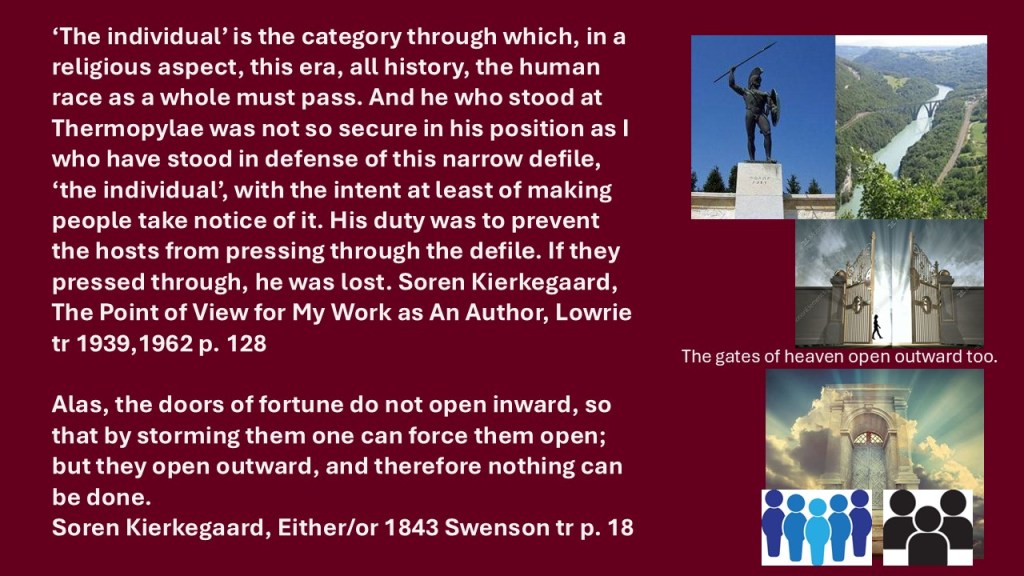
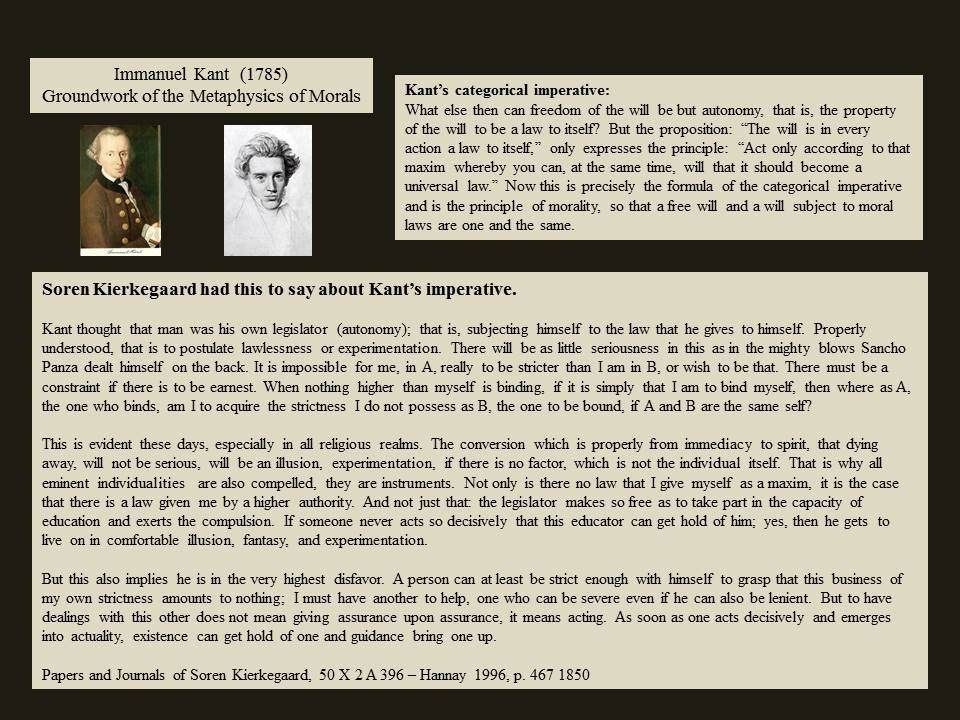

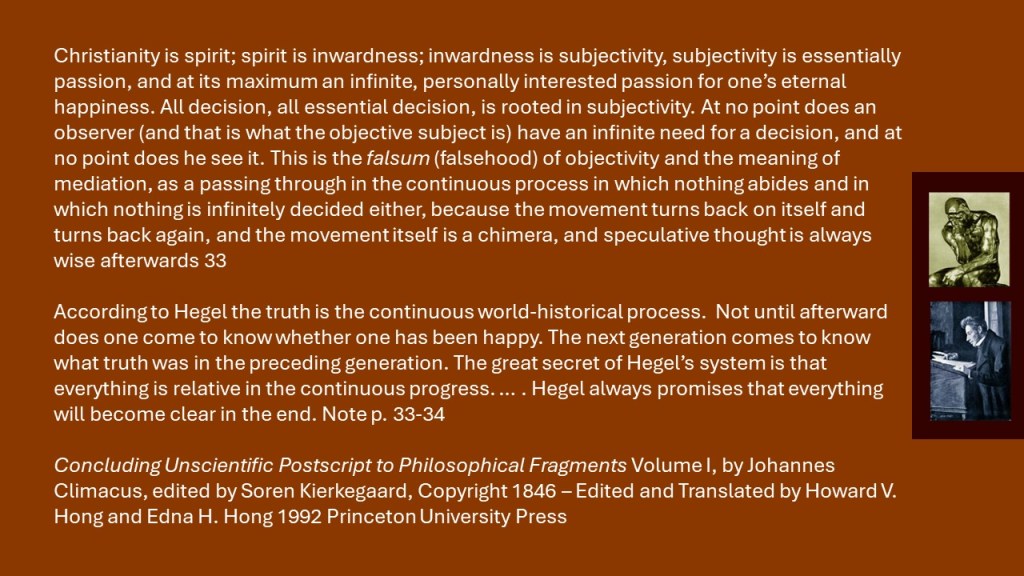
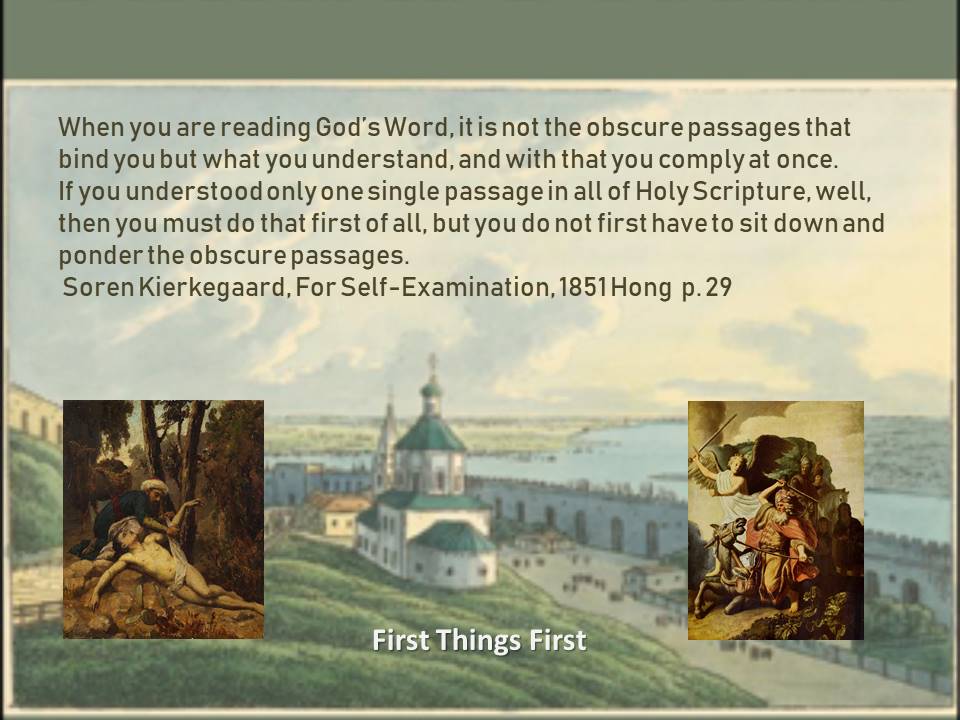
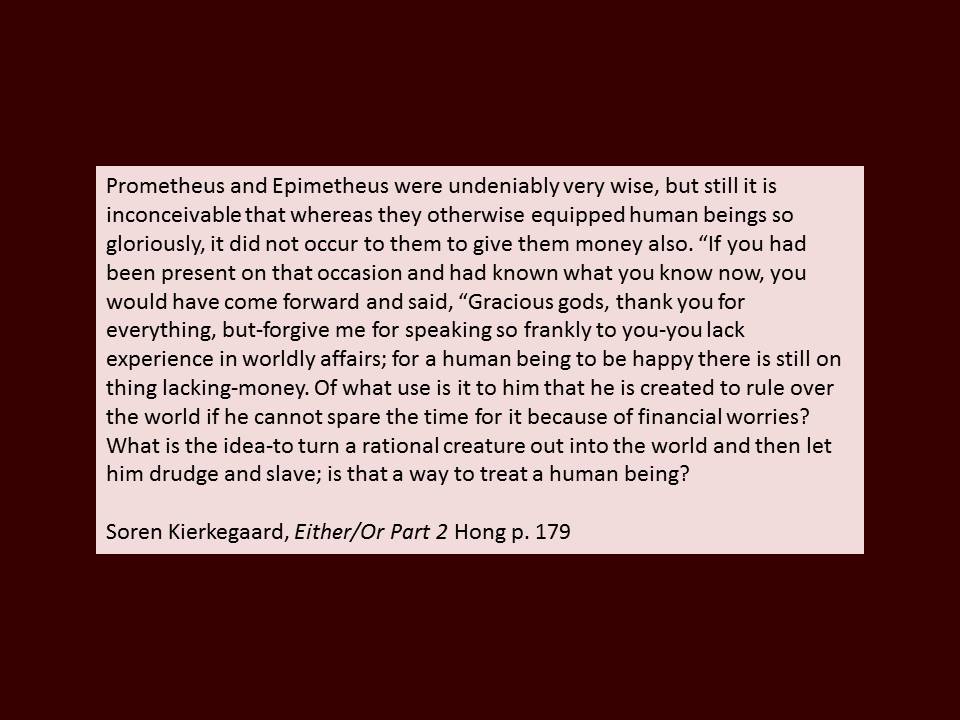
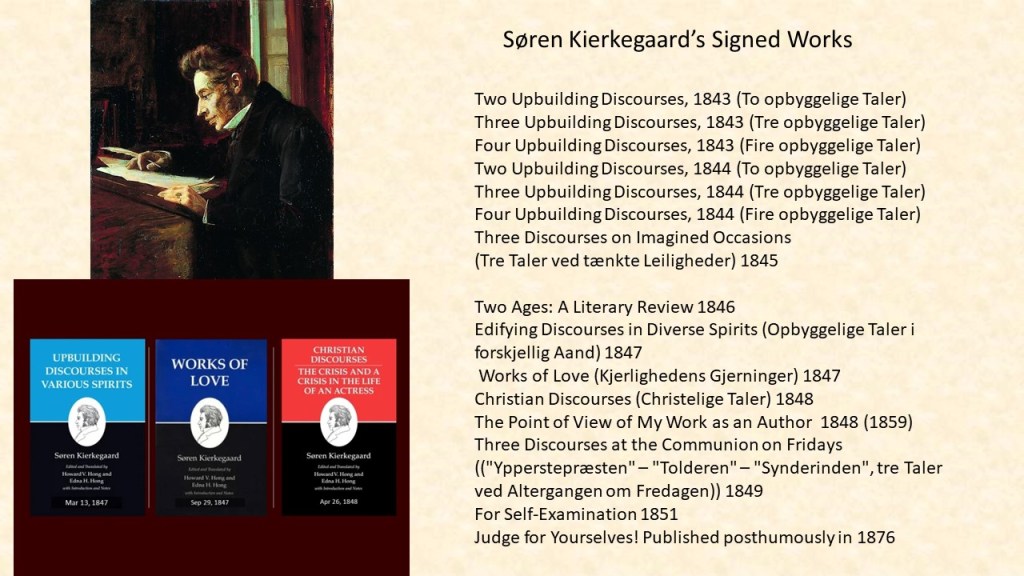
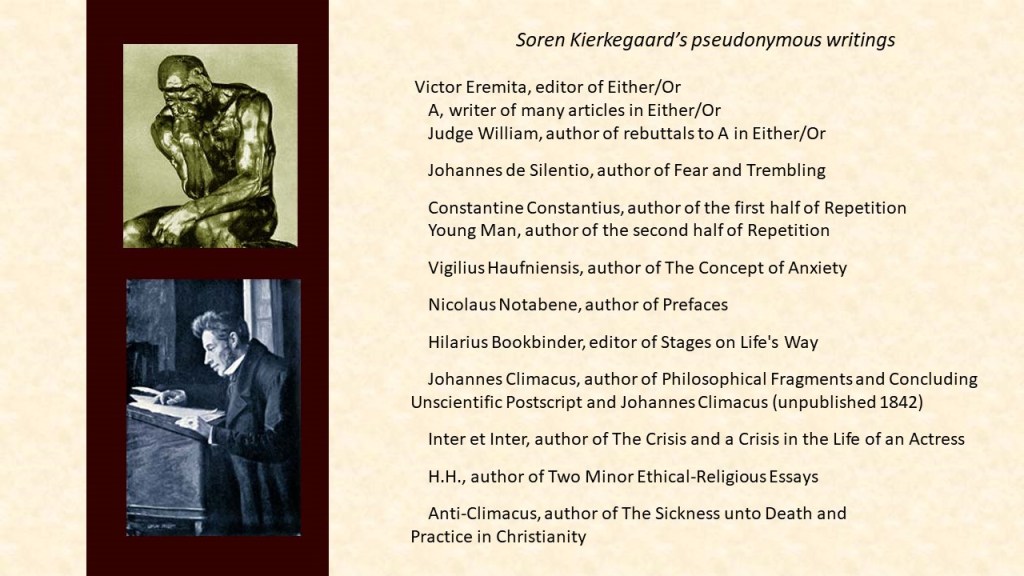

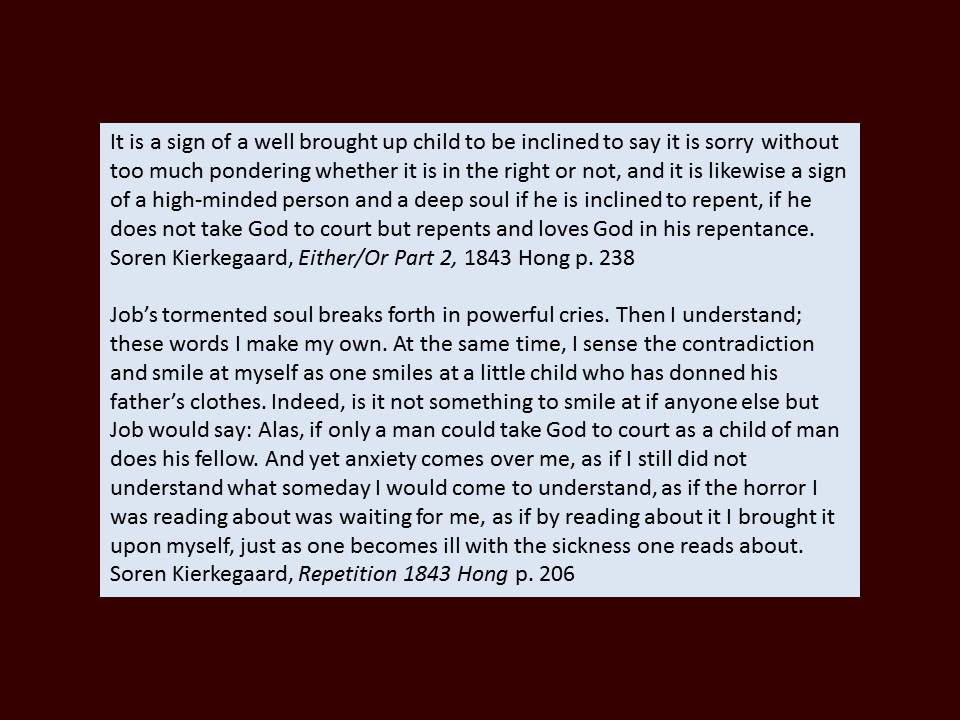

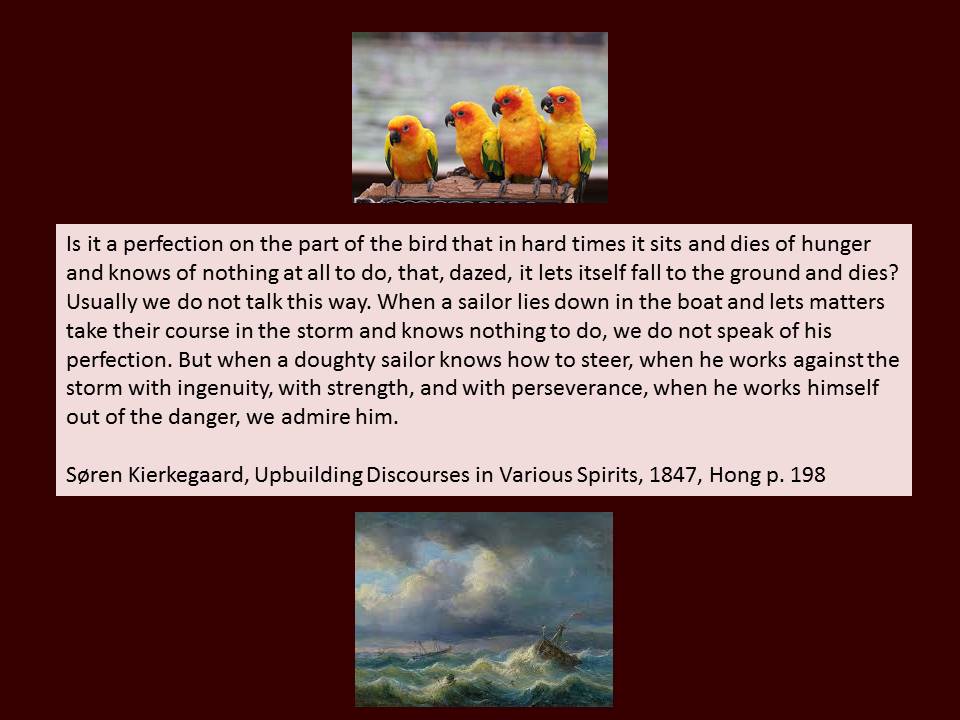
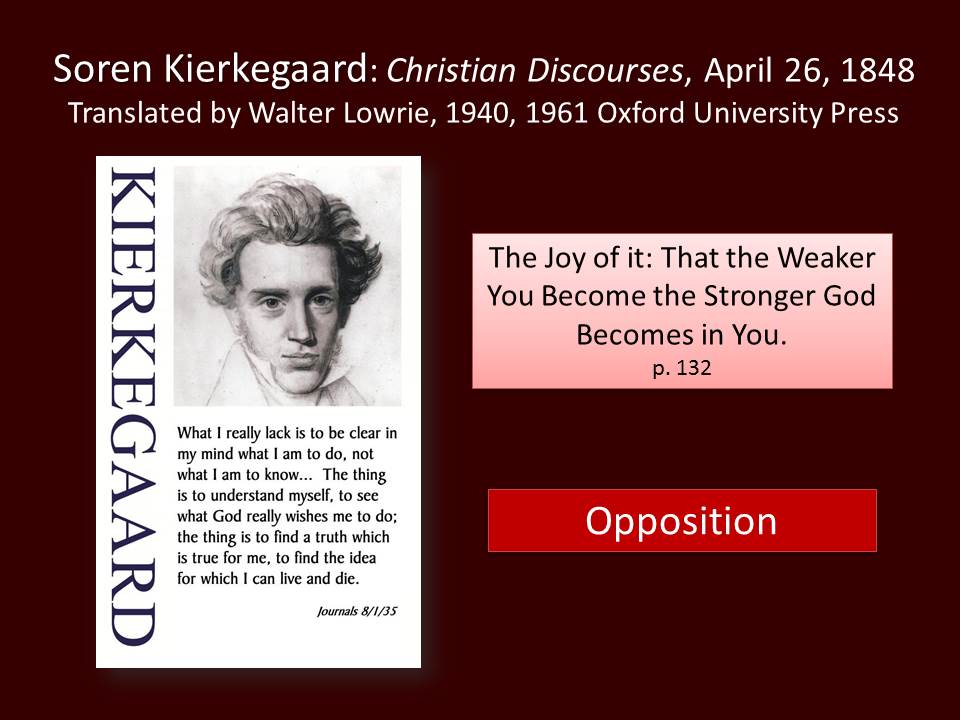


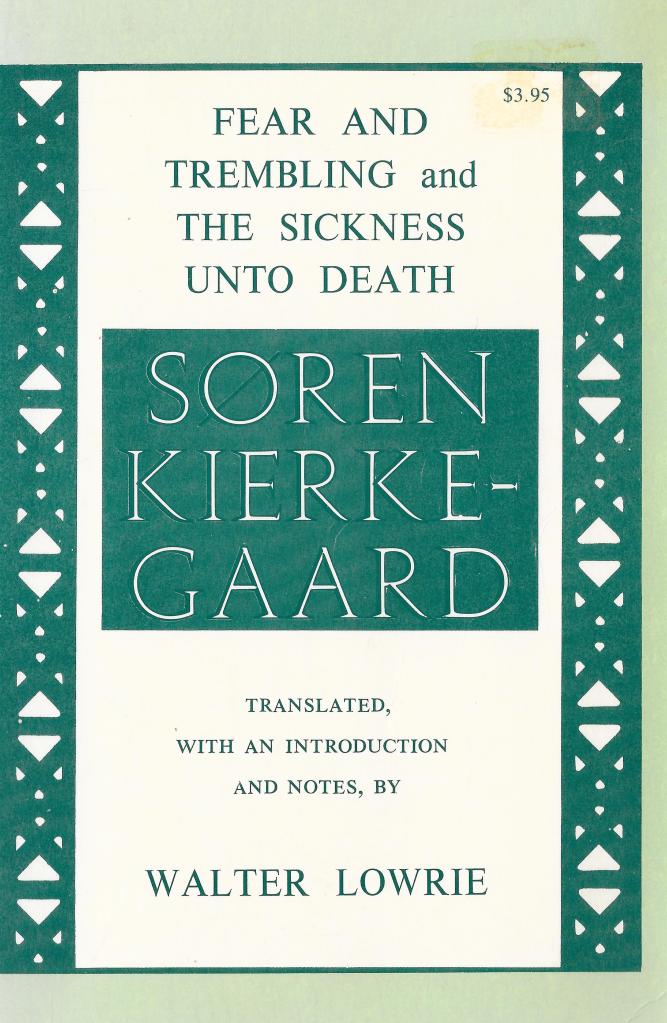
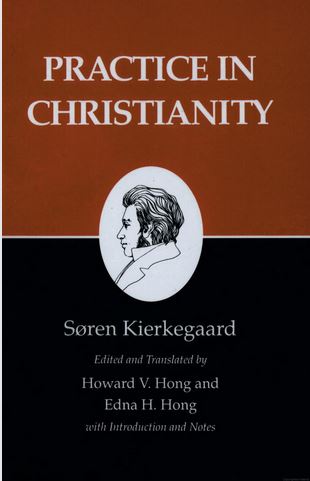
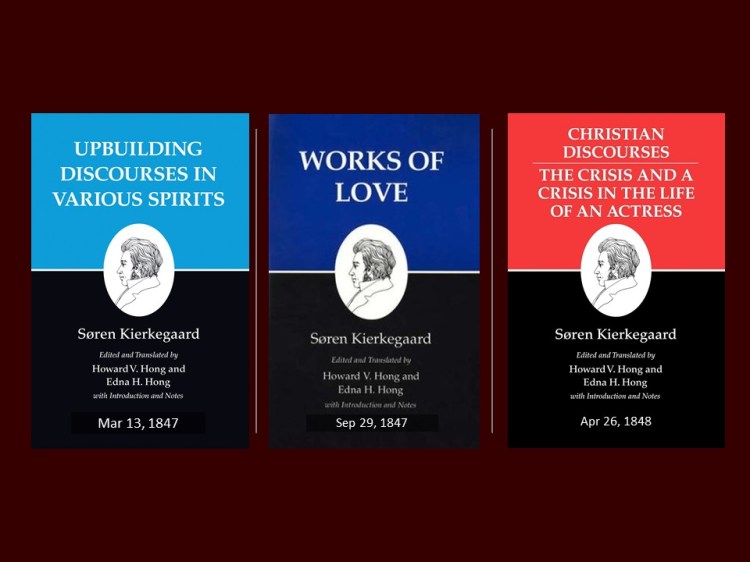

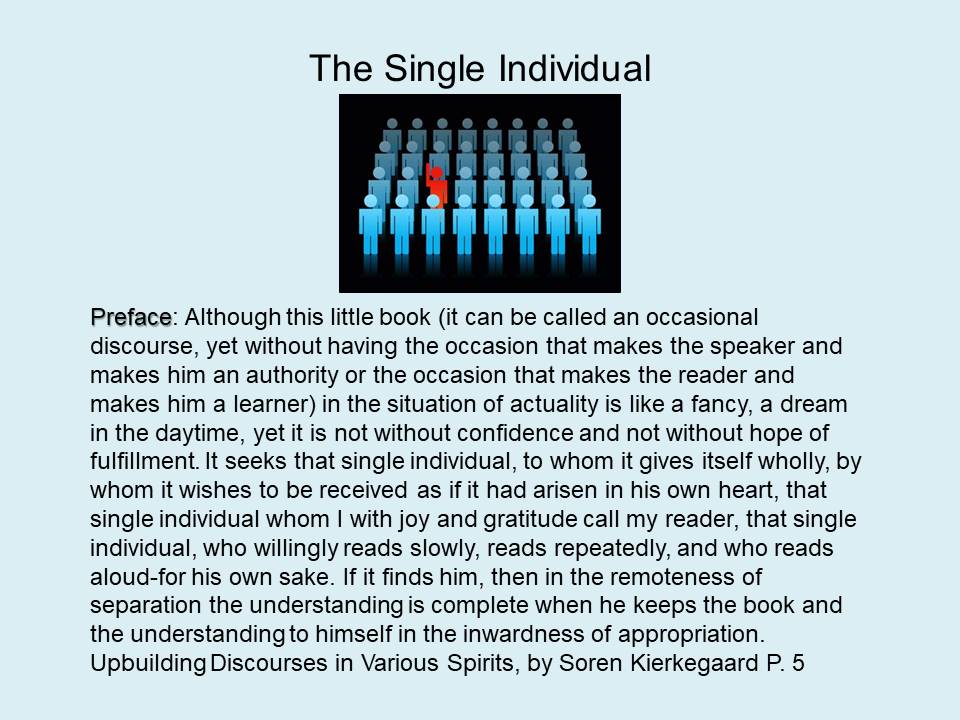

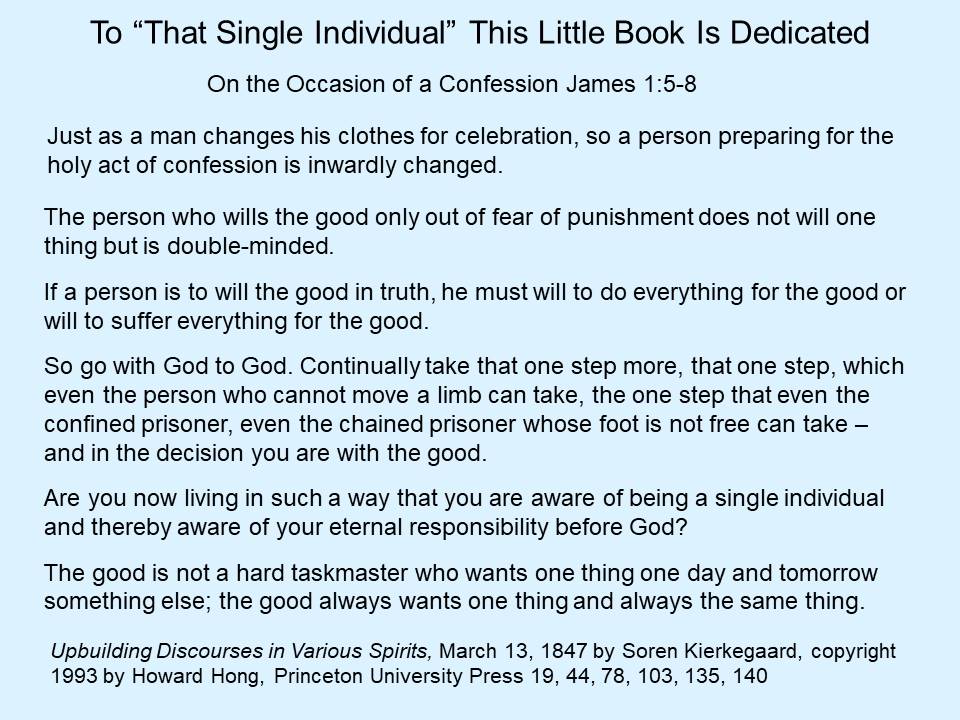


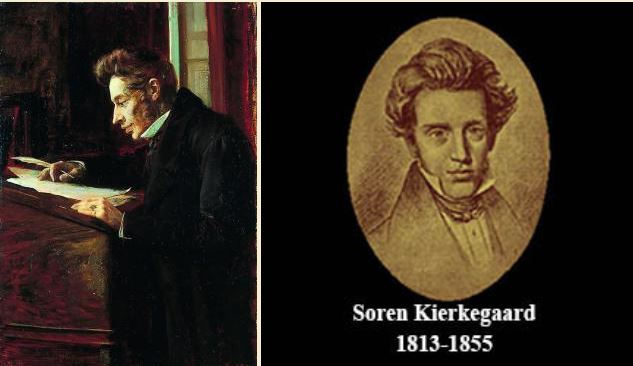




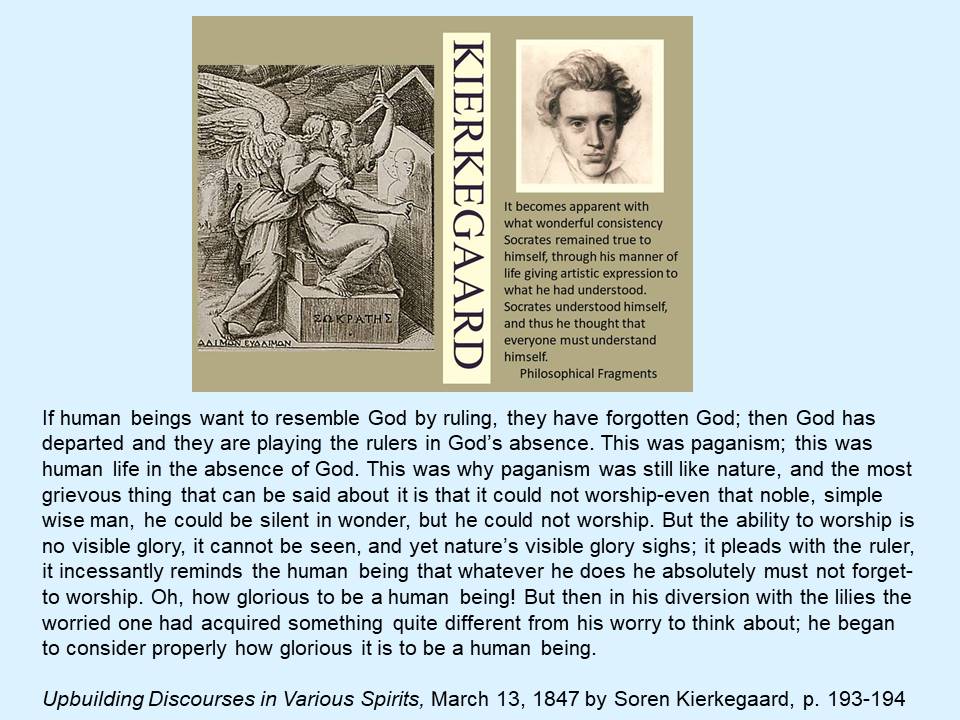
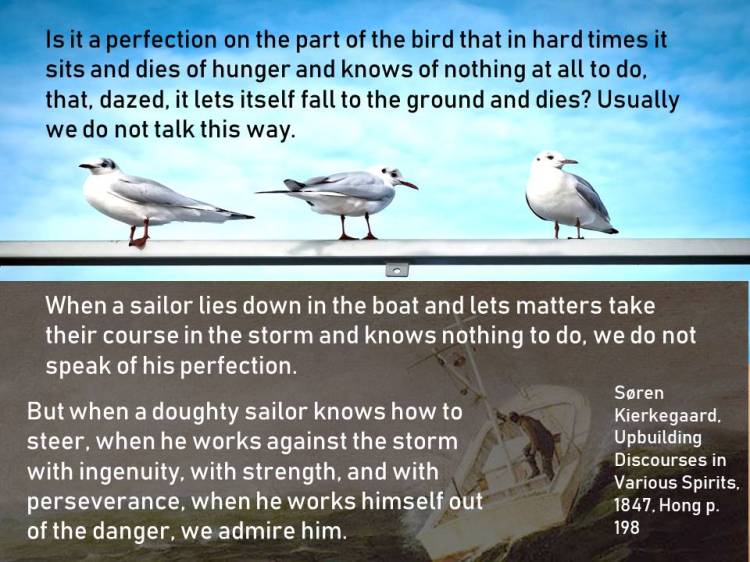
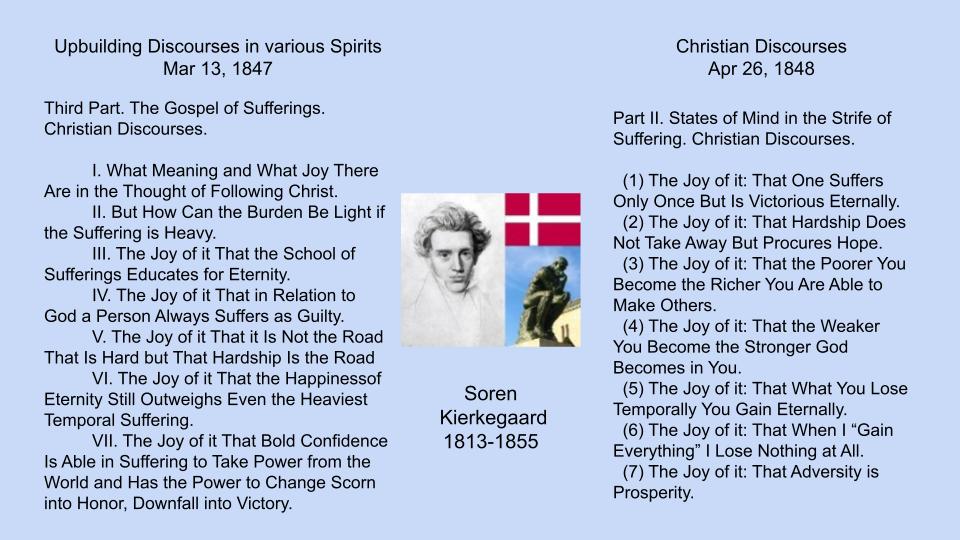

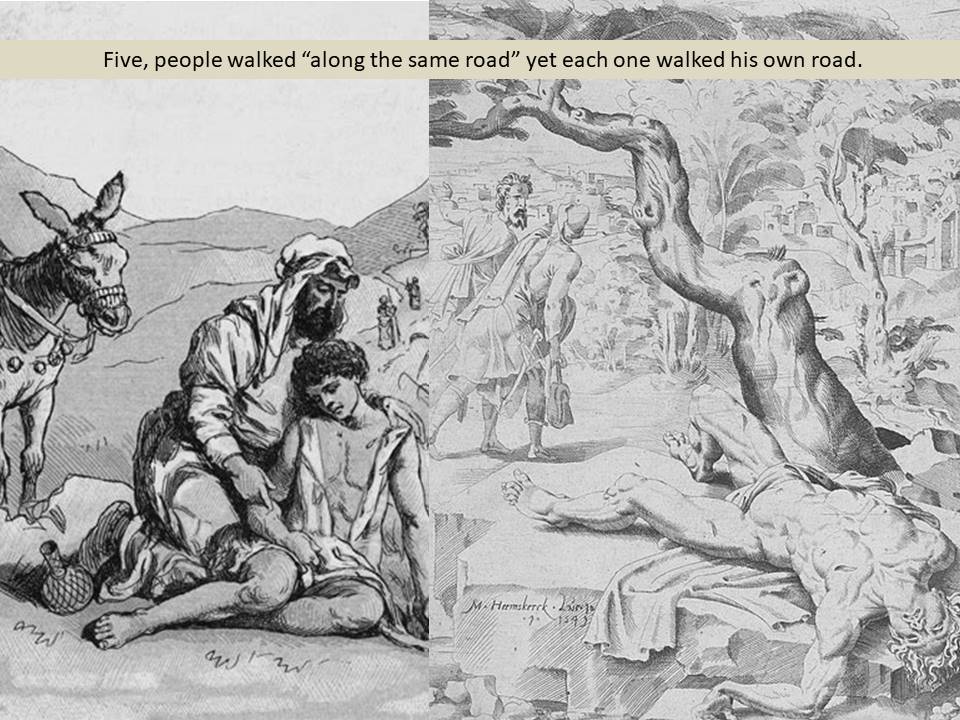







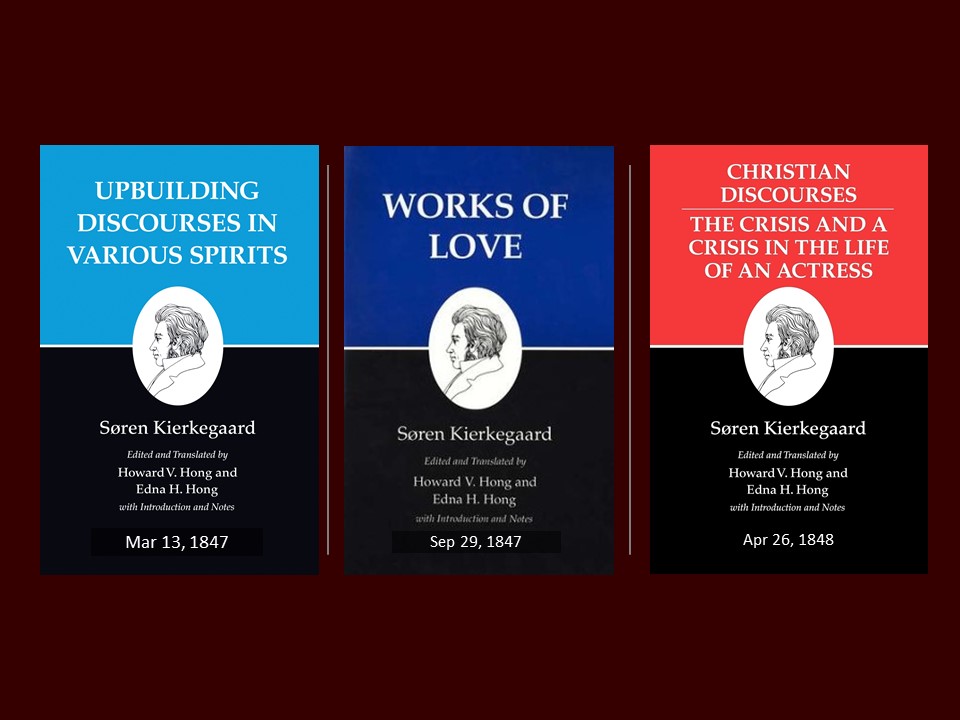


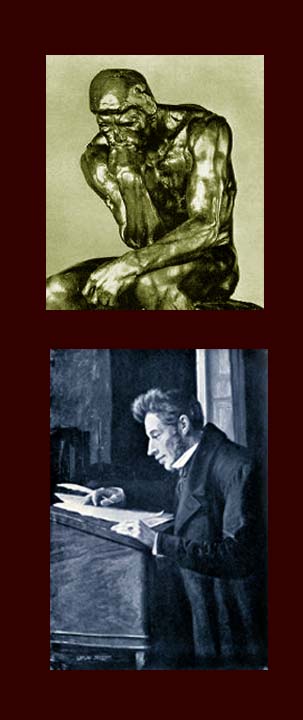

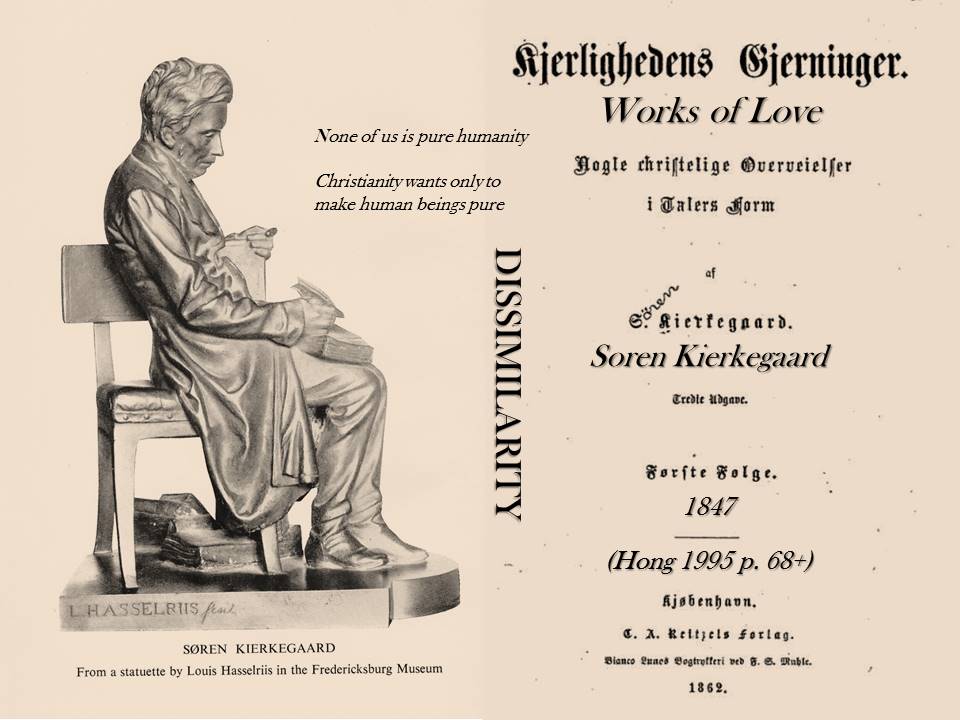




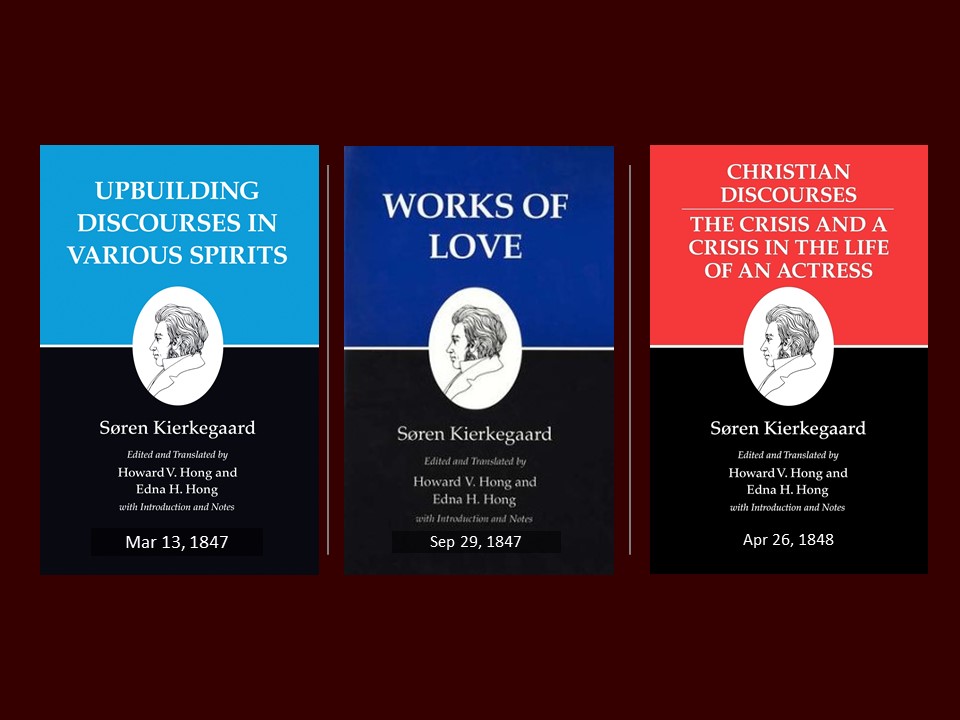


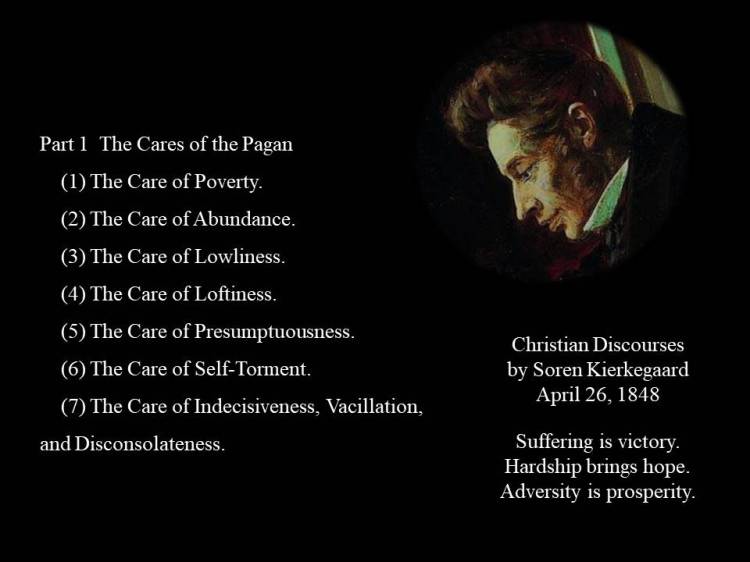

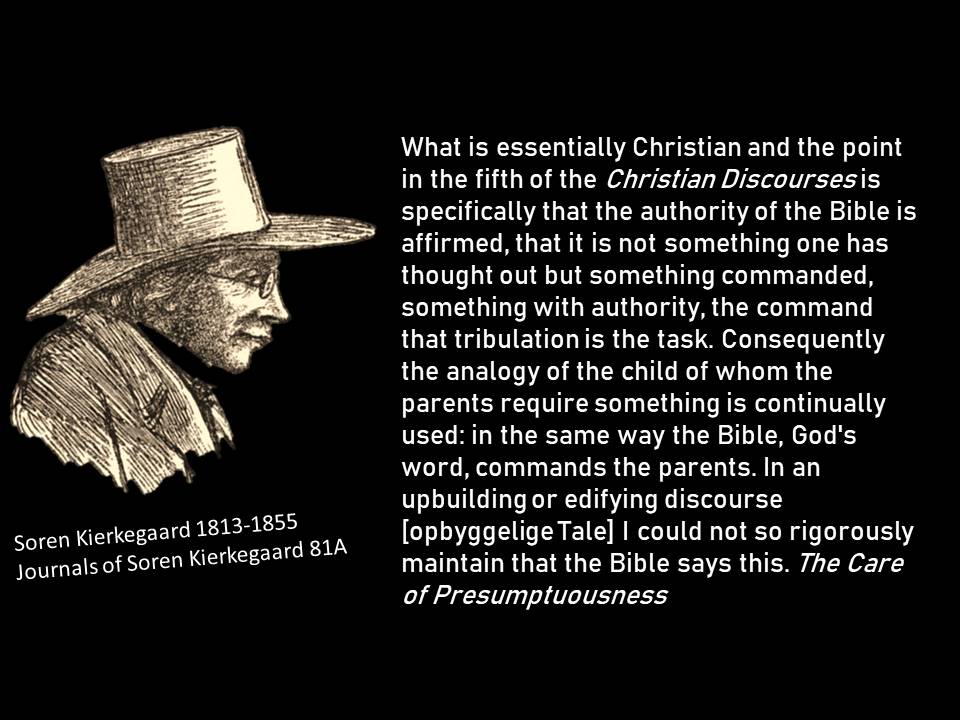
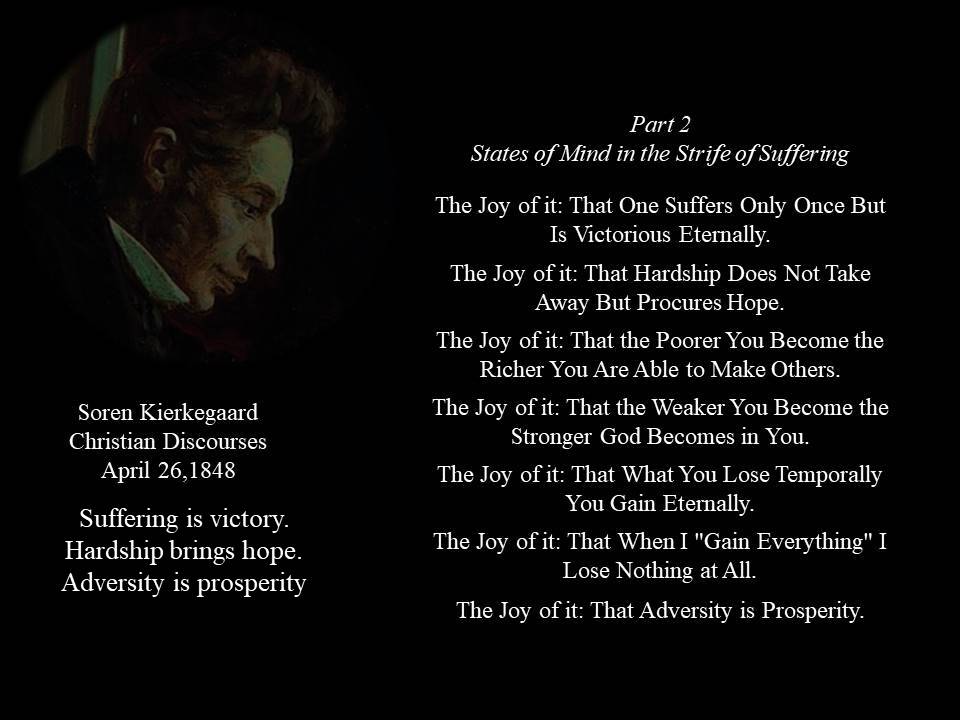
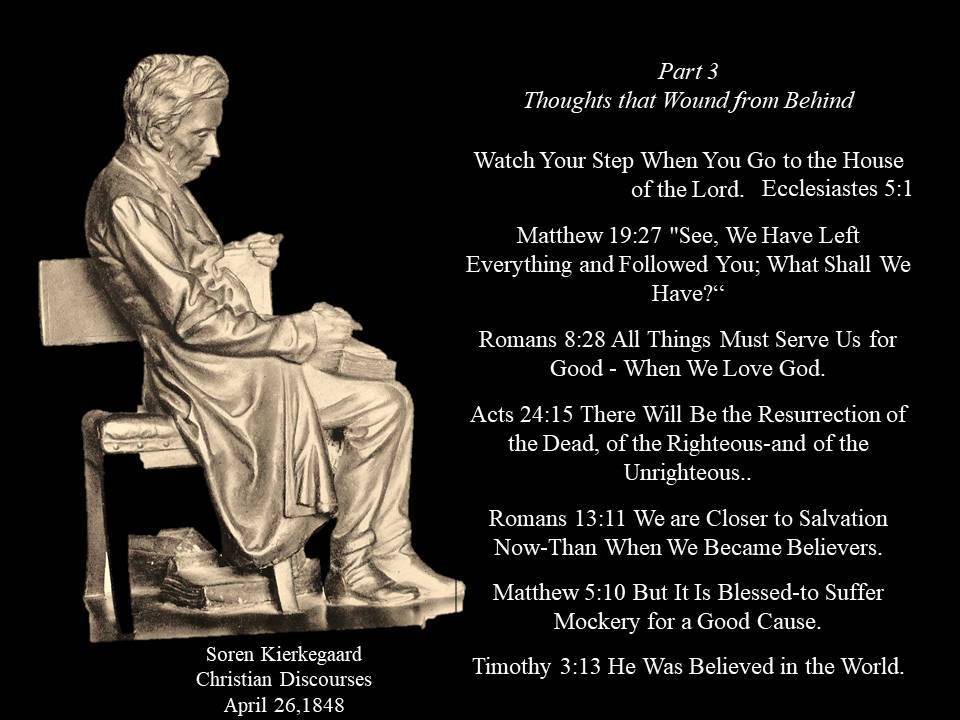

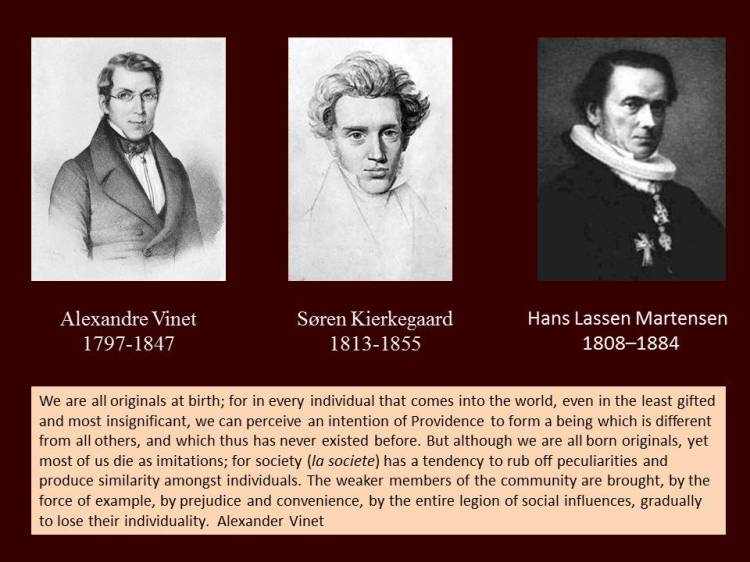


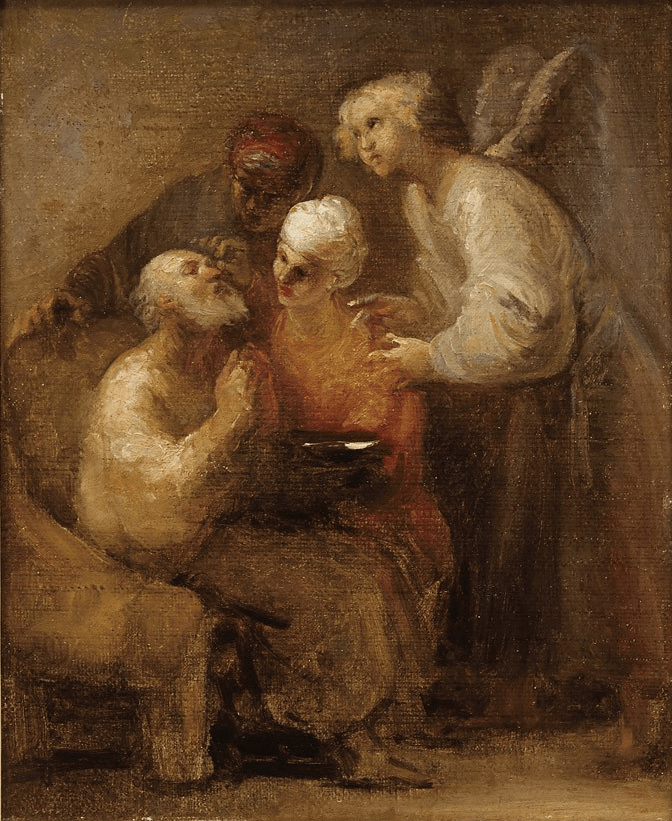


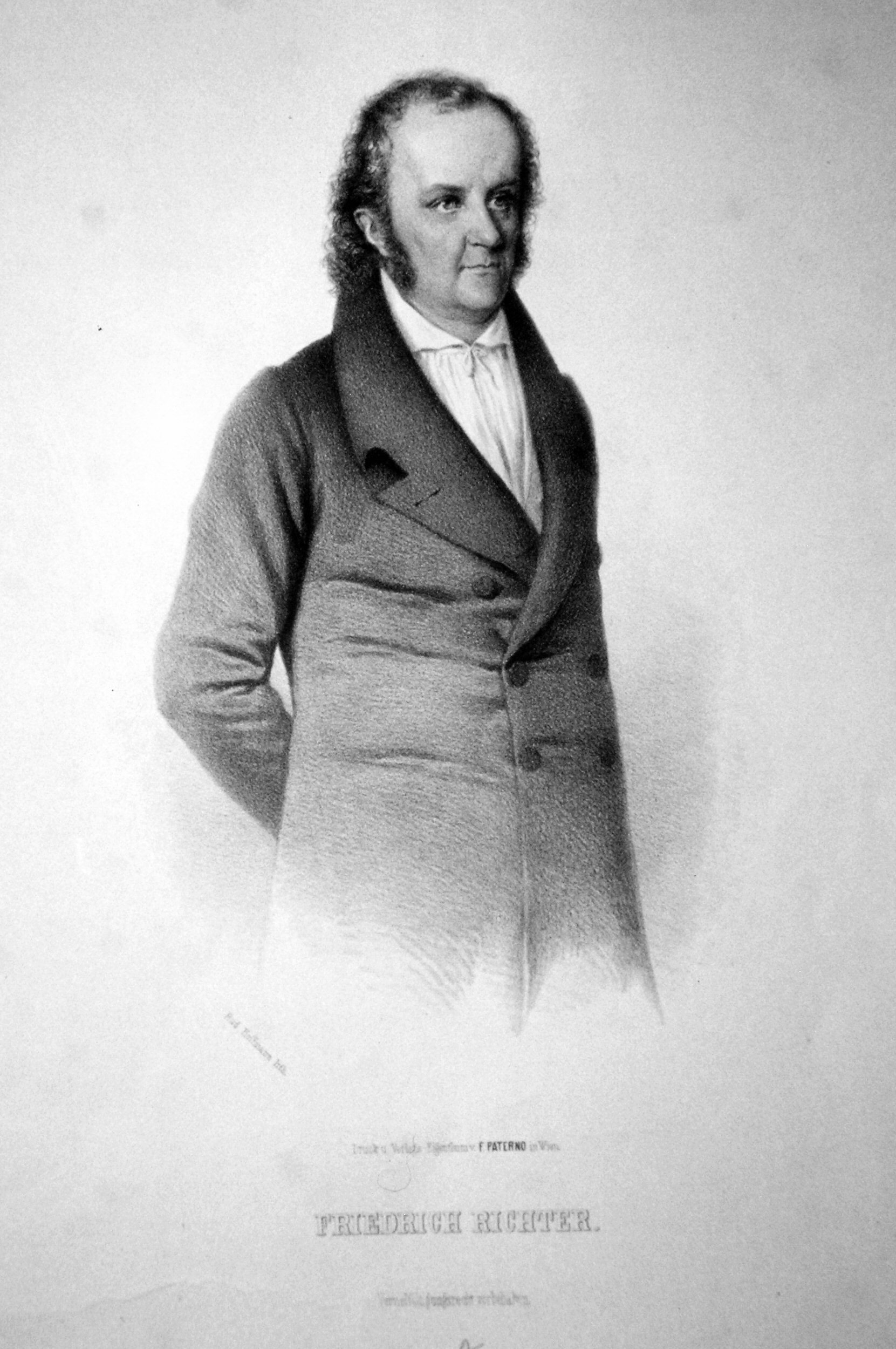
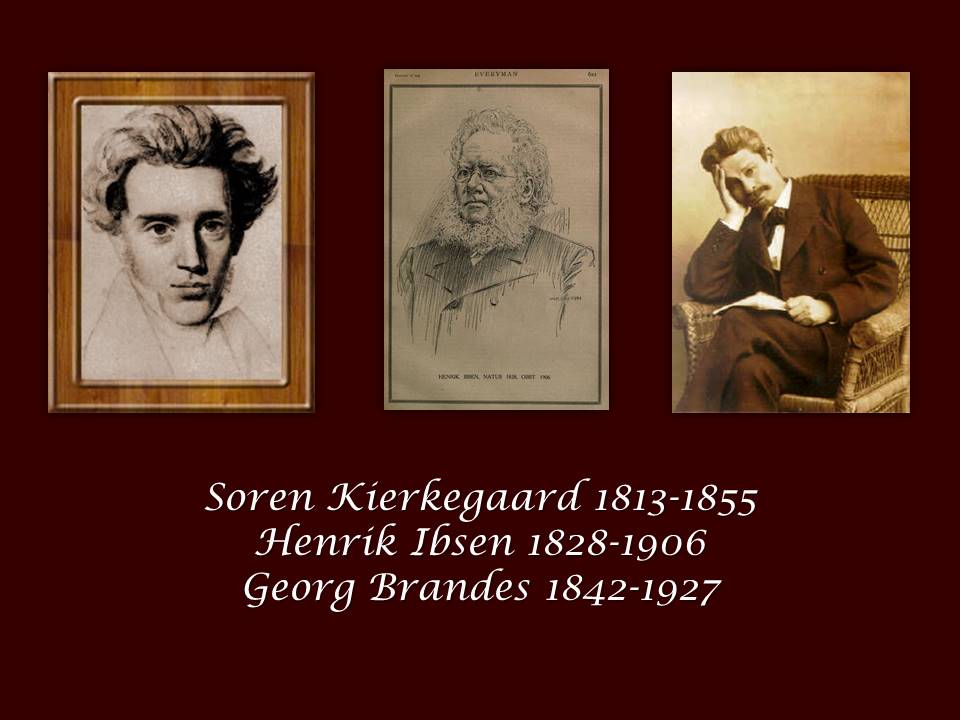
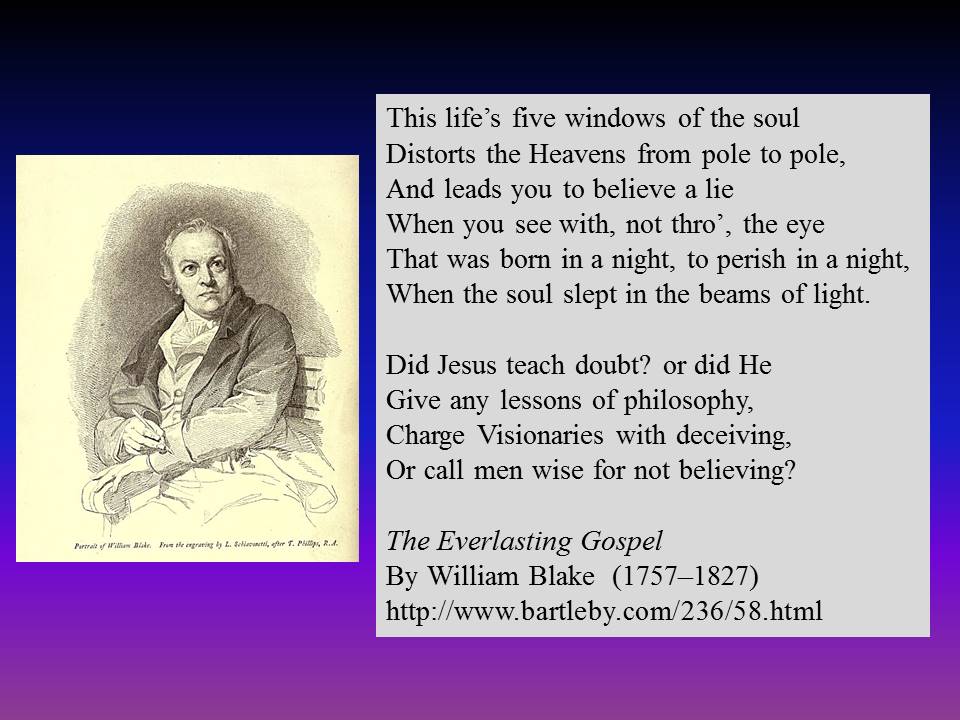
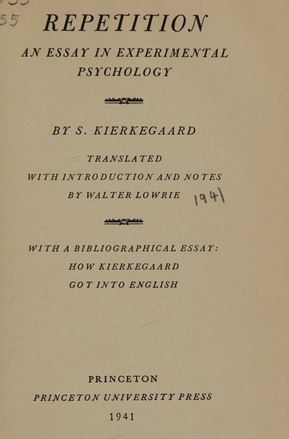
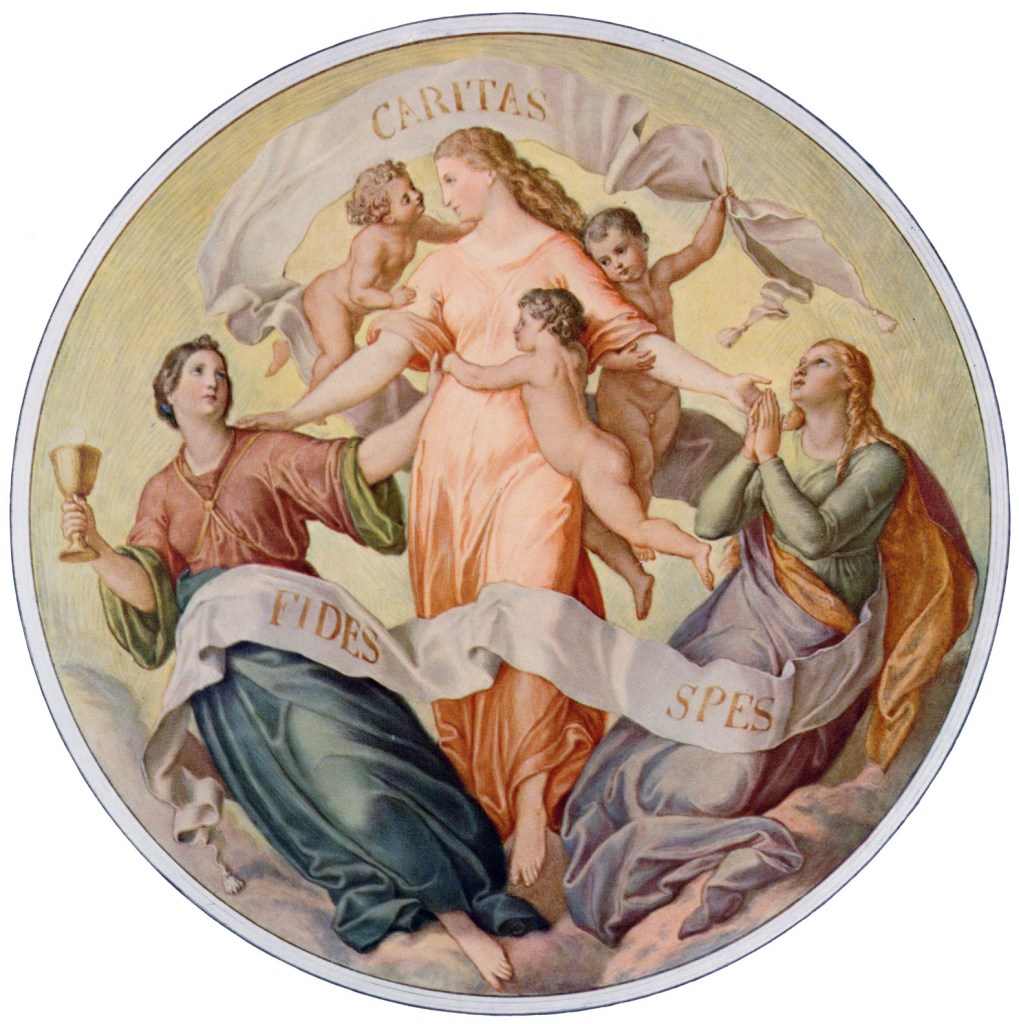
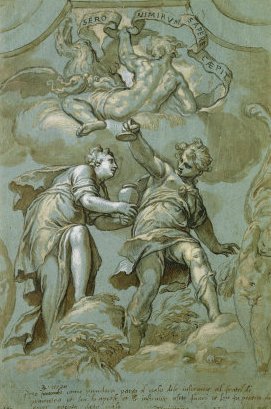

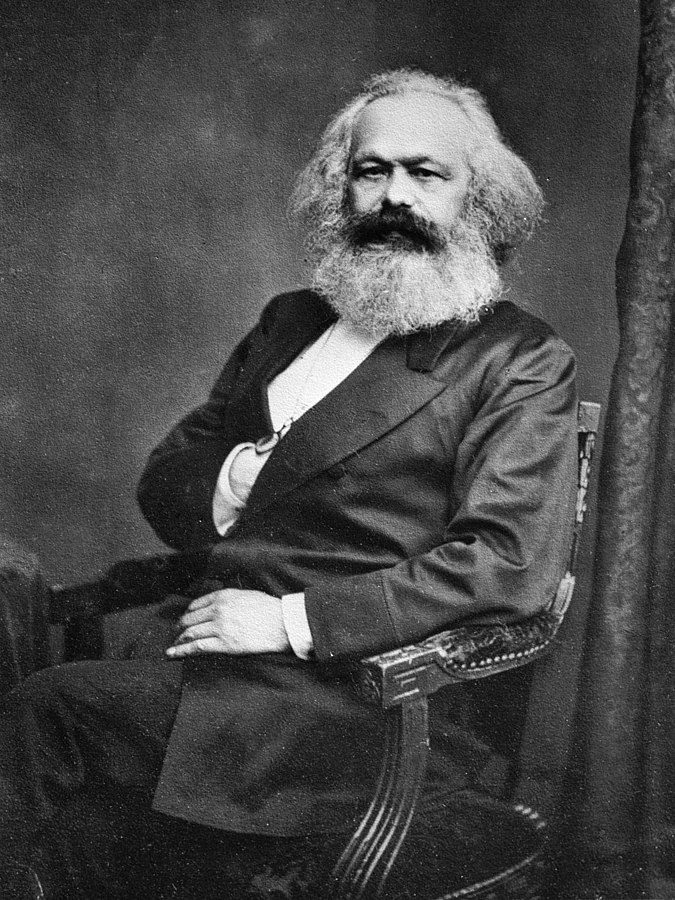
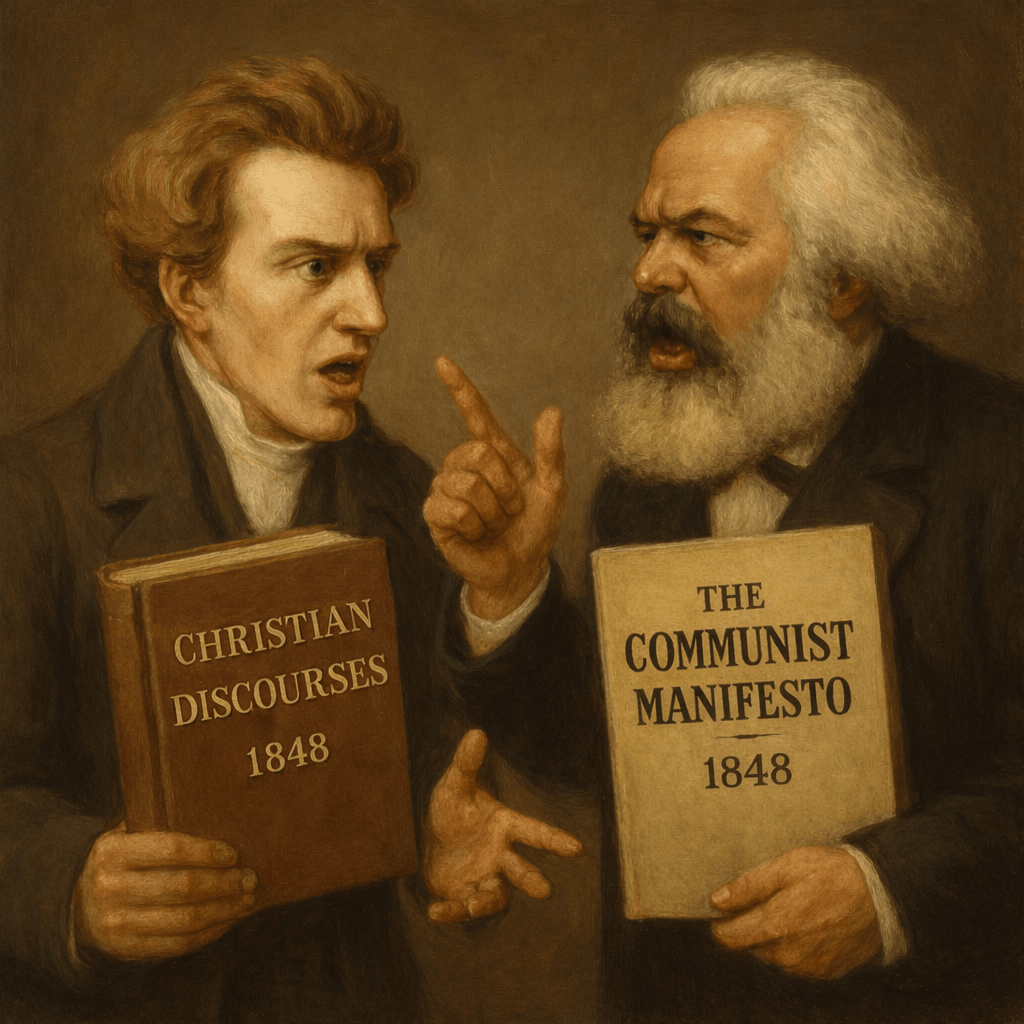
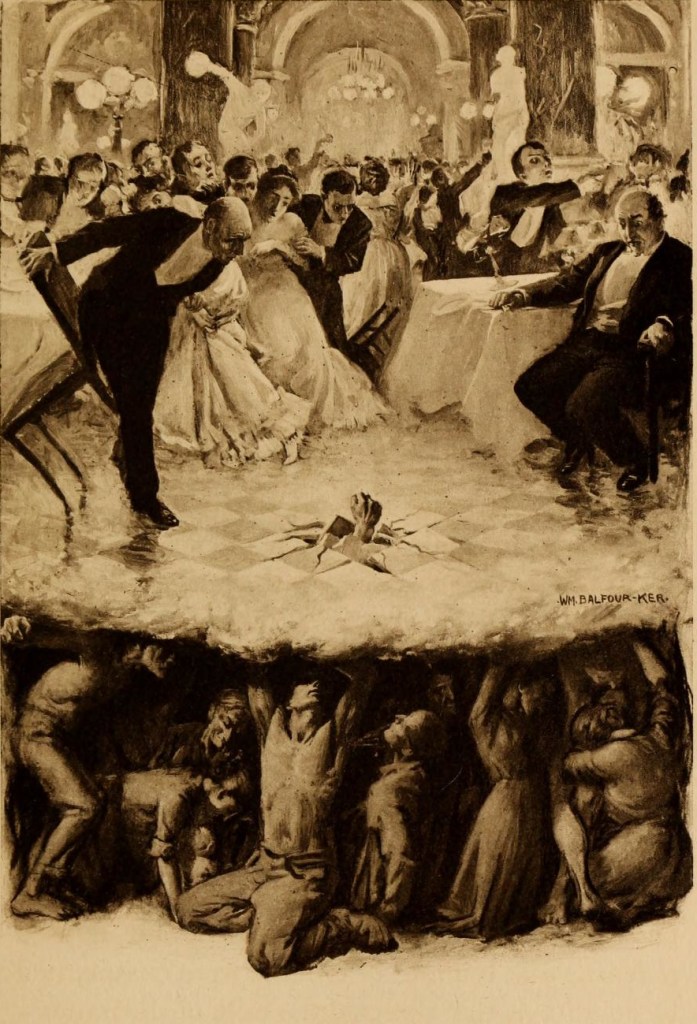
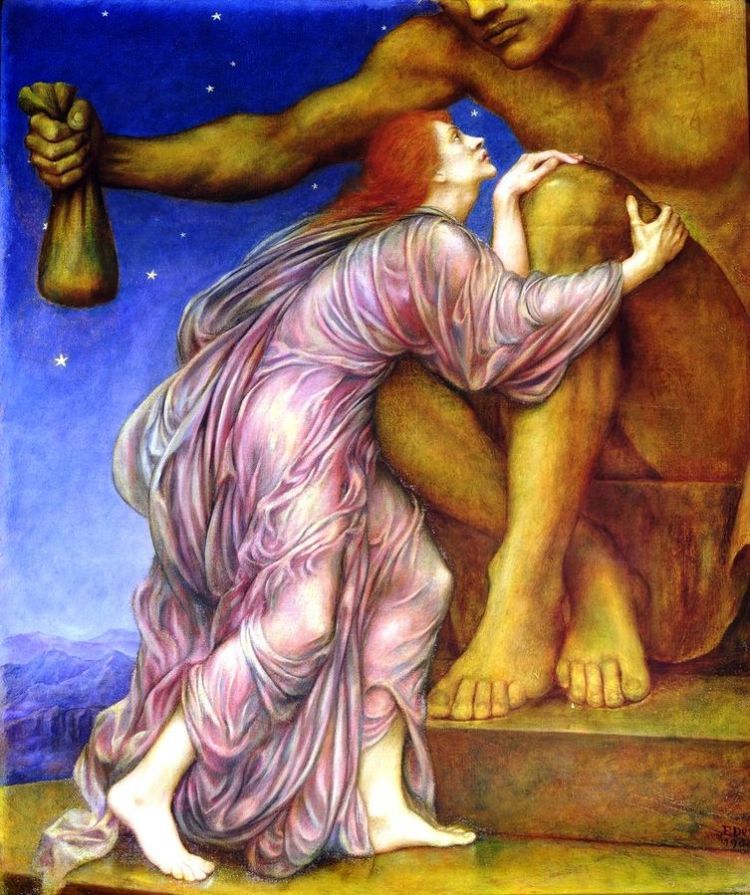



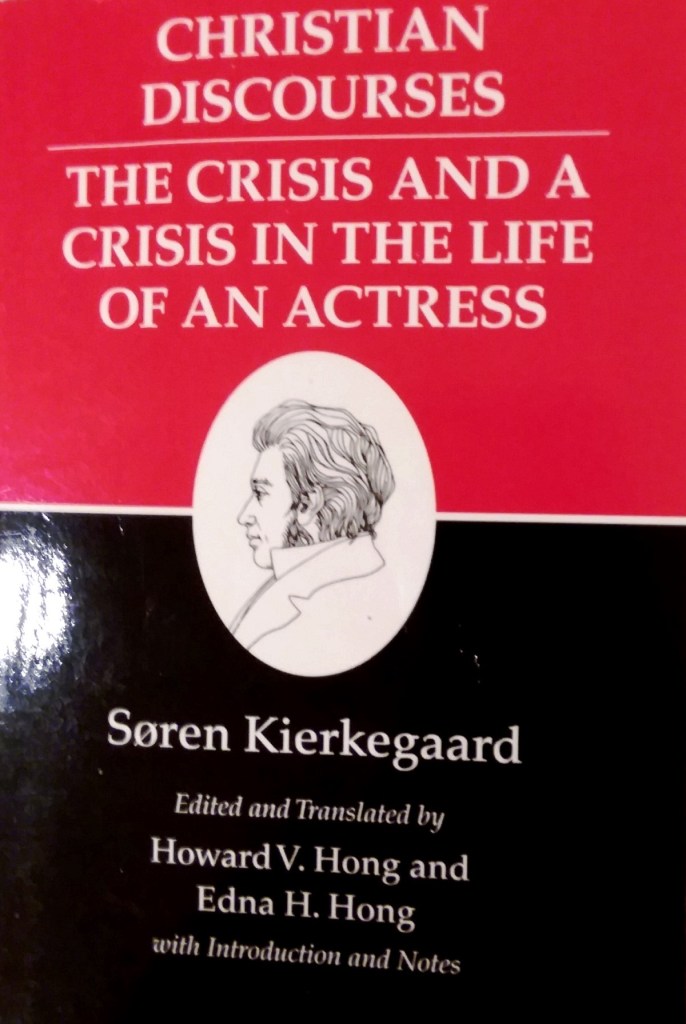
 Søren Kierkegaard: A Christian